
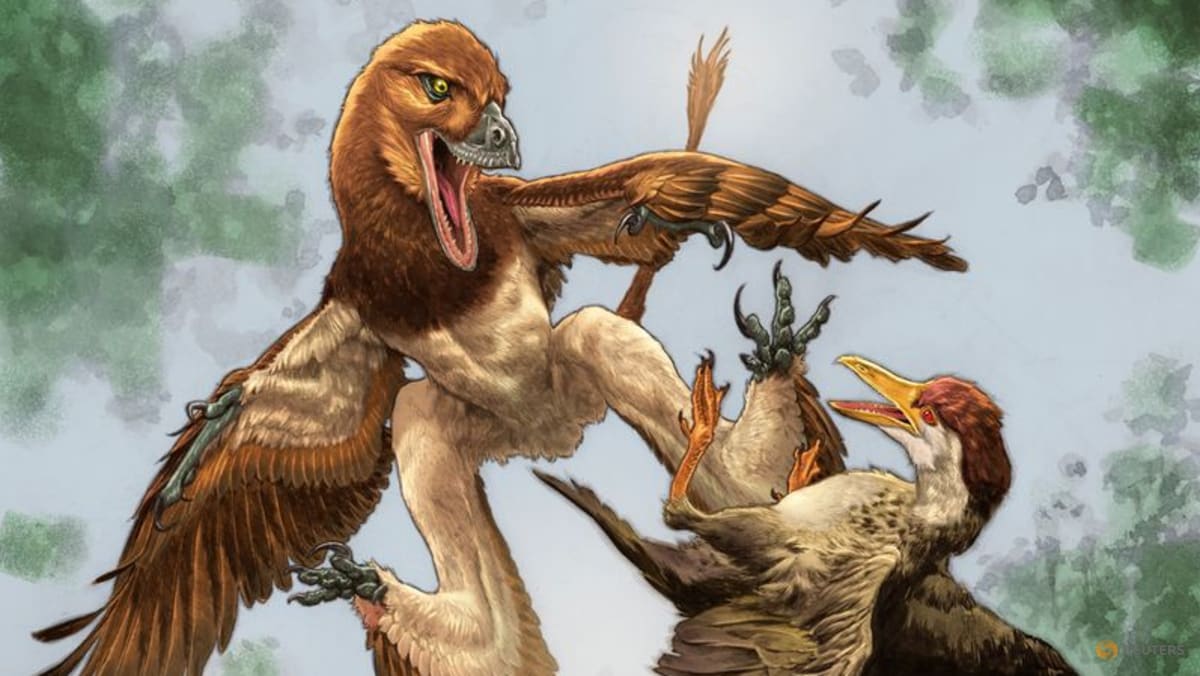
Jian changmaensis, a newly identified microraptor dinosaur from China’s Changma Basin, is emerging as the likely predator behind the mysterious shattered bird fossils found at the site, according to research published in the Annals of Carnegie Museum. The 1.2-meter-long dinosaur, named after a mythical Chinese flying creature, is the largest microraptor specimen ever discovered, with a four-foot wingspan, and its unique skeletal features suggest it hunted birds in a manner similar to its relative Microraptor.
Discovery and Identification
The fossil, recovered from Gansu Province in 2008, consists of a partial left pectoral girdle and forelimb, including fused shoulder and arm bones. Researchers from the Gansu Geological Museum and Carnegie Museum of Natural History used computed laminography to analyze the flattened remains, revealing three key traits: an elongated shoulder bone, a small opening in the radius, and a bird-like elbow joint. These features distinguished Jian changmaensis from other microraptors, which are typically crow-sized, and placed it within the Microraptorinae subgroup, a branch of dromaeosaurs closely related to early birds like Archaeopteryx.
“Jian is one of the biggest microraptor specimens that has ever been found,” said Jingmai O’Connor, associate curator of fossil reptiles at the Field Museum in Chicago, via Earth.com. The dinosaur’s upper arm bone, measuring 10 centimeters, suggests a wingspan comparable to a barn owl, yet its fused joints and smooth surfaces indicate it was fully grown, not a juvenile.
Ecological Role and Hunting Behavior
The Changma Basin, renowned for its rich bird fossil deposits, had long puzzled scientists. Over 100 bird skeletons, including species like Gansus yumenensis, were found alongside clusters of crushed bones—evidence of predation. Jian changmaensis, the only non-avian dinosaur discovered at the site, fills this gap. “Scientists have found these weird, broken-up clusters of bird bones at this site, and we didn’t know what made them. This new microraptor dinosaur, Jian changmaensis, is our best guess,” O’Connor said, per Yahoo.
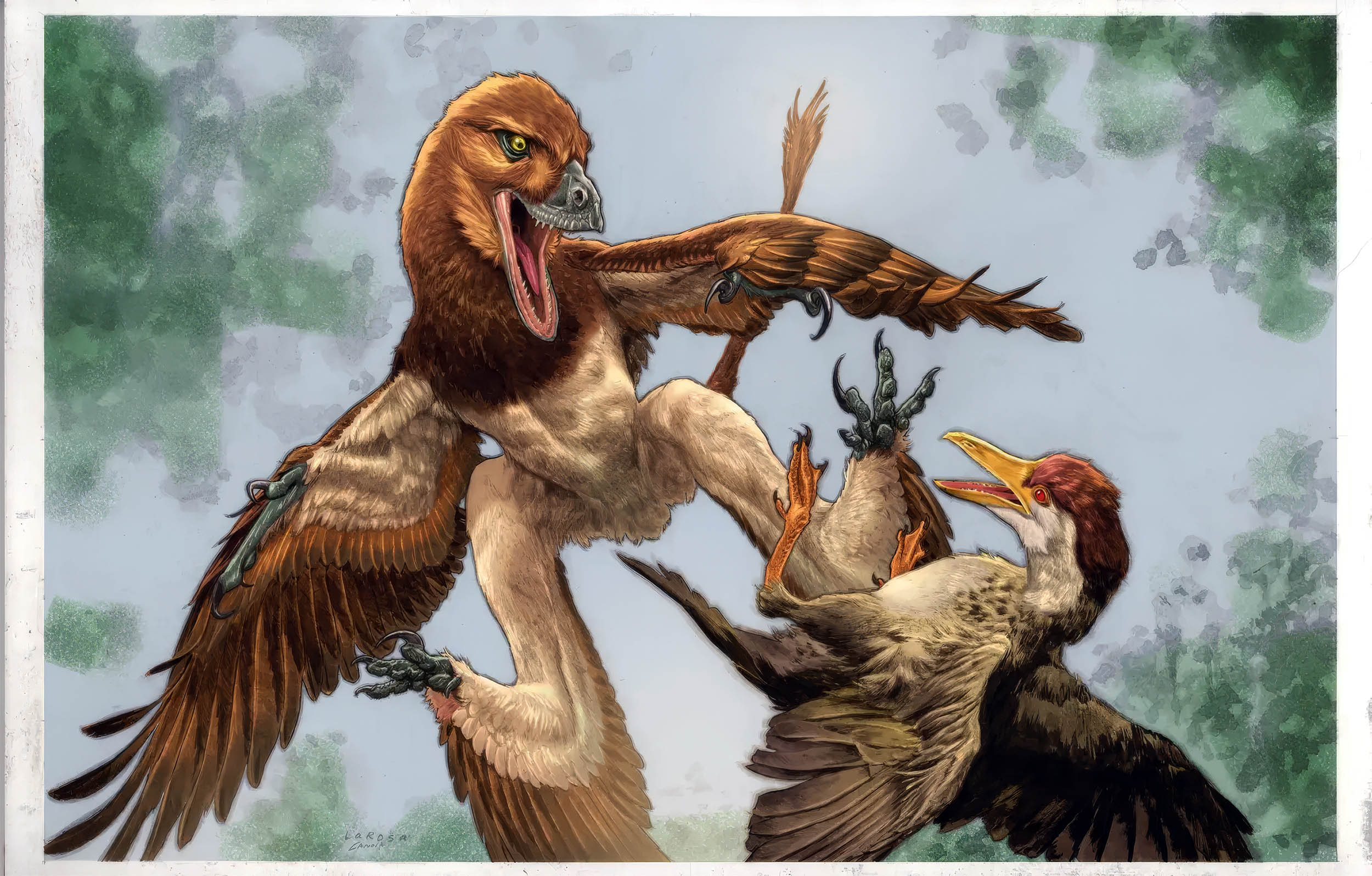
Analysis of Jian’s anatomy suggests it was an ambush predator, likely stalking birds such as the pigeon-sized Gansus. “Jian was probably an ambush predator, stalking and pouncing on distracted birds that were working on finding their own meals,” O’Connor noted. Like Microraptor, it may have fed on a diverse diet, including lizards, mammals, and fish, adapting to seasonal fluctuations in bird populations.
Feathers, Flight, and the Four-Winged Mystery
Although Jian’s skeleton is incomplete, its feathered limbs—similar to Microraptor’s—imply a four-winged appearance. Researchers believe it used these feathers for gliding, not powered flight, akin to a flying squirrel. “Jian and the other microraptors probably weren’t capable of true, powered flight, but they could probably glide like a flying squirrel,” O’Connor explained via Earth.com.
This finding expands the known range of microraptors into northwestern China, linking the Changma fauna to fossil sites in northeastern China’s Jehol Group. “Jian provides critical new insight into the biological history of the Changma region and the ecological context of the ancestors of today’s birds,” said Matt Lamanna, a Carnegie Museum researcher, in the Yahoo report.
Implications for Dinosaur-Bird Evolution
Jian changmaensis bridges the evolutionary gap between non-avian dinosaurs and birds. Its close relation to Archaeopteryx—“just about as close as you can be to being a bird without actually being a bird yourself,” according to Lamanna—highlights the complex transition of dromaeosaurs into avian lineages. The discovery also underscores the Changma Basin’s significance as a hub for early bird evolution, with over 100 bird fossils recovered alongside Jian’s single non-avian dinosaur specimen.
“It’s the only dinosaur found at this site that wasn’t a bird, it was a carnivore, and it was much bigger than everything else that we’ve found there,” O’Connor added. This rarity emphasizes Jian’s role in shaping the ecological dynamics of the Early Cretaceous, where it likely competed with other predators while coexisting with a thriving avian population.
What’s Next for the Research?
Further studies will focus on reconstructing Jian’s full anatomy and behavior, using advanced 3D modeling of its partial remains. Researchers also aim to uncover more fossils from the Changma Basin, which could reveal additional insights into the interactions between dinosaurs and early birds. As O’Connor noted, “Jian changmaensis reveals that non-avian dinosaurs lived in what is now the Changma Basin, an area famous for its fossil birds.”
The discovery not only enriches our understanding of microraptor evolution but also challenges assumptions about the size and capabilities of dromaeosaurs. With its unique blend of avian and reptilian traits, Jian changmaensis stands as a testament to the evolutionary experimentation that defined the Age of Dinosaurs.
