
Early testing is underway for the 2026 Dakar Rally, offering a first look at the challenges facing competitors in the grueling off-road race. Teams are utilizing pre-race trials to calibrate vehicles and refine strategies ahead of the event, which is scheduled to begin later this month in Saudi Arabia. Initial sessions have already revealed mechanical setbacks for several drivers, including Lithuania’s Benediktas Vanagas and Rokas Baciuška, highlighting the demanding nature of the terrain and the critical importance of readiness.
Testing for the upcoming Dakar Rally involved varying distances from the Janbu bivouac, ranging from 30 to 50 kilometers for different vehicle classes. As a result, some participants began their tests at sunrise, while others, like Vaidotas Žala, started in the afternoon.
Benediktas Vanagas experienced an issue during morning testing with his “Hilux,” requiring a return to the bivouac for a steering booster replacement.
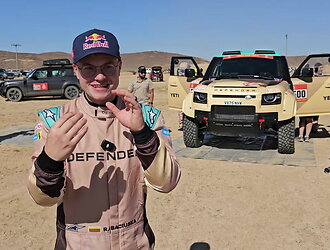
Rokas Baciuška also faced an early setback with his “Defender.” Shortly after starting, a rock damaged a component of the rear suspension – a support. The impact was unusual, as the wheel itself remained undamaged, with the force concentrated on the suspension. According to Baciuška, such a precise hit is rare, occurring due to an atypical angle of impact.
Benediktas Vanagas: Day’s Plan Completed
After completing 60 kilometers of testing, the team had the opportunity to assess the vehicle’s performance under full throttle.
“The most important task of the first day was completed. I was already missing the Hilux and its speed where there is no road. This evening, we will work a little more with the engineers on a new version of the engine control program. We had to change the power steering, so we briefly returned to the bivouac. But essentially, these were routine matters. It seems that the speed is there, the car handles really well, and I’m communicating well with Aisviu,” shared the racer who has achieved the best Baltic result in the Dakar.
These tests are a crucial check not only of the vehicle’s calibration for competitive conditions but also of the crew’s teamwork. Vanagas emphasized that he and Aisvydas already have a strong working relationship, and the practice runs further solidify their preparation for the race.
“Good first kilometers that resemble the Dakar. However, the track was quite clear, we had a ‘clear track’ because many participants had already driven before us. A good start,” said A. Paliukėnas.
VIDEO: A Rock Stopped Rokas Baciuška in Dakar Tests: He Had to Return to the Technicians
(function(d, s, id) { var js, fjs = d.getElementsByTagName(s)[0]; if (d.getElementById(id)) { return; } js = d.createElement(s); js.id = id; js.src = "https://connect.facebook.net/lt_LT/sdk.js"; fjs.parentNode.insertBefore(js, fjs); }(document, 'script', 'facebook-jssdk'));
Initial testing for the upcoming Dakar Rally saw competitors tackling varied terrain and encountering unexpected mechanical challenges. The rigorous testing phase, crucial for preparing vehicles and teams for the demanding race, revealed early issues for several drivers.
Benediktas Vanagas experienced a temporary setback during morning trials with his “Hilux” vehicle, necessitating a return to the base camp for a power steering unit replacement. Vanagas discussed the issue and the quick repair in a video statement, emphasizing the importance of addressing these issues before the race begins.
Similarly, Rokas Baciuška’s “Defender” sustained damage early in the testing phase. A rock impact compromised a rear suspension component, despite leaving the wheel itself intact. Baciuška noted the unusual nature of the impact, suggesting it occurred due to a rare and unfavorable angle.
Vanagas Confident After Initial Tests
Following 60 kilometers of testing, Vanagas expressed satisfaction with the vehicle’s performance and the team’s progress. “The most important task of the first day was completed. I was already missing the Hilux and its speed where there is no road,” he said. The team plans to refine the engine control program further, building on the positive initial results.
Vanagas also highlighted the strong communication and established rapport with his co-driver, Aisvydas. He emphasized that these practice runs are vital for solidifying their teamwork and ensuring a coordinated effort during the race. Effective teamwork is often a key factor in success during endurance events like the Dakar Rally.
A. Paliukėnas also offered a positive assessment of the initial testing, noting a clear track due to prior runs by other competitors. “Good first kilometers that resemble the Dakar. However, the track was quite clear, we had a ‘clear track’ because many participants had already driven before us. A good start,” he stated. Baciuška’s suspension issue was also documented in a video, underscoring the unpredictable nature of the terrain.
These early tests provide valuable data for teams to fine-tune their vehicles and strategies before the official start of the Dakar Rally, a grueling endurance race known for its challenging conditions and demanding course.
