
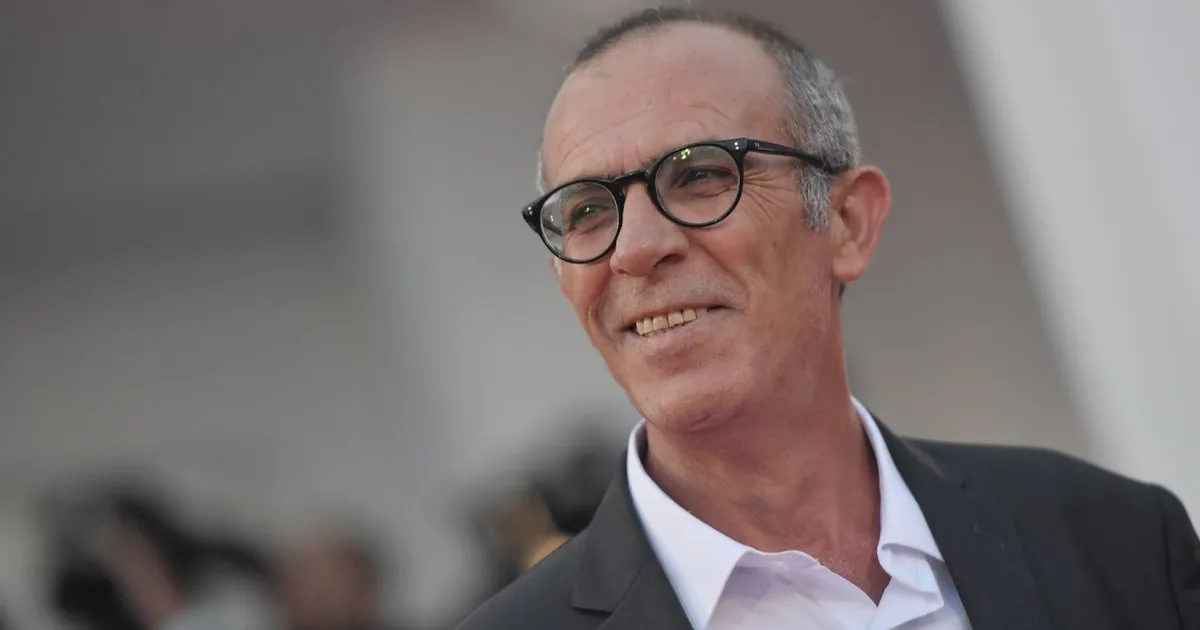
Palestinian actor كامل الباشا credits the widespread response to the series “صحاب الأرض” to the immense effort put forth by the production team to deliver a profound and human portrayal of the Palestinian experience, noting that this response has bolstered international empathy for the suffering and resilience of the Palestinian people.
Speaking to “Al-Sharq,” الباشا said the reactions accompanying the show’s release have been overwhelmingly positive, adding that this engagement serves the Palestinian cause and helps to highlight the human dimensions of life under occupation.
Regarding Israeli reactions to the series, الباشا explained that these responses were anticipated, adding that commenting on them isn’t worth wasting further time or effort given the importance of the message the work seeks to convey.
The Palestinian Reality
الباشا revealed that his journey with the series began with a series of intensive preparatory meetings, including lengthy discussions with the director and art director, as well as a thorough study of the script. He emphasized that the script was carefully written and that the team was aware of the importance of delivering a sincere dramatic work that reflects the Palestinian reality with depth and responsibility.
In the series, الباشا portrays “Ibrahim,” a history professor and a graduate of Ain Shams University, who experiences psychological disorientation as a result of the tragedies endured by the Palestinian people, but these haven’t been able to erase his memory or break his deep connection to his history and identity.
He explained that the character represents a symbolic model of the Palestinian who has lived through the major transformations in the history of the issue, starting with the Nakba of 1948, through the 1967 war, and up to the tragic events unfolding in Gaza today.
He added that the main lines of the character were clear in the script, but some of the details he added to the performance came as a result of his personal experience of the Palestinian reality within the occupied territories, which helped him deliver the character with greater sincerity and realism.
In another aspect of preparing for the role, الباشا revealed that he drew some of the finer details of his performance from his mother’s experience with Alzheimer’s disease, explaining that he tried to evoke some of her behaviors and sensitivity in dealing with memory and mental confusion, in order to present a sincere human case that reflects the reality of many families in Gaza and the West Bank.
When asked about the most hard moments of filming, الباشا said that most of the scenes were painful and difficult, as the reality on which the work is based is more cruel and complex than any dramatic treatment, stressing that the real challenge was being able to convey this suffering to the audience with honesty without exaggeration.
National and Human Responsibility
He pointed out that his participation in the work stems from a deep sense of national and human responsibility, believing that drama has a great ability to influence public opinion and convey impactful human and political messages to the Arab and international audience.
He explained that the series has had a wide echo at the global level, especially because it combines elements of dramatic documentation and human narrative, which gives the work a greater ability to influence the recipient.
He added that the work’s proximity to the Palestinian reality was one of the most important reasons for its success, pointing out that the truth on the ground is often much harsher than what drama can offer.
الباشا emphasized that presenting artistic works that address the Palestinian issue remains a necessity at all times, whether in the present or in the future, as they represent an important means of preserving collective memory and documenting the suffering of the Palestinian people.
He affirmed that the goal of the series is not limited to presenting pain and suffering, but also seeks to highlight the details of daily life for Palestinians and their continued determination to cling to their land and continue living despite the harsh circumstances.
الباشا believes that art can be a powerful tool for documenting major Arab issues and reminding the world of them, pointing out that ignoring these issues represents a denial of historical rights that cannot be dropped.
He added that the scenes of destruction and pain included in the work will remain etched in the viewers’ memories for a long time, because they do not reflect mere dramatic events, but a human reality that millions of Palestinians live through its details.
The series “صحاب الأرض” stars إياد نصار, منة شلبي, آدم بكري, عصام السقا, تارا عبود, سارة يوسف, إياد حوراني, ديانا رحمة, يزن عيد, and the child سمير محمد.
The series is based on a dramatic treatment, script, and dialogue by عمار صبري, with script development and dialogue by محمد هشام عبية, and is directed by بيتر ميمي. It addresses the humanitarian conditions of the residents of Gaza following the events of October 7th. The series’ focus on the human cost of conflict is resonating with audiences globally, adding to a growing body of work examining the Israeli-Palestinian conflict.
