
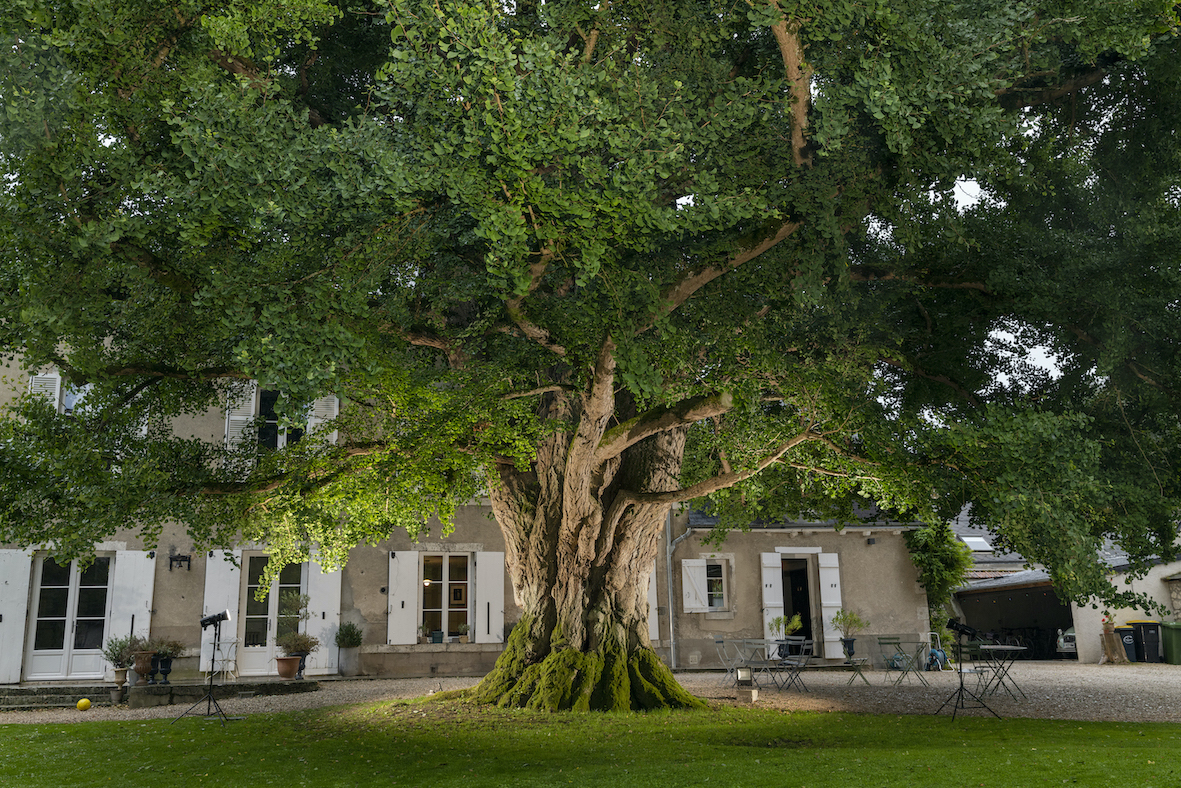
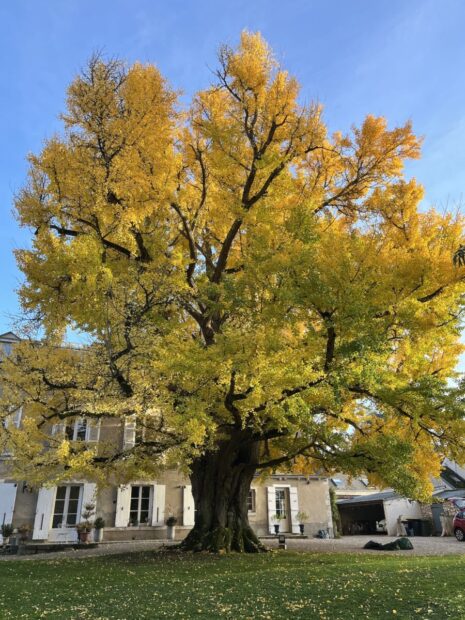
A 170-year-old ginkgo biloba tree at the Domaine Saint-Hilaire in Meung-sur-Loire, France, has been awarded the “People’s Choice” prize in the 2025 “Tree of the Year” competition. The ginkgo, known for its striking golden autumn foliage, is also one of the oldest tree species on the planet.
By Estelle Boutheloup.
The remarkable tree garnered 5,079 votes to win the public prize in the “Tree of the Year” competition, which concluded in December. This year’s contest, organized by Terre Sauvage magazine, the ONF (National Forestry Office) and the A.R.B.R.E.S. association (Remarkable Trees: Assessment, Research, Studies and Preservation), highlights the richness and diversity of France’s tree heritage, including overseas territories. The competition underscores the growing interest in preserving biodiversity and recognizing the cultural significance of trees.
Coralie Lorre, owner of the Domaine de Saint-Hilaire in Meung-sur-Loire (Loiret), described the tree as an immediate draw when she and her family purchased the property. “The tree was definitely a favorite when we bought the house,” she said. Located within the park of a former tannery, the ancient Ginkgo creates a stunning backdrop to the estate, near a branch of the Mauves river. “It’s a rare species for its age, planted around the mid-19th century by the former owner of the tannery, and quite possibly the oldest, or one of the oldest, in the Centre-Val de Loire region. It thrives and offers a spectacular display each autumn with its golden-yellow foliage.”
A Survivor from the Age of Dinosaurs
Ginkgo biloba trees originated in China and arrived in the Netherlands as seeds in the 18th century before being introduced to France. Later, during the 19th century, they were brought to France through diplomatic channels – as gifts from emperors and ambassadors – or by traveling military personnel. Recognizable by its fan-shaped leaves without veins, Ginkgos are also known as “The Tree of 40 Crowns.” According to Georges Feterman, president of the A.R.B.R.E.S. Association, a botanist named M. De Pétigny is believed to be the first to import seedlings to France, “paying five trees at forty crowns apiece.”
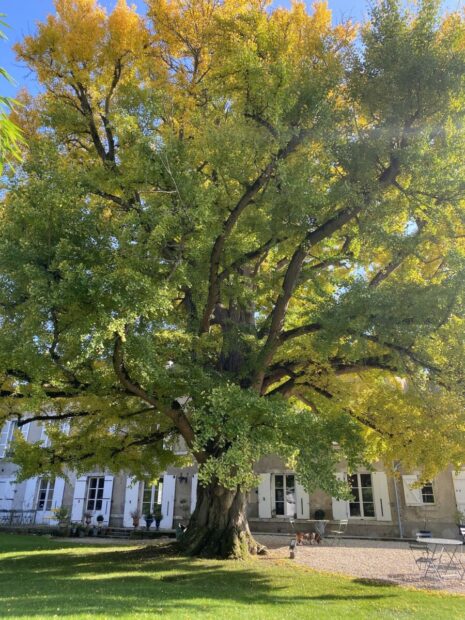
But what truly sets this tree apart is its remarkable history. “It’s one of the oldest species on Earth, a fossil species that appeared at the end of the primary era,” Feterman explained. “A leaf imprint has been discovered – a leaf resembling that of the Ginkgo and a small fern…” Even more remarkably, “The Ginkgo is a tree species that survived all geological catastrophes. It survived the extinction of the dinosaurs as well as the atomic bomb.” These highly resilient trees, now rare in their native China but abundant in Europe – including in England and France – are represented by a prime example in Meung-sur-Loire.
Open House Events
The venerable tree attracts artists who come to paint it, and its leaves inspire potters, sparking interest in visiting the Domaine Saint-Hilaire. “The award generated a lot of buzz among local businesses and helped create connections between neighbors and residents who peek into the property to try and catch a glimpse of it,” Lorre noted. “We’ve decided to host open house events on June 14th and another in the autumn to showcase our Ginkgo and thank those who voted for it.” The tree is a source of pride and contributes to the area’s natural heritage, alongside the Roquelin Gardens, the Folie Hubert, and the Ilex Conservatory. The Ginkgo is also a contender for a European title in the “Tree of the Year” competition.
More information:
