
A Seven-Hour Mystery: Scientists Puzzled by the Longest Gamma-Ray Burst Ever Recorded
Last summer, astronomers detected an extraordinary burst of gamma radiation – the longest “gamma-ray burst” ever observed. Lasting seven hours and consisting of three distinct gamma events within a single day, the phenomenon has left astrophysicists searching for answers. One leading hypothesis suggests a mid-sized black hole consumed a star.
Gamma-ray bursts (GRBs) are, as far as we know, the most energetic explosions in the universe. In a fraction of a second, they release more energy than our Sun will emit over approximately 10 billion years. Most GRBs are fleeting events, quickly fading within seconds or minutes.

Jonathan Granot. Kredit: Open University of Israel.
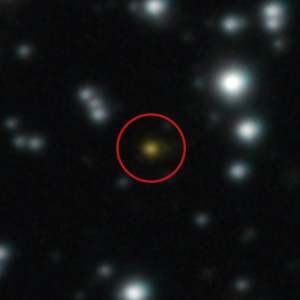
But, on July 2, 2025, a unique event arrived: GRB 250702B. Officially classified as a gamma-ray burst, it actually blazed for seven hours, unleashing three separate gamma events throughout the day. The event also left a lingering afterglow that persisted for months. Scientists immediately recognized this was unlike anything they had previously encountered.
Detected by the Fermi Gamma-ray Space Telescope, GRB 250702B is the longest known gamma-ray burst. Since the first GRB was recognized in 1973, roughly 15,000 have been recorded, with only a handful approaching the duration of GRB 250702B. The repeated nature of the gamma bursts from a single location was also highly unusual. Typically, GRBs are thought to originate from one-time, cataclysmic events, such as the collapse of a massive star or the merger of neutron stars.

Logo. Kredit: Open University of Israel.
Researchers are intensely investigating the nature of GRB 250702B. Jonathan Granot of the Open University of Israel and his colleagues recently proposed one compelling explanation: a mid-sized black hole consuming a star. These black holes, estimated to have masses ranging from a few hundred to around 100,000 times that of our Sun, are theorized to be common, though proving their existence has proven tough.
Granot and his team suggest the black hole tore the star apart, forming a disk of material that it then devoured, triggering an extreme relativistic polar jet whose gamma radiation was detected by Fermi. This process could also explain the unusual repetition of gamma bursts from the same location, as the black hole didn’t consume everything at once. GRB 250702B was observed approximately 18,600 light-years from the center of its host galaxy – a region where wandering mid-sized black holes might be expected.
If Granot and his team are correct – a hypothesis that will be challenging to verify – we witnessed, for the first time, the death cry of a star in the throat of a mid-sized black hole, in the form of an incredibly energetic jet. This would represent one of the most significant events in the universe this decade. The mystery of GRB 250702B remains unsolved, and it will be fascinating to see which explanation scientists ultimately favor.
Video: Record Breaking Cosmic Explosion Was Over a Day Long and Nobody Knows Why
Literatura

