
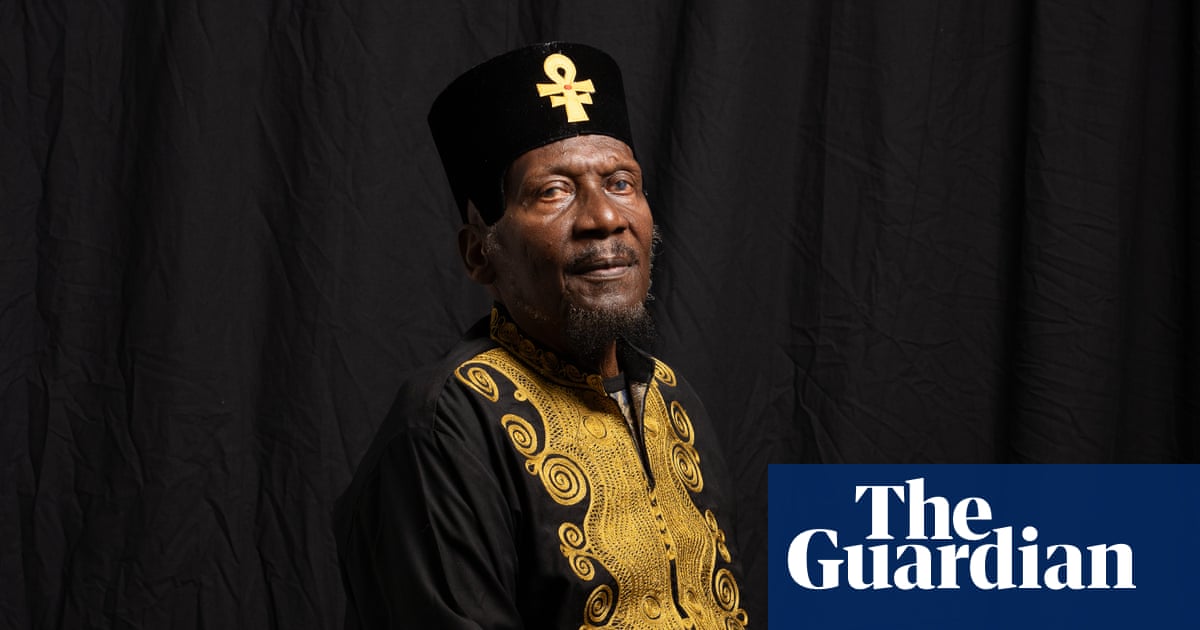
reggae-legend-passes-away-at-81/” title=”Jimmy Cliff Dies: … Legend Passes Away at 81″>Jimmy Cliff, the internationally recognized voice of reggae and star of the groundbreaking film “The Harder They Come,” has died at age 81. News of his passing, confirmed by his wife Latifa Chambers on Monday, marks a significant loss for both the music industry and Jamaica, where Cliff was celebrated as a cultural icon [[1]]. His decades-long career brought reggae to a global audience, earning him numerous accolades and a lasting legacy of socially conscious and optimistic music.
Jimmy Cliff, the iconic reggae singer and actor who helped bring the genre to a global audience, has died at the age of 81. His passing marks a significant loss for the music world and Jamaican culture.
His wife, Latifa Chambers, shared the heartbreaking news on Instagram, stating, “It’s with profound sadness that I share that my husband, Jimmy Cliff, has crossed over due to a seizure followed by pneumonia. I am thankful for his family, friends, fellow artists and coworkers who have shared his journey with him. To all his fans around the world, please know that your support was his strength throughout his whole career … Jimmy, my darling, may you rest in peace. I will follow your wishes.” The message was also signed by their children, Lilty and Aken.
Cliff’s upbeat and optimistic music resonated with fans for decades, producing hits like “You Can Get It If You Really Want,” “I Can See Clearly Now,” and “Wonderful World, Beautiful People.” He was also celebrated for his starring role in the groundbreaking 1972 crime drama, The Harder They Come, a film widely considered a cornerstone of Jamaican cinema.
Cliff was honored with the Jamaican Order of Merit, a distinction he shared with only a select few musicians, including Bob Marley. Jamaican Prime Minister Andrew Holness paid tribute, calling Cliff “a true cultural giant whose music carried the heart of our nation to the world… Jimmy Cliff told our story with honesty and soul. His music lifted people through hard times, inspired generations, and helped to shape the global respect that Jamaican culture enjoys today.”
Born in Saint James, Jamaica, in 1944, Cliff launched his music career in the early 1960s after moving to Kingston and collaborating with producer Leslie Kong. He cleverly wrote a song referencing Kong’s record shop, Beverley’s, to persuade the influential producer – who would become a key figure in reggae – to work with him.
After a string of local hits, Cliff represented Jamaica at the World’s Fair expo in New York in 1964. However, his career truly took off later in the decade when he signed with Island Records. Initially marketed to a rock audience – evidenced by his cover of “Whiter Shade of Pale” – he found London isolating, later describing the city as “a bitch… I experienced racism in a manner I had never experienced before.”
His breakthrough UK hit came in 1969 with the sparkling ska track “Wonderful World, Beautiful People,” which reached No. 6 on the charts. The song’s message of hope and unity, coupled with its critique of societal issues (“cheating, backbiting, scandalising and hating”), became a hallmark of Cliff’s artistry. He continued to blend socially conscious lyrics with infectious rhythms, as demonstrated in songs like “Vietnam,” a plea for peace.
Cliff returned to the UK Top 10 in 1970 with a cover of Cat Stevens’s “Wild World” before landing the lead role in The Harder They Come in 1972, after director Perry Henzell recognized his potential as an actor. The film’s soundtrack, featuring Cliff’s performances of the title track and “You Can Get It If You Really Want” alongside tracks by Desmond Dekker and Toots & the Maytals, played a pivotal role in introducing reggae to a wider audience, particularly in the United States where it was released in 1973.
Cliff reflected on the film’s gritty portrayal of Jamaican life, recalling in the Observer in 2022, “When I came to Kingston I lived in areas that were gangster-infested, and to be quite honest, the only thing that stopped me from joining those gangs full-time was I didn’t know where I would bury my head if my family heard that I was in Kingston firing a gun.”
Throughout the 1970s, Cliff continued to tour and release albums, even making an appearance on Saturday Night Live. He briefly stepped away from music in the mid-to-late 70s, embarking on a journey to Africa to reconnect with his ancestral roots and converting to Islam, influences that were reflected in his 1978 album, Give Thankx.
Bruce Springsteen championed his song “Trapped” by performing it on tour in the early 1980s, and a live version appeared on the massively successful charity album, We Are the World.
In 1994, Cliff experienced a resurgence in popularity with his rendition of “I Can See Clearly Now,” featured on the soundtrack to the Jamaican bobsled film Cool Runnings. The song returned him to the UK Top 40 for the first time since 1970, topped the French charts, and became a hit internationally.
Throughout his career, Cliff collaborated with a diverse range of artists, from the Rolling Stones to Sting. More recently, he partnered with Rancid frontman Tim Armstrong on an EP and album, the latter of which earned him a Grammy Award for Best Reggae Album – one of two Grammy wins from seven nominations.
Cliff’s most recent album, 2022’s Refugees, was created with Wyclef Jean, capping a discography of over 30 studio albums. While best known for his music, Cliff also occasionally returned to acting, notably appearing in 1986’s Club Paradise alongside Robin Williams and Rick Moranis.
