
The 16th Arab Theatre festival concluded Friday in Egypt with a top honor for the Tunisian play “Al-Haribat” (The Runaways), marking a high point for Arab theatrical productions. Held January 10-16 and organized by the Arab Theatre Authority with support from the Egyptian Ministry of Culture, the festival showcased performances from across the region and featured a concurrent playwriting competition-with Egyptian writers taking all three prizes in the children’s category. The event, attended by prominent artists and critics, underscored a commitment to fostering a vibrant and evolving Arab theatre scene.
The Tunisian play “Al-Haribat” (The Runaways), directed and written by Wafa Taboubi, took home the Dr. Sultan bin Muhammad Al Qasimi award for “Best Play” at the 16th Arab Theatre Festival. The production competed against 13 other shows from several countries during the festival, held in Egypt from January 10 to January 16, organized by the Arab Theatre Authority and sponsored by the Egyptian Ministry of Culture. A prominent group of Arab artists and theatre professionals were in attendance under the theme “Towards a New and Renewed Arab Theatre.”
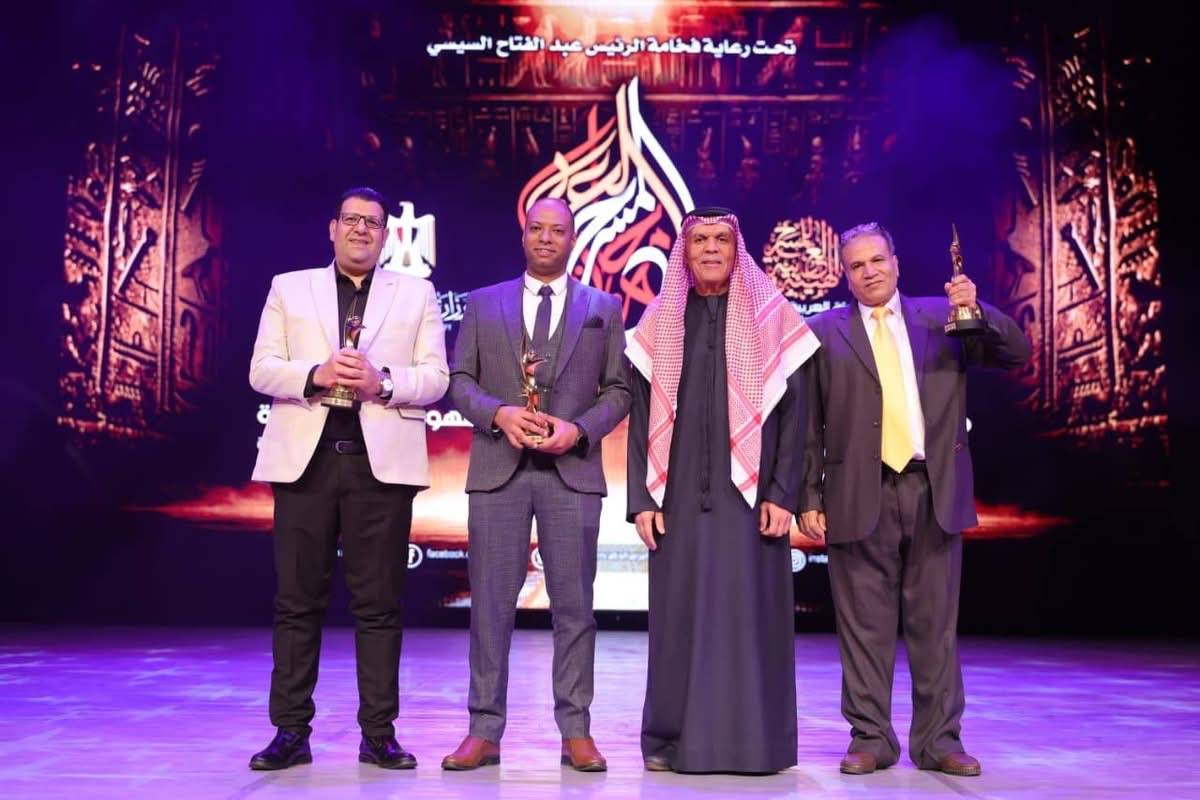
Egyptian Minister of Culture Dr. Ahmed Fouad Heno and the Secretary-General of the Arab Theatre Authority, Ismail Abdullah, honored Taboubi and the play’s team during the ceremony.
In related news, three Egyptian writers swept the awards for the “Playwriting Competition” aimed at children, titled “Our Children are New Heroes in Our Folk Tales.” The winners were Abdel Hakim Rukhiya for his script “Simulating the Biography of Al-Zir,” Mohamed Sorour for “Al-Hilali Al-Saghir,” and Hani Qadri for “Aladdin and a Made-in-China Lamp.”
The closing ceremony, held Friday at the Large Theatre of the Egyptian Opera House, was directed by Khaled Galal and hosted by Rania Farid Shawki. The event featured artistic and performance segments by the Reda Troupe for Folk Arts, affiliated with the Theatre House of the Ministry of Culture, and included a tribute to all the theatrical performances participating in the festival.
The honored performances included “Carmen” and “Sent To” from Egypt, the Qatari show “The Ninth Hour,” the Algerian “The Key,” the Emirati “Baba,” the Lebanese “Picnic on the Line of Contact,” the Jordanian “Frigidaire,” as well as “A Requiem for My Father” and “Sacred Divorce” from Iraq, the Kuwaiti “From Another Angle,” and from Tunisia, “Al-Haribat,” “Jacaranda,” and “Today’s Chemistry,” and from Morocco, “Economic Citizen” and “Windows F.”
Moroccan playwright and critic Bouchra Ammour described the events of the 16th Arab Theatre Festival as “diverse and distinguished.” She affirmed that the organization by the Arab Theatre Authority and the Egyptian Ministry of Culture, along with the professionalism and distribution of logistical tasks, was remarkable in every detail.
“The Arab Theatre Festival has been able to consolidate its foundations in the Arab theatre scene and has become an annual tradition for theatre practitioners in various fields,” Ammour told Asharq Al-Awsat. “The Arab Theatre Authority has maintained its core programs consisting of performances, critical and applied discussions, intellectual seminars, artistic workshops, book signings, and support for writers.” She noted that this year’s performances varied in terms of approach, artistic schools, and social issues, which benefits the Arab audience.
The festival, over its six days, hosted a number of cultural and critical seminars on theatrical performances, in addition to various issues related to Egyptian theatre, its icons, its problems, its techniques, and its development.
Bahraini critic Dr. Zahra Al Mansour affirmed that the festival witnessed a clear diversity in the level of participating performances, with experiences varying between what was striking and artistically diligent, and performances that were more traditional in their approach and tools.
“This diversity is a credit to the festival, as it provides a space to see different theatrical trends and enhances opportunities for dialogue and exchange of experiences between theatre makers from different Arab countries,” Al Mansour told Asharq Al-Awsat, adding that the festival remains an important platform for discovering new experiences and reading the transformations of Arab theatrical discourse in its various aesthetic and intellectual contexts.
Al Mansour noted that the theatrical performances witnessed remarkable interaction from the audience, whose reactions varied according to the different experiences presented, which reflects its importance as a “living space” for the meeting between the performance and the recipient. This interaction opened the door to necessary aesthetic and intellectual discussions and gave the performances their life outside the stage, whether through direct dialogue or subsequent critical reading.
In related news, the 5th Arab Puppetry and Marionette Arts Forum will take place alongside the Arab Theatre Festival, for the first time in Egypt, from January 21 to January 23, with wide Egyptian and Arab participation, including a number of intellectual sessions and puppet shows.
