
The Mercedes-Benz E-Class has long been a benchmark for European mid-size luxury sedans, and the sixth generation continues that tradition with a range of plug-in hybrid powertrains. Recent testing focused on the gasoline-powered E 300 e, evaluating its real-world fuel efficiency.
During testing with the four-door German vehicle, equipped with a 313-horsepower 2.0-liter turbocharged gasoline engine and an electric motor, rear-wheel drive, and a 9-speed automatic transmission, an average fuel economy of 3.60 l/100 km (27.78 km/l) was achieved. The cost for a standard 360 km journey was €26.51 ( €21.24 for gasoline + €5.27 for electricity). Notably, the vehicle traveled 94 km in electric mode when departing Rome.
Most Efficient Plug-in Hybrid in its Class
The Mercedes Classe E, in its plug-in hybrid gasoline configuration, ranks highly in real-world fuel economy tests, earning the title of the most efficient mid-size PHEV. It surpasses the Mercedes E 300 de 4MATIC Plug-in hybrid All Terrain (3.80 l/100 km – 26.3 km/l), Skoda Superb Wagon iV (4.20 l/100 km – 23.8 km/l), Audi A6 Avant 55 TFSI e quattro S tronic (4.50 l/100 km – 22.2 km/l), BMW 330e (4.75 l/100 km – 21.0 km/l), and Volvo V90 R-Design T8 Twin Engine AWD (6.00 l/100 km – 16.6 km/l).
Mercedes Classe E, leading the pack in efficiency
Historically, only the more compact Mercedes Classe C has achieved better results, as demonstrated by the Mercedes C 300 de Plug-in hybrid Station Wagon (2.90 l/100 km – 34.4 km/l) and the Mercedes C 300 e Plug-in hybrid Station Wagon (2.80 l/100 km – 35.7 km/l).
Even the Base Model Offers Advantages
The vehicle tested was a Mercedes E 300 e with EQ Advanced hybrid technology, essentially the entry-level version of the plug-in rechargeable range. This “base” trim level still includes, as standard, 19-inch alloy wheels, LED High Performance headlights, a rearview camera, fabric and synthetic leather interior trim, automatic climate control, keyless-go, and the MBUX Entertainment Plus system on the central display. Plug-in hybrid technology is increasingly becoming a standard feature in luxury vehicles, offering a balance of performance and efficiency.
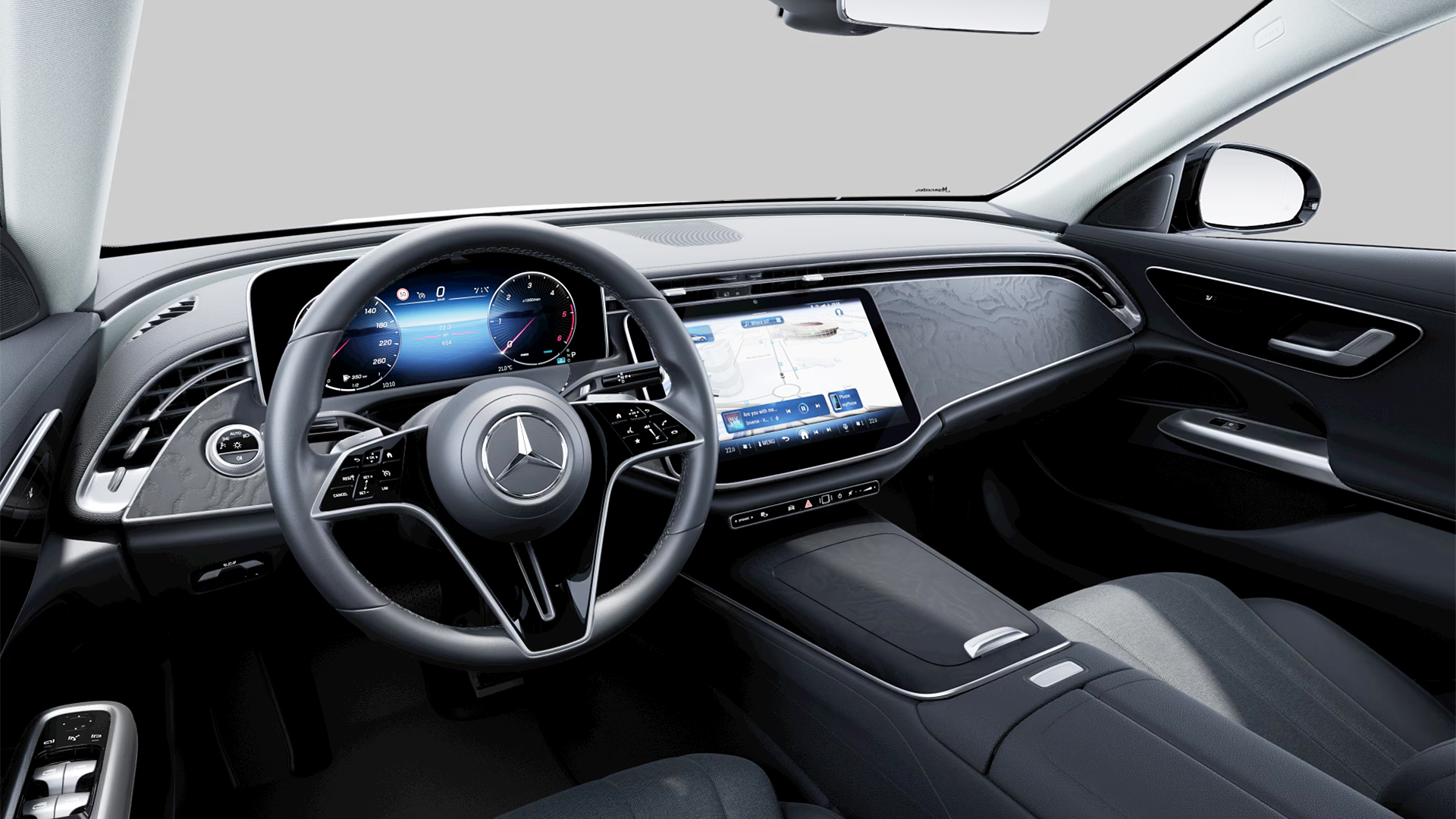
The essential interior of the Advanced trim
Photo by: Mercedes-Benz
Adding hands-free operation for the trunk lid brings the price to €79,987. This is a significant figure, especially considering that personally, I would add electric seat adjustment, a head-up display, digital LED headlights, and convenient DC rapid charging – all optional extras. However, I must admit that even in this somewhat basic trim level, the Mercedes E-Class felt like an excellent grand tourer, comfortable and quiet, technologically advanced in every aspect, relatively spacious, and with a excellent rear cargo area. The power and acceleration are also noteworthy, as is the handling.

Our video review of the Mercedes Classe E
More Than 80 km on Electric Power and At Least 650 km on Gasoline
With the battery charged (19.53 kWh net), I was able to travel at least 80 km in electric mode on mixed routes, reaching a maximum of 110 km on a single charge on an ideal extra-urban route for low consumption.
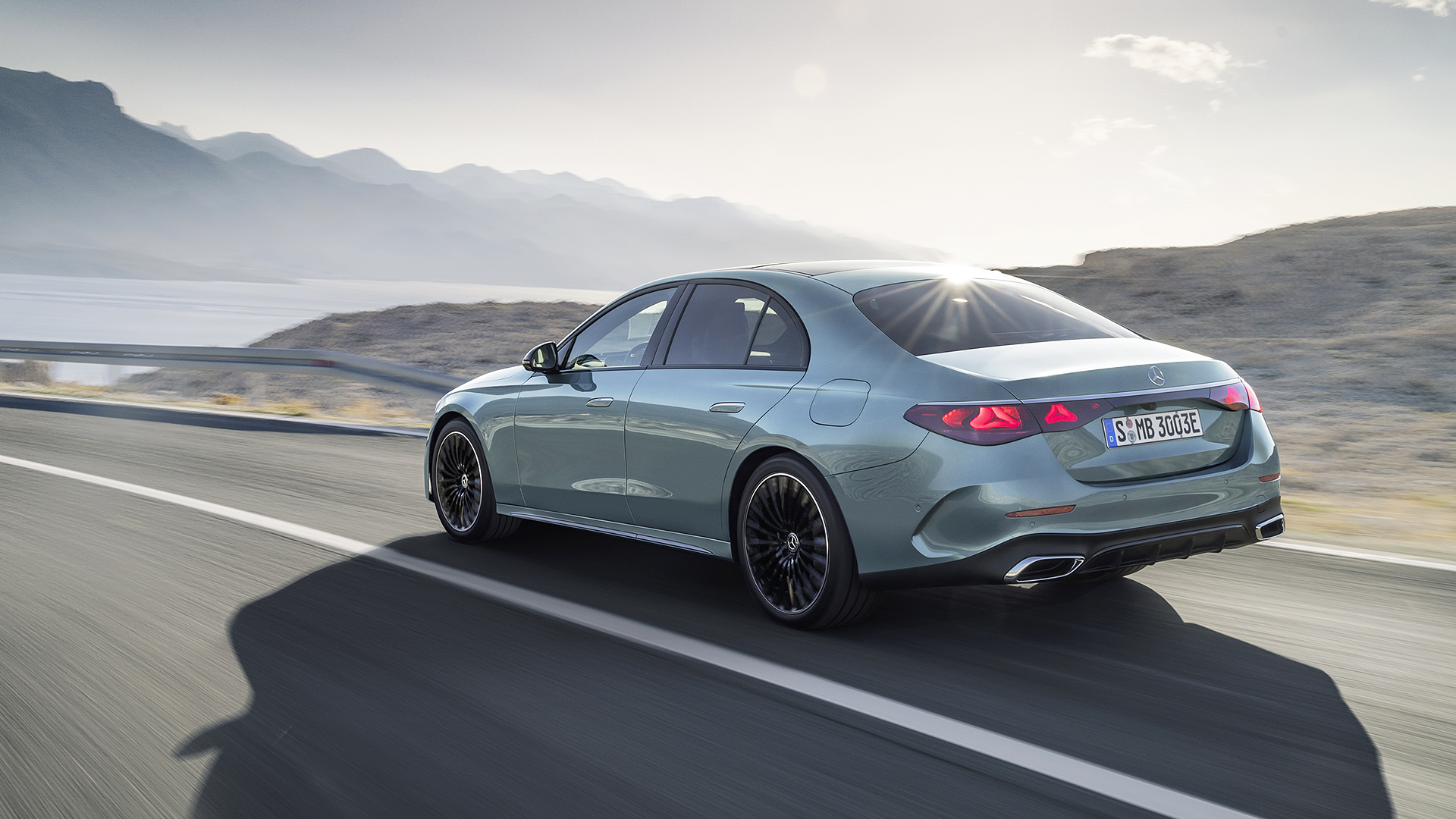
The Mercedes E 300 e with EQ hybrid technology also travels a long distance on electric power
Photo by: Mercedes-Benz
With the battery discharged, gasoline consumption is obviously higher, especially on the highway, but within a range justified by the size and performance of the Mercedes sedan. The 50-liter tank guarantees a good minimum range of 650 km, with a maximum of over 1,000 km under ideal conditions.
Consumption with Discharged Battery
- Mixed urban-extraurban: 6.4 l/100 km (15.6 km/l)
780 km theoretical range - Highway: 7.5 l/100 km (13.3 km/l)
665 km theoretical range - Economy run: 4.1 l/100 km (23.4 km/l)
1,170 km theoretical range
What the Vehicle Registration Document Says
| Mercedes E 300 e with EQ Advanced hybrid technology | |
| Fuel | Hybrid (Gasoline, 1,999 cc) |
| Power | 150 kW |
| CO2 Emissions (WLTP) | 12 g/km |
| Unladen Weight | 2,135 kg |
| Power-to-Weight Ratio | 67.873 kW/t |
| Approval | Euro 6D-ISC-FCM (Compl. Reg. EU 2018/1832 AP) |
Data
Vehicle: Mercedes E 300 e with EQ Advanced hybrid technology
Base Price: €78,315
Test Date: January 16, 2026
Weather (Departure/Arrival): Cloudy, 14° / Cloudy, 7°
Fuel Price: €1.639/l (Gasoline) – €0.27/kWh (electricity)
Total km at the start of the test: 9,149
Total km at the end of the test: 10,568
Average speed on the Rome-Forlì route: 68 km/h
Tires: Pirelli Winter SottoZero 3 – 245/45 R19 102V XL runflat – 275/40 R19 105V XL runflat (EU Label: D, B, 72 dB – C, B, 73 dB)
Consumption
Real Average: 3.60 l/100 km (27.78 km/l)
Onboard Computer: 3.7 l/100 km
At the Pump: 3.5 l/100 km
Discover the methods and criteria of the consumption test
The Bottom Line
Real Cost: €26.51 (€21.24 for gasoline + €5.27 for electricity)
Monthly Cost: €47.20 (800 km per month) *
How far with €20: 339 km *
How far on a full tank: 1,389 km
* Excluding the cost of electricity
The Rome-Forlì test also has its updated ranking of fuel consumption, as well as the ranking of real electric range for plug-in hybrids. Check them out for some surprises.
