
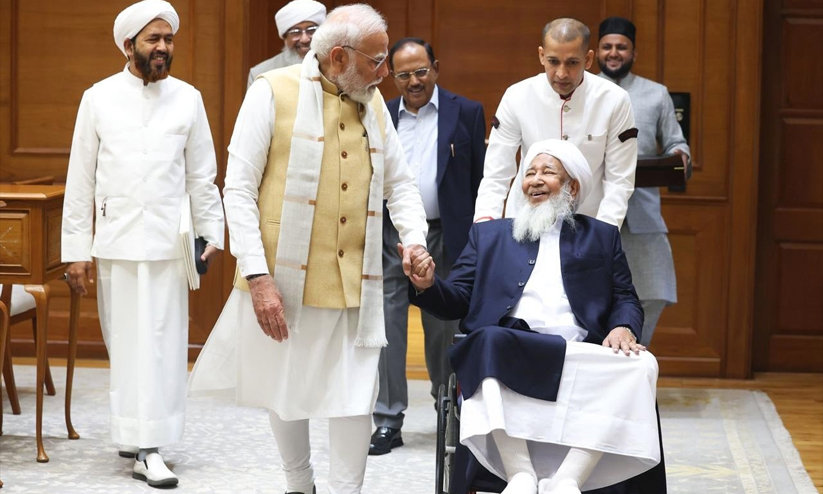
New Delhi – Indian Grand Mufti Kanthapuram A.P. Aboobacker Musliyar met with Prime Minister Narendra Modi on February 16, 2026, to discuss a range of issues including minority welfare and international affairs. The meeting underscores the Indian government’s ongoing dialogue with religious leaders on matters of national importance.
During the meeting, Musliyar shared concerns and requests that arose during a recent trip across Kerala, according to a social media post from the Mufti. He also presented Modi with a Ramadan message. Discussions encompassed social, humanitarian, educational, and development topics, as well as current international events.
Musliyar noted that the Prime Minister expressed appreciation for the educational and social welfare initiatives undertaken by the Samastha Kerala Jamiyyathul Ulama and the Markaz, as well as efforts to enhance India’s global standing. “The Prime Minister said that he is aware of the educational and social welfare activities carried out by the Jamiyyathul Ulama and the Markaz, and that they are commendable,” Musliyar wrote on social media.
Kanthapuram A.P. Aboobacker Musliyar’s post:
Met with Honorable Prime Minister Shri. Narendra Modi in Delhi today. Various social-humanitarian-educational-development issues, minority welfare matters, and international events were discussed. The needs that arose from various sections of society during my Kerala trip, themed “With Humanity,” were also brought to the Prime Minister’s attention. A sacred Ramadan message was also conveyed.
The Prime Minister shared that he is aware of the educational and social welfare activities carried out by the Jamiyyathul Ulama and the Markaz, and that they are commendable.
Topics discussed included inclusive development for all sections of the population, the importance of considering happiness indices and human development alongside economic progress, the need for equitable resource allocation proportional to population and regional balance, concerns regarding Waqf and SIR, the preservation of ancient mosques and Islamic heritage sites, the reinstatement of minority education welfare schemes such as the Maulana Azad National Fellowship, justice for the innocent in cases like the Bareilly incident, addressing the challenges faced by Islamic institutions in North India from Mubarakpur Jamia Ashrafiyya, a train service connecting pilgrimage centers in South India, the development of the Aligarh University Malappuram center, and the necessity for the central government to engage with minority communities across the country.
Perode Abdurahman Sakhafi, Secretary of the Samastha Kerala Jamiyyathul Ulama, and Dr. Mohammed Abdul Hakeem Azhari, President of S.Y.S., also participated in the meeting.
