
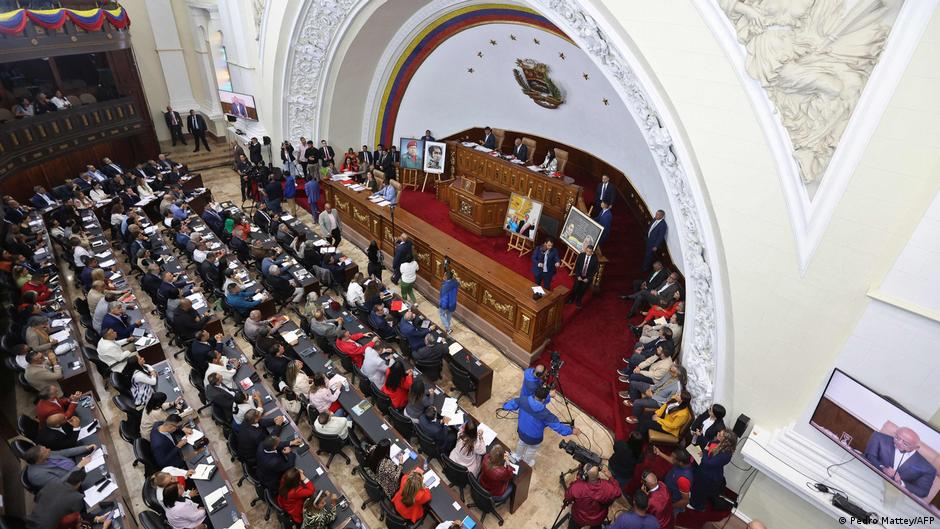
Venezuela’s National Assembly approved a sweeping amnesty law on Thursday, February 19, 2026, a move expected to lead to the release of hundreds of political prisoners held during 27 years of Chavismo. The legislation was unanimously approved by the parliament and swiftly enacted by interim President Delcy Rodríguez, signaling a potential shift in the country’s political landscape amid ongoing international pressure. The development comes as Venezuela continues to grapple with a severe political and economic crisis, and follows a recent, and at times tense, period of negotiations with Washington.
Following the law’s enactment, Rodríguez stated, “One must know how to ask for forgiveness and one must also know how to receive forgiveness,” emphasizing that the law should result in a large-scale release of political prisoners.
“One must know how to ask for forgiveness and one must also know how to receive forgiveness,” Rodríguez said from the presidential palace in Caracas, according to AFP.
Rodríguez is governing under pressure from Washington and initiated a process of releasing prisoners prior to the proposal of the amnesty. According to the NGO Foro Penal, 448 prisoners have been released, but 644 remain incarcerated.
“The only thing I regret is that such regrettable and catastrophic events had to occur for all of us to seek and promote brotherhood, unity, and peace in the Republic,” said Jorge Rodríguez, President of the National Assembly and brother of the interim President.
Unanimity
The law passed with unanimous support. Maduro’s party holds an absolute majority in the Assembly, though some concessions were made to a tiny number of opposition members.
The session was delayed by two and a half hours as lawmakers engaged in negotiations.
“Today, yesterday, and all these days, but especially today, was a day of profound debate,” said Deputy Rodríguez at the start of the session.
Article 7, which had stalled debate on February 12, was modified and approved unanimously.
The revised article stipulates that the amnesty applies to “any person who is or may be prosecuted or convicted of crimes or offenses committed” during the 27 years of Chavismo, provided they either are currently subject to legal proceedings or submit to the jurisdiction of the courts – a system critics allege is biased in favor of the ruling party. The modern text also allows those in exile to submit their requests through a legal representative.
“After submitting the amnesty application, the person may not be deprived of liberty for the acts provided for in this law and must appear personally before the competent court for the purpose of granting the amnesty,” the text reads.
Delcy Rodríguez herself has called for a deep reform of the judicial system.
Exclusions
Article 8 lists the specific events covered by the amnesty, ranging from the coup against Hugo Chávez and the 2002 oil strike to protests against Maduro’s disputed reelection in 2024.
Critics had argued that the amnesty should encompass all 27 years of Chavismo without exception, but this position was ultimately rejected.
Article 9 excludes from the amnesty violations of human rights or crimes against humanity, as mandated by the Constitution.
It also excludes “persons who are or may be prosecuted or convicted of promoting, inciting, requesting, invoking, favoring, facilitating, financing or participating in armed actions or force against the people, the sovereignty and the territorial integrity of the Bolivarian Republic of Venezuela by States, corporations or foreign persons.”
Venezuela was bombed by the United States less than two months ago.
Opposition leader Machado, for example, has been accused on multiple occasions of calling for foreign intervention, as have other leaders such as Leopoldo López. A source told AFP that a special commission created under the law will review these cases individually.
Machado is currently in the United States, after spending more than a year in hiding in Venezuela. López has been in exile in Spain since 2020.
Independent experts from the United Nations have emphasized that the amnesty “must apply to all victims of illegal prosecution and be integrated into a comprehensive process of transitional justice.”
Hunger Strike
Dozens of family members have been camping outside prisons since the first announcements of releases on January 8. Many followed the session in silence on their cell phones, according to AFP.
The 448 prisoners who have been released were granted conditional freedom, a point activists emphasize: the amnesty should grant full freedom.
A hunger strike initiated on February 14 by a group of 10 women, of whom only one remained, ended with the approval of the law.
mg (afp, efe)
