Geopolitical tensions are driving up oil prices, with Brent crude rising 1.86 percent to $71.66 (1480 CZK) per barrel on Friday, February 20, 2026.
West Texas Intermediate (WTI) crude also saw an increase, climbing 1.9 percent to $66.43 per barrel.
The price surge follows a more than four percent jump on Wednesday, marking the largest daily increase since October of last year.
Gold, often seen as a safe-haven asset during times of uncertainty, also rose on Wednesday, increasing by two percent to surpass $2,000 (103,000 CZK) per troy ounce.
On Thursday, the price of gold continued to climb, increasing by an additional 0.2 percent.
Recent diplomatic talks between U.S. And Iranian envoys in Geneva, focused on Iran’s nuclear program, have added to market anxieties.
U.S. Vice President J.D. Vance stated on Tuesday that Iranian negotiators did not acknowledge certain “red lines” established by President Donald Trump.
Simultaneously, the United States is reportedly deploying a significant number of ships, fighter jets and logistical aircraft toward Iran.
In response, Iran conducted joint military exercises with Russia in the Gulf of Oman and the northern Indian Ocean on Thursday.
Concerns over a potential conflict in Iran are fueling fears of disruptions to global oil supplies and subsequent price increases.
“Renewed geopolitical tensions between the U.S. And Iran are now clearly impacting prices,” said Capital.com’s chief market analyst, Daniela Hathorn.
A Critical Shipping Lane
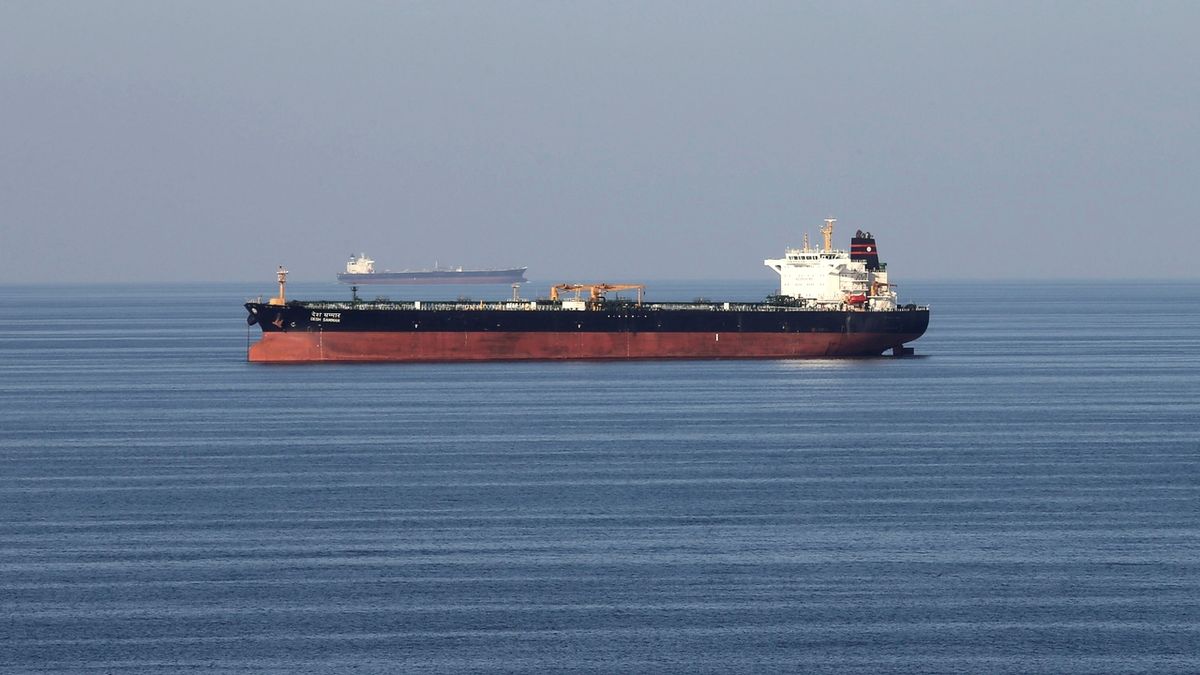
The Strait of Hormuz, a narrow waterway off the coast of Iran connecting the Persian Gulf to the Gulf of Oman, is a crucial chokepoint for global oil shipments.
More than 20 percent of the world’s oil supply – approximately 20 million barrels daily – and a significant portion of liquefied natural gas, transits this vital trade route.
Any blockage of the strategic strait, which Iran has previously threatened to close, would severely restrict trade and drive up oil prices.
However, Iran has so far refrained from such action, likely due to the risk of widespread international condemnation.
“The latest price movement in oil signals that the market is pricing in a substantial geopolitical risk premium, as the world’s most key oil artery is once again within range of conflict,” noted Ole Hansen, an analyst at Saxo Bank.
Iranian media reported on Thursday that Iran had partially closed the Strait of Hormuz due to planned naval exercises.
Hathorn noted that even limited disruptions to this shipping lane could cause an “immediate shock” to oil supplies, particularly for China.
The uncertainty is also impacting equity markets.
On Thursday, the Dow Jones Industrial Average fell 0.54 percent, the S&P 500 dropped 0.28 percent, and the Nasdaq Composite declined 0.31 percent.
Dennis Follmer, chief investment officer at Montis Financial, believes that protecting oil shipments through the Strait of Hormuz is a priority for the White House, given the importance of low inflation and affordable oil prices.
“That means a priority is a diplomatic solution, and only if that’s not possible, a military plan that protects the flow of oil as much as possible,” he said.
CNN recalls that when a conflict between Israel and Iran erupted last June, and the U.S. Conducted strikes on Iranian nuclear facilities, oil prices also surged. Similar concerns about Iran closing the Strait of Hormuz arose at that time, but did not materialize. Following the de-escalation of the conflict, oil prices subsequently decreased.
Western media reports indicate that the Iranian theocracy is currently more vulnerable than ever.
It has been weakened by last year’s 12-day Israeli and American attacks on Iranian nuclear facilities and the military, as well as January’s widespread protests, which the government in Tehran violently suppressed.
However, as noted by CTK, Iran remains capable of striking Israel and U.S. Bases in the region and has warned that any attack would trigger a regional war.