
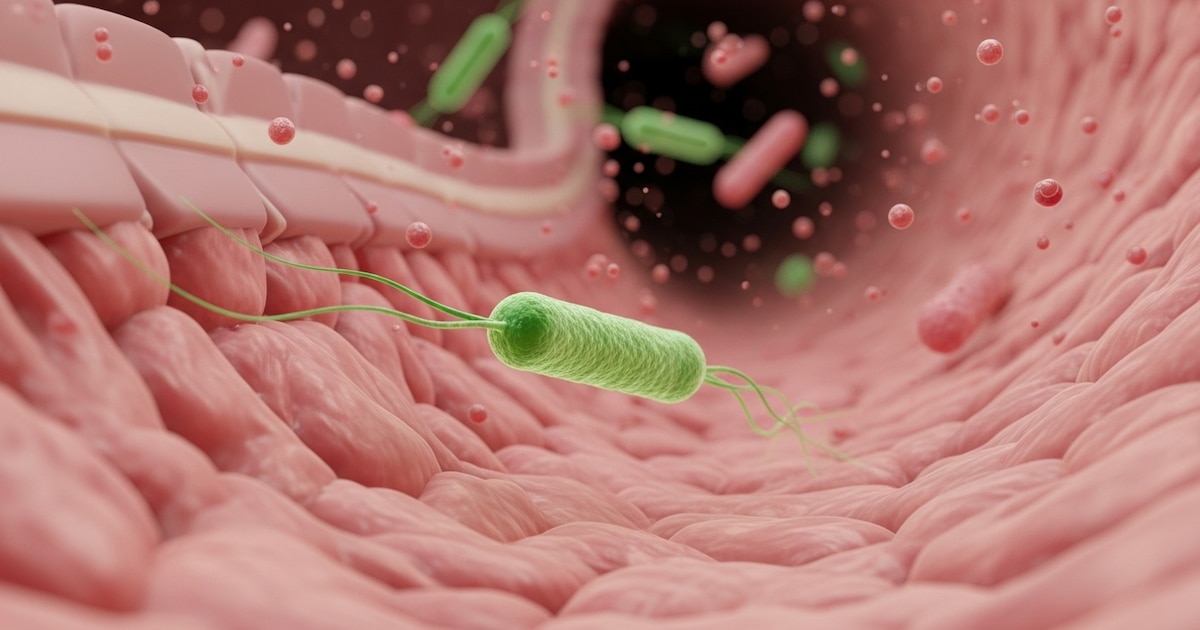
A newly discovered virus within the intestinal bacteria Bacteroides fragilis has been linked to an increased risk of colorectal cancer, according to an international study led by the University of Southern Denmark and Odense University Hospital. This finding highlights the complex interplay between the gut microbiome and cancer development.
Published in Communications Medicine, part of the Nature portfolio, the research identified a robust statistical association between the presence of this bacteriophage and the disease. However, researchers emphasize that it has not yet been determined if the virus plays a causal role in tumor development.
Colorectal cancer is a leading cause of cancer-related deaths worldwide, and even as factors like age, diet, and lifestyle contribute to risk, many of the underlying mechanisms remain unclear.

For years, scientists have linked the bacterium Bacteroides fragilis to colorectal cancer, but a puzzle remained: this bacterium is a normal part of a healthy gut flora and is found in both people with and without the disease.
Dr. Flemming Damgaard, a physician and researcher at the Department of Clinical Microbiology at Odense University Hospital and the University of Southern Denmark, underscored the “paradox” of repeatedly finding the same bacterium associated with cancer, despite its normal presence in most individuals.
This led researchers to investigate whether there might be internal differences within the bacterium itself that could explain its association with colorectal cancer.

The research took a step further by identifying that it wasn’t just the bacterium, but a specific virus—a bacteriophage—residing within it, that appeared more frequently in patients with colorectal cancer.
The team, led by Damgaard, examined the gut microbiome of a population of approximately two million people in Denmark, observing that patients with severe infections from Bacteroides fragilis had a notably higher incidence of colorectal cancer compared to the general population. This initial finding, detected in Danish samples, allowed the development of a concrete hypothesis: that the presence of the virus within the bacteria could be the differentiating factor.
The hypothesis was tested in an international analysis of fecal samples from 877 people from Europe, the United States, and Asia.
The results indicated that patients with colorectal cancer were twice as likely to carry this virus in their gut microbiome compared to healthy subjects. The statistical association was replicated across all populations studied, reinforcing the global relevance of the finding.

Although the relationship between the virus and cancer is statistically significant, researchers stress that the virus has not been proven to cause the disease.
Damgaard remarked that We see still unknown whether this bacteriophage actively contributes to tumor development or if its presence is simply a marker of changes in the intestinal environment.
The virus could alter the properties of the bacteria, modifying the intestinal environment, or it could simply be an indicator of biological processes that are not yet known.
Experts from the University of Southern Denmark emphasized that the discovery opens new avenues of research into the role of microorganisms in oncogenesis.
“We discovered a new, previously undescribed virus that infects intestinal bacteria in patients with colorectal cancer,” Damgaard noted, adding that “in the long term, it may be possible to detect these viruses in stool samples to assess the risk of colorectal cancer and potentially improve prevention and treatment.”
Currently, diagnosis is based on the detection of occult blood in stool, but the authors suggest that in the future, specific tests could be developed to identify the presence of these viruses as a complementary screening tool.

In preliminary analyses, certain viral sequences allowed for the identification of approximately 40% of colorectal cancer cases, while most healthy people did not present that genetic signal.
Up to 80% of the risk of developing colorectal cancer is attributed to environmental factors, including the composition of the intestinal microbiome, which harbors thousands of bacterial species and a remarkable diversity of genetics. This complexity has historically made it difficult to identify differences between healthy individuals and those who develop the disease, but the discovery of these viruses could aid clarify such distinctions.
The team led by Damgaard continues its work on three parallel projects: culturing Bacteroides fragilis carrying the virus in artificial intestinal models, searching for the bacteria and virus directly in tumor tissues, and evaluating in genetically predisposed mice to determine if the presence of the virus accelerates tumor development.

The epidemiological context reinforces the importance of these advances: colorectal cancer is the second most frequent cancer when considering both men and women, and ranks among the leading causes of death globally.
The disease often progresses silently, without obvious symptoms in its early stages, making early detection difficult. Recent studies have alerted to an increase in cases in young adults, underscoring the require not to underestimate nonspecific symptoms at any age.
Experts emphasize that prevention and early diagnosis are key to improving survival. Tools such as colonoscopy and the fecal immunochemical test (FIT) allow for the detection of polyps or lesions prior to tumor development and have been shown to reduce mortality.

Leading international medical societies recommend starting screenings at age 45, earlier for those with a family history or persistent symptoms.
Among the warning signs that require immediate attention are persistent changes in bowel habits, abdominal pain or discomfort, blood in the stool, unexplained fatigue, and unexplained weight loss.
Despite the fact that many adults postpone preventive studies, such as colonoscopies, due to lack of information or embarrassment, experts insist on the need to consult a doctor for any symptom and not delay diagnostic studies.
Researchers from the University of Southern Denmark and Odense University Hospital cautioned that these results are preliminary and experimental. Further studies are needed before considering clinical applications based on viral detection.
