
Published February 26, 2026 at 5:12 PM
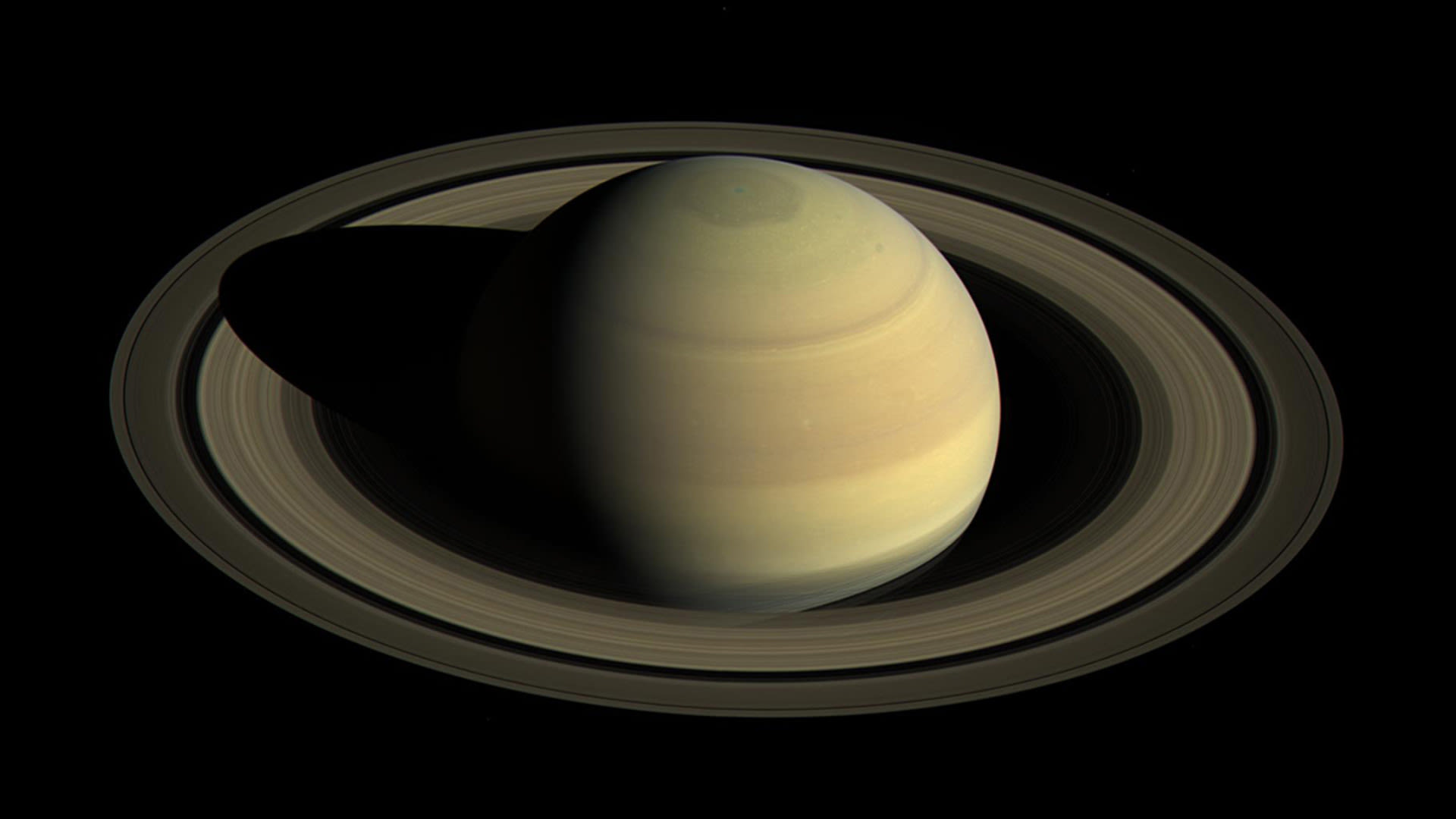
A cosmic collision followed by a cascading reaction may explain the origin of Saturn’s rings. Details.
An Answer Finally Emerges
Astronomers believe they’ve solved one of the solar system’s biggest mysteries: how Saturn’s iconic rings and its largest moon, Titan, formed. A latest study suggests a massive impact between two ancient moons profoundly shaped the Saturnian system hundreds of millions of years ago. This discovery offers new insight into planetary formation and the dynamic history of our solar system.
Born From Planetary Collision
Titan, Saturn’s largest moon, has long puzzled scientists. Larger than Mercury and half the size of Earth, it possesses a unique, dense atmosphere within the solar system. It exhibits a range of characteristics difficult to reconcile with a slow, calm formation process. The new hypothesis proposes that Titan wasn’t built through gradual accretion of material, but rather from a colossal impact between two ancient moons approximately 400 to 500 million years ago.
According to lead study author Matija Ćuk, a now-vanished moon collided with a precursor moon to Titan. This collision not only merged the two bodies but also altered Titan’s orbit and helps explain some of the moon’s astonishing features that previously lacked clear explanations.
The Rings’ Origins
However, the impact’s effects weren’t limited to Titan. Simulations suggest debris from these violent encounters disrupted the orbits of other Saturnian moons. These disruptions triggered a series of collisions between smaller satellites, generating a large amount of ice and dust that subsequently spread around Saturn to form its famous rings. This perspective suggests a relatively young age for the rings, likely only a few hundred million years old compared to the planet’s age.
The theory could also explain several other aspects of the Saturnian system, including Saturn’s misalignment with Neptune’s orbit and the peculiar shape of other moons like Hyperion, which may be a fragment from these collisions.

Data from the Cassini-Huygens mission (2004-2017) provides a strong foundation for these simulations and interpretations. Cassini measured Saturn’s mass distribution, observed its moons with high precision, and gathered clues about the forces at play within its rings. This data now allows researchers to move beyond simple theoretical models and propose dynamic models of the system’s overall evolution.
