
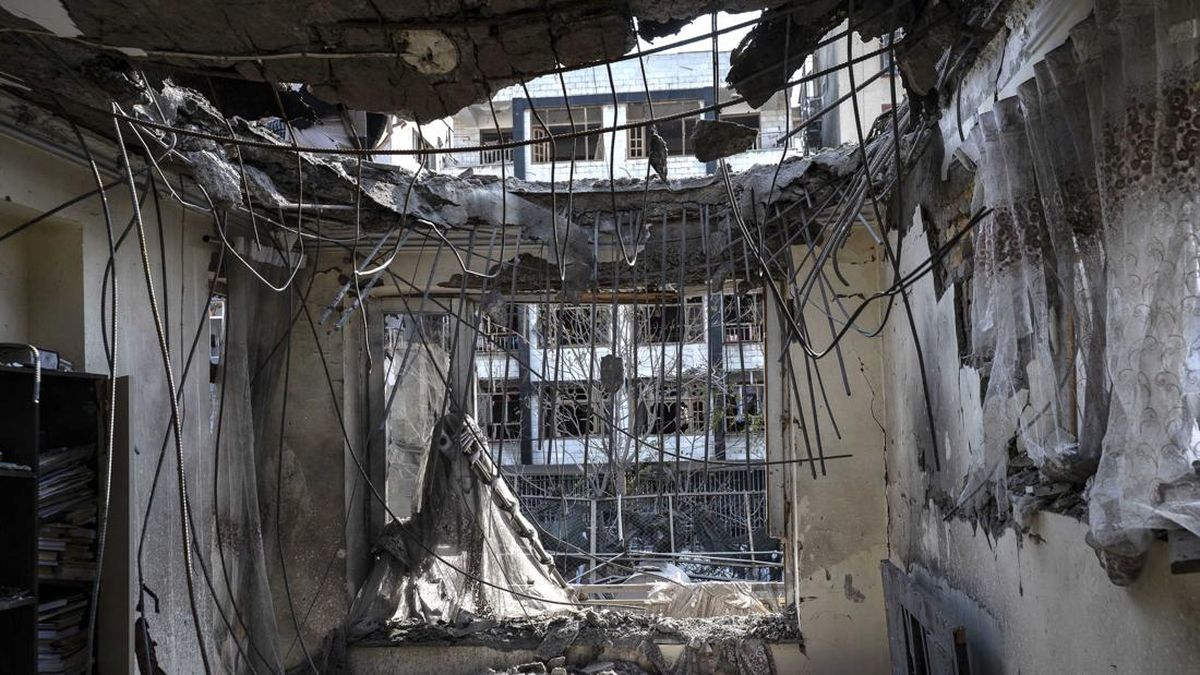
Pakistan launched airstrikes against the capitals of Kabul and Kandahar, Afghanistan, on Friday, February 27, 2026, hours after Taliban forces attacked a Pakistani border post. The escalating conflict between the two nations raises concerns about regional stability.
Both militaries reported dozens of soldiers killed in the border violence, which follows a series of Pakistani strikes into Afghanistan and clashes along the frontier in recent months.
ADVERTISEMENT
SCROLL TO CONTINUE WITH CONTENT
“Hits were carried out on defensive Taliban targets in Kabul, Paktia, and Kandahar,” Pakistan’s Information Minister Attaullah Tarar wrote on X.
In Kabul, AFP reporters heard the sound of jet fighters and several loud explosions, followed by bursts of gunfire, for more than two hours.
A journalist with AFP in Kandahar, the base of Taliban Supreme Leader Hibatullah Akhundzada, similarly reported hearing fighter planes overhead.
The Taliban government confirmed the Pakistani airstrikes, but spokesperson Zabihullah Mujahid said there were no casualties.
Hours earlier, Mujahid announced a “large-scale offensive operation” on the Pakistani border “in response to repeated violations by the Pakistani military.”
Afghanistan’s Defense Ministry reported that eight of its soldiers were killed during the ground operation.
An Afghan official also reported that several civilians were injured near the Torkham border crossing, at a camp for people returning from Pakistan.
“A mortar shell hit the camp and, unfortunately, seven of our refugees were injured, with the condition of a woman being serious,” said Qureshi Badlun, head of information for Nangarhar Province.
Pakistan launched its airstrikes into Afghanistan days after a series of deadly bombings occurred within its borders, including an attack on a Shia mosque in Islamabad that killed 40 people, and claimed by ISIS.
The regional affiliate of ISIS Pakistan, Islamic State Khorasan Province, also claimed responsibility for a deadly bombing at a restaurant in Kabul last month.
The two countries have been engaged in clashes, with the border largely closed since fighting in October.
The Taliban’s military operation followed Pakistani strikes on the provinces of Nangarhar and Paktika on the night of February 23, which, according to the UN mission in Afghanistan, killed at least 13 civilians.
The Taliban government stated that at least 18 people were killed and disputed Pakistan’s claim that the operation killed more than 80 of its forces.
Both sides also reported cross-border fire on Tuesday, with no reported casualties.
Relations between the two countries have deteriorated in recent months, with most land crossings closed since deadly clashes in October that left more than 70 people dead on both sides.
Several rounds of negotiations have taken place following an initial ceasefire mediated by Qatar and Turkey, but those efforts have failed to produce a long-term ceasefire agreement.
Saudi Arabia intervened earlier this month to mediate the release of three Pakistani soldiers captured by Afghanistan in October.
Islamabad accuses Afghanistan of failing to act against militant groups carrying out attacks in Pakistani territory, accusations denied by the Taliban government.
(rds)
Pakistan’s defense minister has declared “open war” with the Taliban, according to reports, as tensions escalate following the airstrikes. The development underscores growing regional tensions and the potential for a wider conflict. The situation is particularly concerning given the complex security landscape in the region and the presence of various militant groups.
