
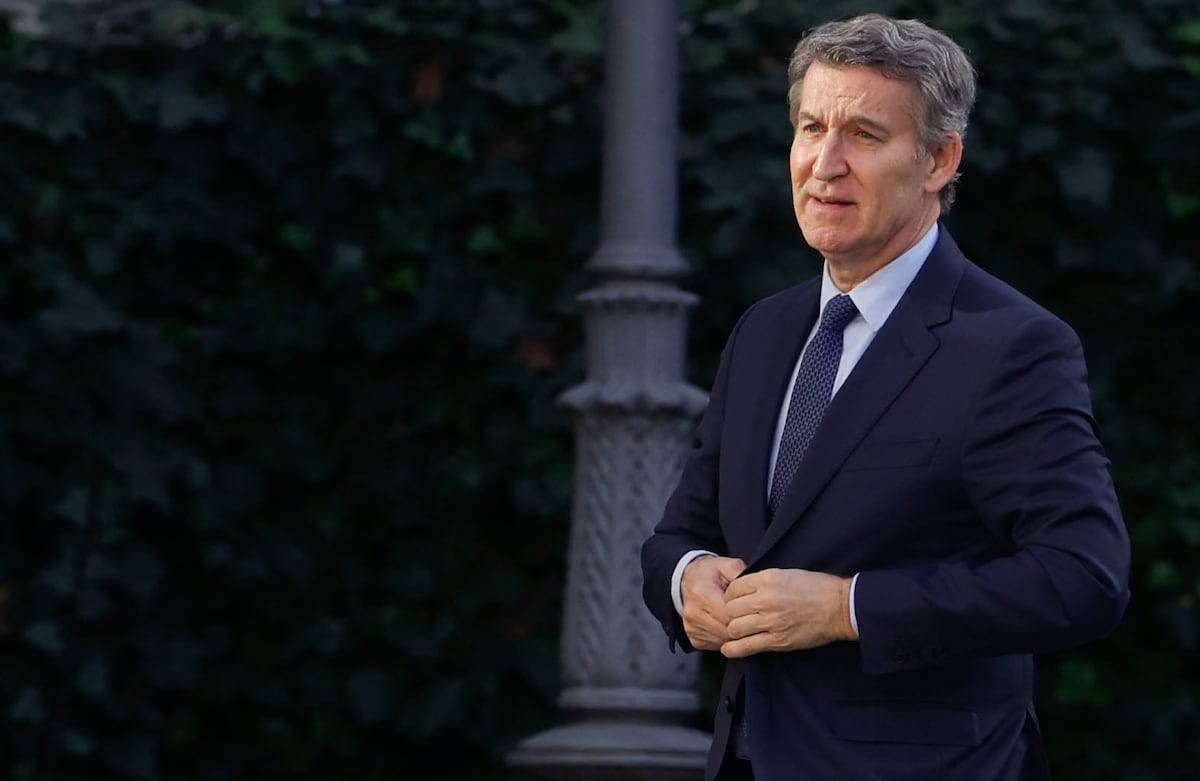
Spain’s People’s Party (PP) leader, Alberto Núñez Feijóo, has moved to centralize control over negotiations with the far-right Vox party regarding regional government formations, a shift that is already creating friction within the party. The move comes as the PP seeks to project stability ahead of potential national elections.
The change in strategy marks a departure from Feijóo’s previous approach of allowing regional PP leaders autonomy in negotiating with Vox. Previously, tensions existed between Feijóo and former PP leader Pablo Casado, with the Galician PP resisting Casado’s attempts to share the stage at a party congress in July 2021. Sources at the time said that Feijóo’s team wanted to maintain control over appearances and messaging.
Nearly four years after becoming the PP’s national leader, Feijóo has decided to directly oversee agreements with Vox, a decision announced whereas negotiations were already underway in Extremadura and Aragon. Two of Feijóo’s top aides, Secretary General Miguel Tellado and Chief of Staff Marta Varela, will now be involved in supervising the regional talks.
The increased oversight hasn’t been without immediate challenges. A planned meeting with Vox on February 27th was canceled after the PP publicized the meeting before it took place, prompting a rebuke from Vox officials who said they wouldn’t negotiate with a party that lacked seriousness.
Several regional PP leaders have expressed discomfort with the national party’s intervention. Juan Manuel Moreno Bonilla, the president of Andalusia, stated that he prefers negotiations to be conducted at the regional level, emphasizing his confidence in securing a majority without needing to reach an agreement with Vox. “I don’t foresee having to reach an agreement with Vox because I’m going to work for a stable government,” Moreno Bonilla said in a recent interview.
The president of Castilla y León, Alfonso Fernández Mañueco, who faces elections on March 15, has remained publicly silent on the issue. One PP source suggested that national intervention could harm regional candidates facing elections. “Electorally, that message of intervention from Génova destroys the barons who are going to celebrate elections,” the source said.
According to one veteran PP insider, centralized control often creates tension. “The intervention of Génova always goes badly,” they said. “But you also can’t let things happen completely unchecked, as Feijóo did at the beginning of the legislature with the pact of Mazón with Vox. Now, the intervention of Génova in the territories will always be a process of tension. The national party can control, but imposing is too much.”
For now, Génova will only be directly involved in negotiations in Extremadura and Aragon. Those close to María Guardiola, the PP leader in Extremadura, argue that the national intervention has strengthened her position against pressure from Vox. They maintain that negotiations will continue to be led by Guardiola in Extremadura. “We believe the national position is necessary to avoid falling into Vox’s framework,” they said. “It shouldn’t be that Vox tries to make it seem like You’ll see different PP parties.”
PP officials explain the shift was prompted by threats from Vox leader Santiago Abascal to call for a repeat election in Extremadura. “If the national leadership of Vox is talking to the autonomous communities of the PP, our obligation is to participate. But also, it would be anomalous to be like spectators if repeat elections are being discussed,” a source in Génova said. “Vox has very different approaches in Aragon and Extremadura, making asymmetrical demands. We will accompany Guardiola and Azcón and perhaps later Mañueco. We will not get involved in specific details.”
This fresh approach contrasts with Feijóo’s initial stance after the 2023 regional and municipal elections, when he allowed regional candidates more leeway in forming governments. At that time, the national leadership emphasized that each region had a unique political reality and that those who participated in the elections should lead the conversations to form a government. This approach allowed the national party to distance itself from potentially controversial decisions.
“The problem is that now, if the negotiations fail, it’s no longer a problem for Guardiola and Azcón, but for Feijóo,” warned one regional PP leader. The situation has already hit some snags, as Vox reacted angrily to a framework document presented by the PP, accusing them of treating Vox as “savages” for including a requirement to respect Spanish law and unity. Vox subsequently canceled a planned meeting with PP negotiators on February 27th.
The PP has also taken on the political cost of presenting a framework document for negotiations with Vox that adopts positions favored by the far-right on issues like immigration and the environment. The document rejects climate policies that “destroy jobs” and claims that “irregular immigration has reached intolerable levels,” while also broadly condemning all forms of violence. The move represents a shift away from the center, and Moreno Bonilla, considered a moderate within the PP, has defended the document with apparent discomfort, stating that it is “very generic and speaks of gender violence clearly.” “Vox and PP are not the same,” Moreno Bonilla emphasized, as the ideological boundaries between the two parties turn into increasingly blurred.
Negotiations have gotten off to a rocky start, and it remains unclear when they will yield results. However, the prevailing opinion within the PP is that an agreement will not be possible until after the elections in Castilla y León on March 15. That would mean postponing María Guardiola’s investiture vote, scheduled for March 3. A deal in Aragon, where the PP may concede the presidency to Vox, could come sooner.
Both communities still have time before being forced to call for new elections. Extremadura has until May 3. Delaying a resolution could mean more than four months of instability after the elections held on December 21, a lengthy period for a move intended to prevent political instability due to a lack of budgets.
“An agreement with Vox will happen. The question is when and how,” summarized one PP official. “When is clear: after Castilla y León. And in terms of how, Vox wants to impose its conditions, because it is afraid of the bear hug, it has seen what has happened to Ciudadanos, Podemos and Sumar,” they warned. “If they see that they are accepting the conditions of the PP, they will withdraw from the negotiation. The PP will have to swallow many frogs to reach an agreement.”
