
Italians and Germans fondly remember the summer of 2006: the FIFA World Cup in Germany went down in history as the “Sommermärchen,” or summer fairytale. The only disappointment for the hosts was losing the semi-final against Italy, who went on to become world champions. Around the same time, Opel unveiled a car poised for success in both countries.
The Corsa D was first publicly revealed in July 2006, succeeding the Corsa C, at the British International Motor Show in London. The new subcompact arrived in dealerships starting in October 2006.
Related to the Fiat Grande Punto
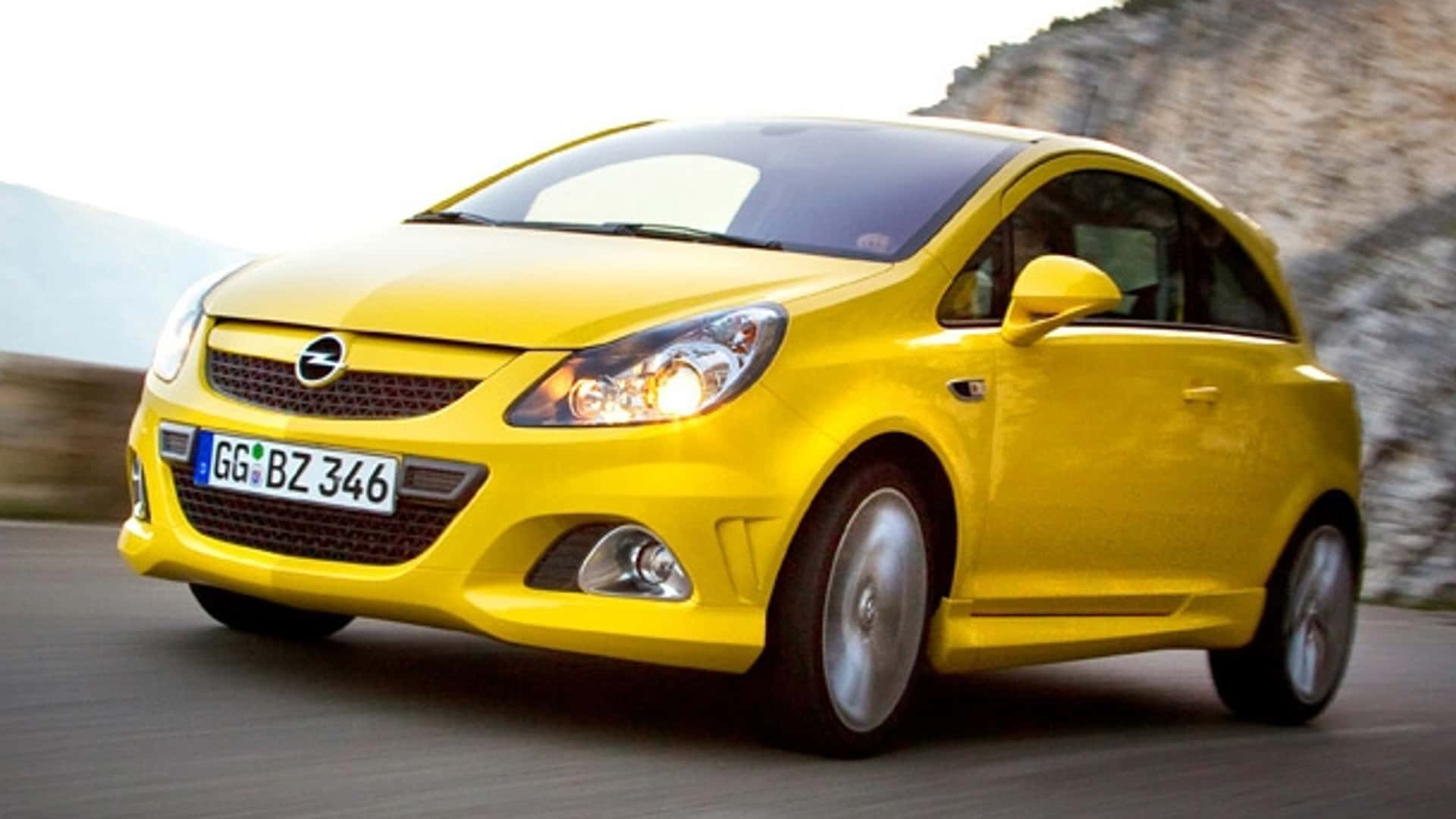
Compared to the previous generation, the new Opel increased in all dimensions and was based on a platform developed in collaboration with Fiat – the same platform used by the Grande Punto. The most noticeable increase was in length: at 3.999 meters, the Corsa D nearly reached the four-meter mark, but remained just under it.
As with the Corsa B, the three-door and five-door versions took different stylistic paths. The three-door had a distinctly “coupé” design, appealing to those seeking a sportier glance, while the five-door was designed as a more practical and spacious car for everyday use and families. This design approach reflects a growing trend in the automotive industry to cater to diverse consumer preferences.
The increased space is particularly noticeable in the five-door variant. Curb weight, depending on the body style, was just over 1.1 tons. Despite the weight gain, fuel consumption remained in line with the previous model thanks to longer gear ratios.
When it launched, the engine range included several gasoline and diesel units. The gasoline engines ranged from a 1.0-liter three-cylinder producing 60 hp, through 1.2 and 1.4-liter four-cylinder engines up to 90 hp. On the diesel front, two 1.3 CDTI engines with 75 and 90 hp were available, as well as a 1.7 CDTI with 125 hp. Depending on the engine, customers could choose between five or six-speed manual transmissions, the Easytronic automated transmission, or a four-speed automatic.
To complete the offering, Opel also offered versions powered by LPG, with an additional tank providing a total range exceeding that of gasoline-only models. The 1.3 CDTI, jointly developed by GM and Fiat, was considered particularly efficient and had previously won awards in its displacement class as “Engine of the Year.”

Photo: Opel
Sportiness and Efficiency
In 2007, the Corsa OPC arrived with a 1.6-liter turbo engine producing 192 hp, available exclusively as a three-door model. It accelerated to 62 mph (100 km/h) in just over seven seconds and reached a top speed of 140 mph (225 km/h). Also debuting in 2007 was the Corsa GSi. With 150 hp, a sporty suspension, and styling cues from the OPC, it positioned itself between the standard versions and the top-of-the-line model and was also offered as a five-door.
With the introduction of ecoFLEX technology, Opel focused on efficiency. Start/Stop systems and optimized engines significantly reduced fuel consumption and emissions. The 1.3 CDTI ecoFLEX was particularly frugal, with a combined fuel consumption of 3.3 l/100 km and CO₂ emissions of just 88 g/km. A further evolved version followed, with even lower consumption figures.
Photo: Opel
In 2010, the Corsa D received a technical update. The engines were progressively upgraded to meet Euro 5 standards, the gasoline engine range was reorganized, and a facelift also changed the front complete. At the same time, the GSi was discontinued. From 2011, the flagship sporty model became the OPC Nürburgring Edition.
The 1.6-liter turbo engine was boosted to 155 kW (210 hp), paired with a mechanical limited-slip differential, revised suspension, upgraded brakes, and specific detail modifications. A brief press of the accelerator is all it takes to push the subcompact to 140 mph (230 km/h).
Opel Corsa D restyling 2010
Photo: Opel
A Successful Generation
Demand was strong from the start. Shortly after launch, orders significantly exceeded expectations, and in 2007, the Corsa led subcompact car registrations in Germany for a period, ahead of the VW Polo. In total, over 2.9 million units of the fourth generation were sold.
The three-door version was primarily produced at the Eisenach plant, while the five-door version came from Figueruelas, Spain; assembly in Belarus was later added. In October 2014, production of the Corsa D ended, and the new generation succeeded it in early 2015.
