
An international team of scientists has developed a new system capable of predicting severe solar flares up to a year in advance. This breakthrough could prove critical in protecting modern technology from the potentially damaging effects of space weather.
The research was led by Victor Velasco Herrera of the National Autonomous University of Mexico, and its findings were published in the Journal of Geophysical Research: Space Physics.
The Threat of Solar Flares to Earth
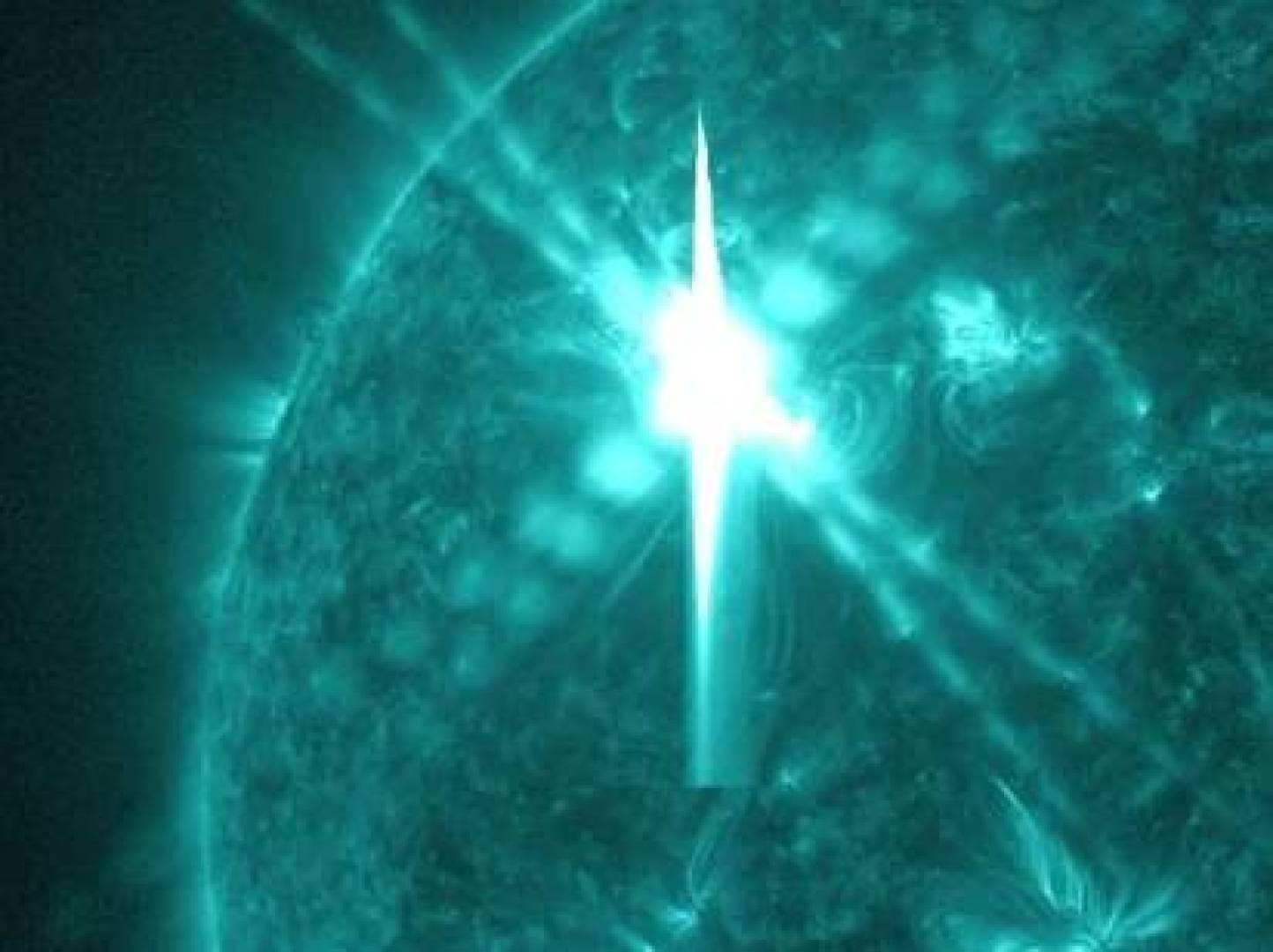
Solar flares (Image source: European Space Agency)
The sun experienced a series of powerful eruptions in early February, with six X-class flares recorded in succession, including an X8.1 flare – one of the strongest events in recent years. These events highlight the ongoing need for improved space weather forecasting.
These flares can disrupt wireless communications and Global Positioning Systems, and may also cause power outages and increased radiation levels on aircraft, and satellites.
Analyzing Half a Century of Data
Researchers analyzed X-ray data collected by satellites from 1975 to 2025, allowing them to identify cyclical patterns in solar activity. This long-term data set was crucial for uncovering the predictive patterns.
The study revealed two primary cycles of solar activity:
A short cycle repeating every 1.7 years
A longer cycle lasting approximately 7 years
When these two cycles coincide, the likelihood of strong solar flares increases significantly.
Artificial Intelligence Enhances Prediction Accuracy
Scientists utilized machine learning techniques to build a model capable of predicting periods of risk months, or even a year, in advance. This represents a significant step forward in managing space weather risks. The model’s accuracy was validated during a review of the study, with its predictions aligning with intense flares that occurred on the far side of the sun, including a powerful flare with a magnitude of X16.5.
Periods of Risk in the Coming Years
According to the new model, the most dangerous periods during the current solar cycle include:
Mid-2025 to mid-2026, particularly in the southern hemisphere of the sun
Early and mid-2027 in the northern hemisphere
These forecasts will help governments and space companies seize precautionary measures to protect satellites, power grids, and digital infrastructure.
The Role of the Solar Orbiter Mission in Monitoring the Sun
The European Space Agency’s Solar Orbiter mission is contributing to the collection of precise data on solar activity, enhancing scientists’ understanding of the sun’s behavior and improving the accuracy of future models. The mission’s detailed observations are proving invaluable to the research effort.
This achievement represents an important step toward developing early warning systems for space weather, which could reduce economic losses and ensure the continuity of vital technical services around the world.
