
More Details
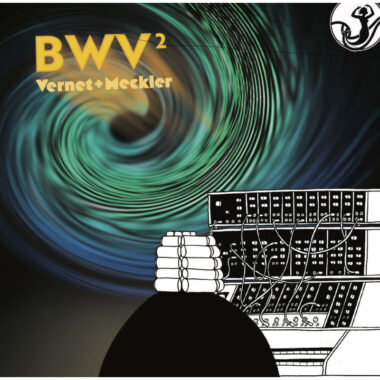
Johann Sebastian Bach’s (1685-1750) Toccata and Fugue for Organ BWV 565 features a piano part by Wilhelm Middelschulte (1863–1943). Invention VIII (BWV 779) first version includes a second piano part by Louis Victor Saar (1868–1937). Brandenburg Concerto No. 3 (BWV 1048) is a transcription by Vernet/Meckler. A choral for organ BWV 768 “Sei Gegrüsset, Jesu Gütig” is arranged for organ duo by Niels Gade (1817-1890). Prelude BWV 875 from The Well-Tempered Clavier has a second piano part by Ignaz Moscheles (1794-1870). Concerto BWV 1061 for 2 keyboards features Olivier Vernet and Cédric Meckler on virtual organ and synthesizer – Altenbruch (Klapmeyer organ) / Lüdingworth (Arp Schnitger organ). Invention VIII (BWV 779), 2nd version, is a free arrangement for two pianos by Cyril Scott (1879-1970). The Chaconne from the Partita for Violin BWV 1004 is arranged by Vernet/Meckler based on arrangements for piano duo by Carl Reinecke (1824-1910) and piano accompaniments by Robert Schumann (1810-1856) and Felix Mendelssohn (1809-1847). Swinging Bach arranged by Porter Heaps (1906-1999), Lloyd Norlin (1918-2000) / Bach Chat. Jazzy digressions on themes by Bach (BWV 1043, 1067, 147, 971) by Charles Balayer (*1957) / Dedicated to Olivier Vernet &. Cédric Meckler. Duo Olivier Vernet and Cédric Meckler, Pipe and virtual organs (Hauptwerk system), synthesizers. 1 CD Ligia Digital. Recorded in September and October 2025. Presentation notes in French and English. Duration: 79:29
No matter how one approaches the music of Bach, with all the adaptations or transformations one can imagine or create, his genius remains present. This is masterfully demonstrated by Olivier Vernet and Cédric Meckler in their duo of diverse keyboards serving a new, revisited, and revitalizing Bach.
Since the late 1960s, music lovers have been surprised and gradually accustomed to hearing Bach’s music on contemporary machines: new synthesizers, the most famous of which were designed by American engineer Robert Moog in 1964. This device artificially synthesizes sounds electronically. Shortly after, Walter/Wendy Carlos introduced this new instrument, controlled by a simple keyboard, to the world with the album “Switched on Bach” (CBS). Everything functioned with pioneering methods, analogously without the aid of computers and digital techniques, which were unknown at the time. It’s worth remembering that as early as the 1920s, Maurice Martenod, with the invention of his famous Ondes Martenot, was a global precursor to these new acoustic researches.
First, let’s celebrate the artists’ 20 years as a duo, marked by numerous repertoires explored in concerts and recordings. This new Bach is their anniversary gift. What do they propose? A bold staging of the cantor’s works through essentially three types of instruments: traditional pipe organ (Roquevaire, Saint-Charles in Monaco), virtual organs in the form of sound samples captured on real organs and restored thanks to the “Hauptwerk” system, and Moog-type synthesizers. The virtual organs chosen by the performers are of German Baroque aesthetics, drawn from the data banks of famous historical instruments (Stralsund, Lüdingworth, Altenbruch and Groningen) offered by Sonus Paradisi.
Equipped with this cutting-edge technology, the organists offer a program that is very attractive in its diversity of genre and treatment. These are mostly “hits” with the Toccata in D minor, the Chaconne, the Inventions, and completely revisited Concertos… What is exciting is the intervention of other composers in the construction of an “augmented” version, both through the musical text and through the acoustic effects. We are thus transported to another world without Bach’s music being disfigured by an inappropriate genre or style. The combinations of instruments are multiple and different for each track. The organ/synthesizer dialogue works wonderfully. We sometimes find the exciting atmospheres that recall those of Wendy Carlos, as in Brandenburg Concerto No. 3 which, cheerfully conducted, shines in a dazzling fireworks display of colors. Concerto for Two Keyboards BWV 1061 is presented both on two historical organs (Hauptwerk) and two synthesizers, bringing a lot of depth and relief to the whole. At no point does the listener experience discomfort regarding this somewhat unusual sound treatment, which, on the contrary, opens up new horizons, captivating and engaging.
Two tracks reward us with the pipe organ recorded live: Saint-Charles in Monaco in a selection of variations from the Partita Sei Gegrüsset Jesu Gütig BWV 768 arranged for two organists by Niels Gade and Olivier Vernet, and Olivier Vernet solo in Roquevaire (Bouches-du-Rhône) for a thrilling piece Swinging Bach revisiting the Toccata and Fugue in D minor in a jazzy mode: a whole festival of colors and rhythms on this symphonic organ which was partly that of Pierre Cochereau. Finally, the organists at the controls of their synthesizers conclude the album with some digressions borrowed from jazz and shaped by Charles Balayer from a few famous BWVs. They offer us a jovial final bouquet in their complicit games and heard for the glory of Bach, here greatly magnified.
(Visited 2 times, 1 visits today)
More Details
Johann Sebastian Bach (1685-1750) : Toccata con Fuga pour orgue BWV 565 avec une partie pour piano de Wilhelm Middelschulte (1863–1943). Invention VIII (BWV 779) 1ère version avec une deuxième partie pour piano de Louis Victor Saar (1868–1937). Concerto brandebourgeois III (BWV 1048) Transcription Vernet/Mecker. Choral pour orgue BWV 768 « Sei Gegrüsset, Jesu Gütig » Arr. Pour duo d’orgues par Niels Gade (1817-1890). Prélude BWV 875 du Clavier bien tempéré avec une deuxième partie pour piano d’Ignaz Moscheles (1794-1870). Concerto BWV 1061 pour 2 claviers Olivier Vernet, orgue virtuel, synthétiseur / Cédric Meckler, orgue virtuel, synthétiseur – Altenbruch (orgue Klapmeyer) / Lüdingworth (orgue Arp Schnitger). Invention VIII (BWV 779), 2e version, dans un arrangement libre pour deux pianos de Cyril Scott (1879-1970). Ciaccona de la Partita pour violon BWV 1004, arr. Vernet/Meckler d’après l’arrangement pour duo de pianos de Carl Reinecke (1824-1910) et les accompagnements au piano de Robert Schumann (1810-1856) et Felix Mendelssohn (1809-1847). Swinging Bach Arr. Porter Heaps (1906-1999), Lloyd Norlin (1918-2000) / Bach Chat. Digressions jazzy sur des thèmes de Bach (BWV 1043, 1067, 147, 971) par Charles Balayer (*1957) / Dédié à Olivier Vernet & Cédric Meckler. Duo Olivier Vernet et Cédric Meckler, Orgues à tuyaux et virtuels (système Hauptwerk), synthétiseurs. 1 CD Ligia Digital. Enregistré en septembre et octobre 2025. Notice de présentation en français et en anglais. Durée : 79:29
