
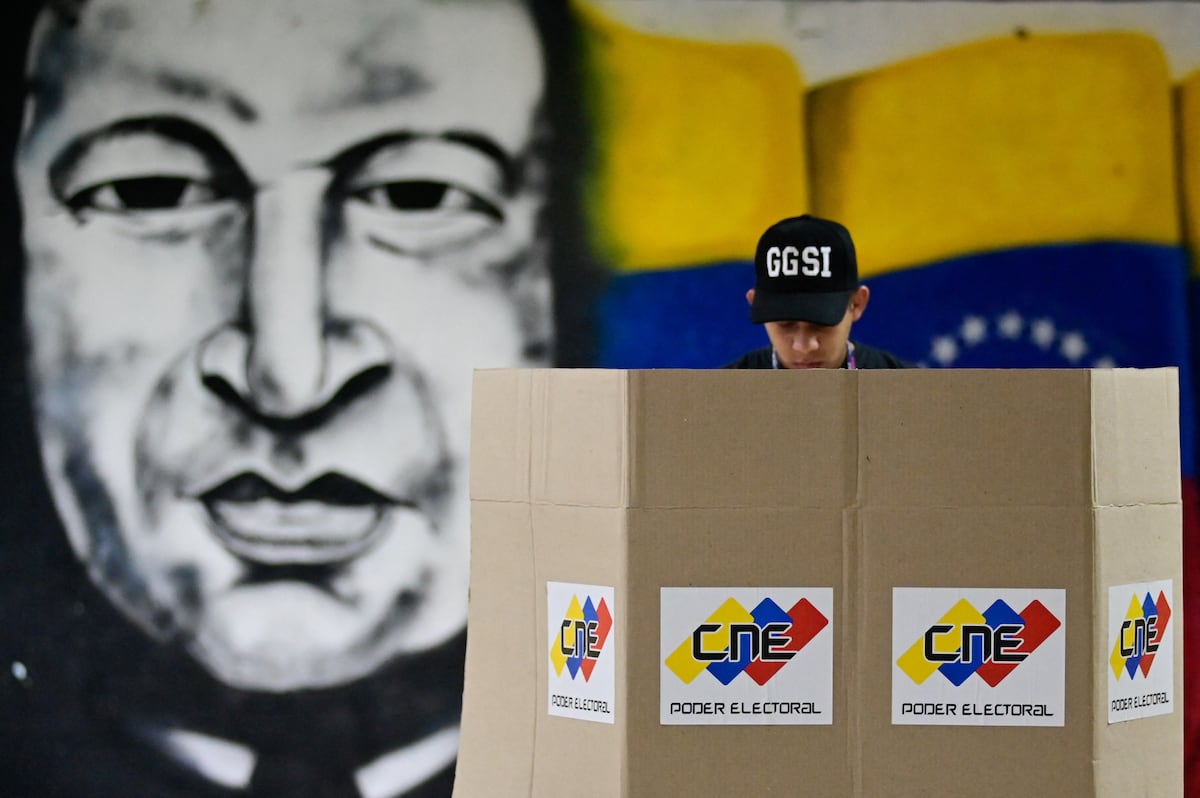
A shift is underway in Venezuela’s political landscape following a U.S. Military intervention on January 3, 2024, that disrupted the government of Nicolás Maduro. Despite the upheaval, opposition figures have consistently maintained that the presidential election held on July 28, 2024, resulted in a victory for Edmundo González, backed by María Corina Machado.
That claimed victory forced many involved to seek exile or go into hiding. However, that stance is beginning to evolve. Two months after the U.S. Military intervention altered the balance of power in Venezuela and initiated a period of political opening, hardline opposition factions are preparing to do something they previously resisted: compete in another election, though the schedule, rules, and oversight remain unclear. This move underscores a potential shift in strategy for Venezuela’s opposition.
A key signal of this change came on Sunday, when Machado announced she would return to Venezuela in the coming weeks to prepare for “a new and gigantic electoral victory.”
Just months ago, such a move would have been unthinkable. For over a year, the opposition, led by Machado, insisted that the 2024 presidential election had already determined Venezuela’s political future.
According to 83% of the tallied election reports collected by their observers, Edmundo González Urrutia received 67% of the vote, compared to Nicolás Maduro’s 30%. These paper records, gathered by thousands of volunteers during the long election night, became material evidence of alleged fraud. Maduro, currently detained in a New York prison, never conceded power.
Those reports were circulated internationally, presented to the Organization of American States, and secured in bank vaults in Panama. More than thirty countries – including the United States, Argentina, Chile, Costa Rica, and the 27 members of the European Union – recognized González as the elected president, despite his inability to take office.
For months, operating in hiding within Venezuela, Machado centered the opposition’s strategy around defending those results. “The Venezuelans have already voted,” she repeatedly stated, justifying abstention from subsequent local and legislative elections. Participating in those contests, according to Machado, would have meant accepting the regime’s attempt to move past the July 28th election.
The political landscape shifted dramatically with the January 3rd U.S. Military intervention. Since then, Venezuela’s political process appears to be progressing according to a roadmap established in Washington. Secretary of State Marco Rubio outlined a three-phase plan – stabilization, reconstruction, and transition – and recently announced that the first phase had been completed. Within this framework, new elections are seen as the culmination of the political process, rather than the starting point, as many initially believed.
Machado was among the first opposition leaders to acknowledge the changing circumstances. While the priority was once defending the results of the July 28th election, the current challenge is ensuring that any political transition doesn’t occur without her and her allies. Her announcement of her return to the country is part of this new phase, following months spent operating between secrecy and abroad to maintain the organization that mobilized voters in 2024.
In recent weeks, mass releases from prison have extended to many members of Vente Venezuela and Comando Con Venezuela, the structure that organized the defense of the vote on July 28th. Local and state-level leaders who had been detained or forced into hiding are beginning to regroup. Political parties are resuming meetings, and networks that had been paralyzed by repression are being rebuilt.
Henry Alviárez, a key leader of Vente Venezuela who spent nearly two years in prison, was released last month. He now plans to tour Venezuela in a campaign that currently lacks a name or schedule. “July 28th is a reality. Edmundo González is the legitimate president of Venezuela,” he said this week. “But if the reality that is taking shape in these sixty days after January 3rd invites a process of understanding, what better way to do it than to allow every citizen to express their decision with guarantees.” The opposition is not abandoning the narrative of that victory, but is beginning to prepare to compete again.
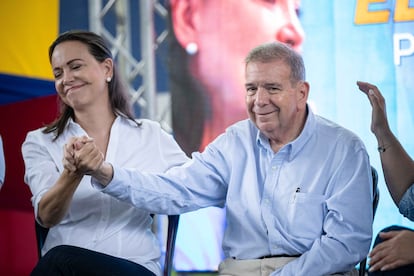
The dates for new elections remain unknown and are not currently being considered in the short term. Nevertheless, Machado has suggested a possible timeline, stating that elections could be organized within a year if real guarantees and minimum institutional conditions are established.
This is not unfamiliar territory for her. Before becoming the most influential political figure in the Venezuelan opposition, she began her career with Súmate, an organization dedicated to defending the vote.
Her teams are now working discreetly on an issue that the opposition has denounced for years: the voter registry. A new census and purification of the registry have develop into priorities if a new electoral process opens. The current system excluded hundreds of thousands of Venezuelans abroad and also displaced voters within the country, moving them to different polling centers to hinder their participation.
The “Surprise” from Diosdado
The main obstacle remains the institutions, where the regime maintains its influence. The Chavismo, now led by Delcy Rodríguez, has begun to test changes to project an image of openness. The resignations of the Attorney General and the Public Defender have been interpreted as signs of ongoing reforms.
However, the two key bodies for any election – the National Electoral Council and the Supreme Court of Justice – remain in the hands of the same structures that validated the official results of 2024 and allowed Maduro to remain in power despite allegations of fraud.
Machado remains the most troublesome political adversary for the new Chavista leadership. Her disqualification from running in elections remains in effect. And while Delcy Rodríguez has promoted an amnesty law for some political prisoners, she has also warned that Machado will need to “account for her actions” upon her return.
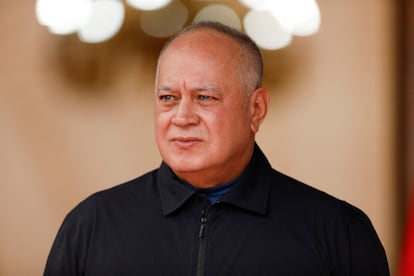
Interior Minister Diosdado Cabello has sounded even more threatening. On Wednesday, during his television program, he issued a warning regarding Machado’s intention to return: “I won’t tell you what surprise I have for her.” Despite the threats and remaining repressive measures, discussions about candidates and campaigns are emerging.
Former presidential candidate and ex-political prisoner Enrique Márquez, who recently appeared in Washington during Donald Trump’s State of the Union address, has said he does not rule out running for president again. And within the traditional parties, the debate is also ongoing. Henry Ramos Allup, secretary general of Acción Democrática, has insisted on the need to preserve opposition unity “at all costs” and has signaled his support for a potential candidacy by Machado.
Without a set election date, a clear arbiter, and under the guidance of Washington, Venezuela is slowly returning to political discussion.
