
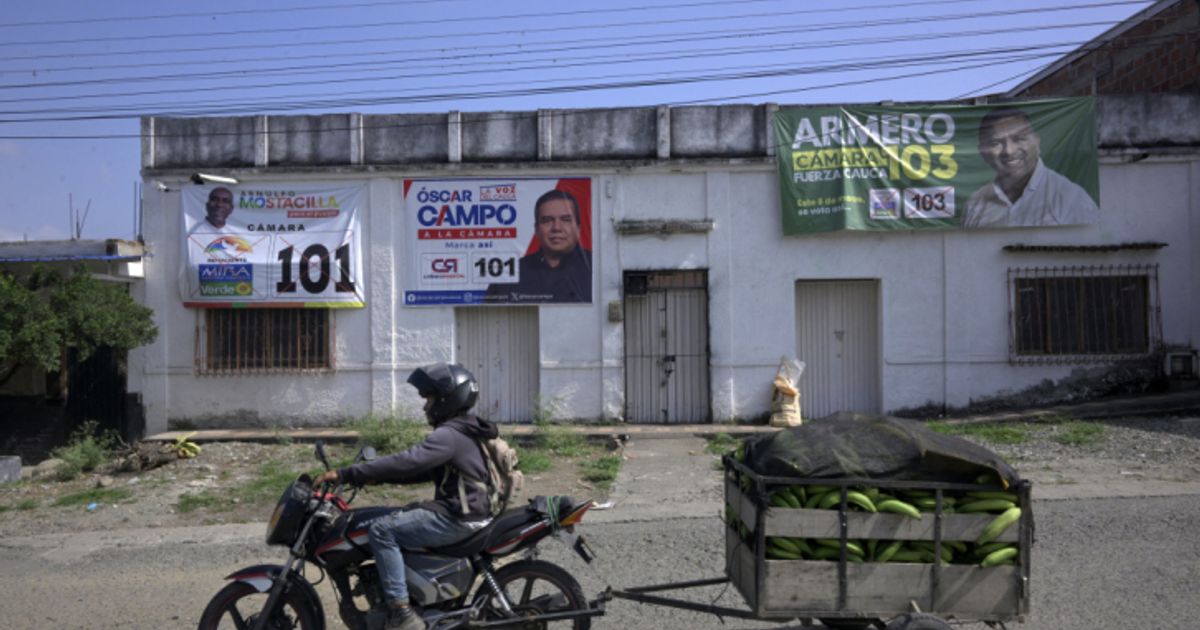
Colombia is holding parliamentary elections on Sunday, March 8, 2026, a vote that will also set the stage for the presidential election in May. More than 41 million eligible voters are casting ballots for 103 Senate seats and 183 seats in the Chamber of Representatives. The outcome of the congressional vote is being closely watched as a key indicator of the political landscape ahead of the presidential race.
Simultaneously, several political parties are holding internal primary elections to select their candidates for the presidency. This allows party members to directly influence who will represent their coalition in the May presidential contest. The Colombian Congress consists of the Chamber of Representatives and the Senate.
The composition of Congress is crucial for the success of President Gustavo Petro’s agenda. The legislature is responsible for passing laws and reforms, and the president relies on securing majorities in both chambers to advance his policies. Petro’s left-leaning “Pacto Histórico” coalition was the largest force in Congress following the last election four years ago, but did not hold a majority. Polls currently suggest the coalition remains in a leading position.
This election is taking place against a backdrop of security concerns, rising crime rates, economic challenges, and deep political polarization. The political climate in Colombia has been tense in recent months, highlighted by the shooting death of conservative Senator Miguel Uribe Turbay during a campaign event in Bogotá last June.
Traditionally, Colombia’s parliamentary elections precede the presidential vote and offer an early indication of which candidates have momentum. The congressional results will be seen as a gauge of support for Petro’s coalition as his term nears its conclude – and a predictor of the political backing his chosen successor will receive. As the country’s first left-leaning president, Petro is constitutionally barred from seeking re-election.
Petro’s administration had proposed ambitious reforms to the healthcare, labor, and pension systems, but many of these initiatives have faced resistance in Congress, and stalled. His presidency has also been marked by ongoing conflicts with the opposition. The outcome of this election could significantly impact the future direction of these reforms.
A key factor contributing to the challenges faced by Petro’s government is the fragmentation of Congress. Several parties that initially supported Petro have since distanced themselves from the administration, making it more difficult to build political consensus. This increasing polarization complicates the formation of governing majorities.
Analysts anticipate another fragmented parliament without clear majorities. Even as “Pacto Histórico” is currently leading in polls, it is not expected to achieve an outright majority. The right-wing “Centro Democrático” party, led by former President Álvaro Uribe, could once again be among the strongest forces in Congress. Traditional parties, such as the Liberal and Conservative parties, will also likely play a significant role, as they have historically served as kingmakers.
Observers also believe the congressional elections will provide insight into Colombia’s future foreign policy direction. Petro has pursued a more independent course, which at times led to tensions with the United States, a traditionally close partner. He clashed with former U.S. President Donald Trump over issues such as migration and drug policy, and even faced threats of military intervention from Washington.
Petro also criticized the U.S. Military’s pursuit of Venezuelan President Nicolás Maduro. Following that criticism, Trump threatened Colombia with military intervention, but the two leaders later adopted a more conciliatory tone after a meeting at the White House.
The presidential election is scheduled for May 31, 2026. If no candidate receives more than 50 percent of the vote, a runoff election will be held on June 21.
Kolumbien steht mit der Kongresswahl vor einer wichtigen politischen Weichenstellung im Wahljahr. Rund 41 Millionen Bürger sind aufgerufen, ein neues Parlament zu wählen. Parallel dazu organisieren mehrere Parteien interne Konsultationen zur Auswahl ihrer Präsidentschaftskandidaten. In diesen offenen internen Vorwahlen können die Bürger bestimmen, wer für ein bestimmtes Bündnis bei der Präsidentenwahl im Mai antritt. Der kolumbianische Kongress – das Parlament – setzt sich aus dem Repräsentantenhaus und dem Senat zusammen. Erste vorläufige Ergebnisse werden noch am Abend erwartet.
Der Kongress beschließt Gesetze und Reformen – für seine Vorhaben ist der Präsident daher auf Mehrheiten im Parlament angewiesen. Das linke Regierungsbündnis “Pacto Histórico” von Präsident Gustavo Petro wurde bei der letzten Wahl vor vier Jahren stärkste Kraft im Kongress, kam aber nicht auf eine eigene Mehrheit. Umfragen sehen es erneut vorn.
Die Abstimmung findet vor dem Hintergrund einer angespannten Sicherheitslage, wachsender Kriminalität, wirtschaftlicher Herausforderungen und tiefer politischer Polarisierung statt. Die Stimmung in dem südamerikanischen Land ist seit Monaten aufgeheizt. Im parallel laufenden Präsidentschaftswahlkampf wurde der konservative Senator Miguel Uribe Turbay im Juni vergangenen Jahres bei einer Wahlkampfveranstaltung in der Hauptstadt Bogotá angeschossen und erlag später seinen Verletzungen.
In Kolumbien findet die Parlamentswahl traditionell vor der Präsidentenwahl statt und gibt einen ersten Hinweis darauf, welche Kräfte Chancen im anschließenden Präsidentschaftsrennen haben. Der Urnengang gilt als Gradmesser für die Stärke von Petros Bündnis kurz vor dem Ende seiner Amtszeit – und dafür, mit welchem politischen Rückenwind dessen Kandidat in das Rennen um seine Nachfolge geht. Der erste linke Staatschef des Landes darf verfassungsgemäß nicht erneut antreten.
Seine Regierung hatte ambitionierte Reformen angekündigt, etwa im Gesundheits-, Arbeits- und Rentensystem. Mehrere dieser Vorhaben sind jedoch im Kongress auf Widerstand gestoßen oder ins Stocken geraten. Petros Amtszeit war zudem von anhaltenden Konflikten mit der Opposition geprägt.
Ein Grund dafür ist die politische Fragmentierung des Kongresses. Mehrere Parteien, die Petro anfangs unterstützten, haben sich inzwischen von der Regierung distanziert. Eine zunehmende Polarisierung erschwert politische Mehrheiten.
Analysten erwarten erneut ein stark zersplittertes Parlament ohne klare Mehrheiten. Zwar führt “Pacto Histórico” in Umfragen, dürfte aber wieder keine eigene Mehrheit erreichen. Die rechtskonservative Partei “Centro Democrático” des früheren Präsidenten Álvaro Uribe könnte erneut zu den stärksten Kräften im Kongress zählen. Und auch traditionelle Parteien wie Liberale und Konservative spielen eine wichtige Rolle, da diese in der Vergangenheit häufig als Mehrheitsbeschaffer fungierten.
Beobachter sehen in der Kongresswahl auch einen Hinweis darauf, wie Kolumbien künftig außenpolitisch agieren könnte. Petro hatte einen eigenständigeren Kurs eingeschlagen. Das führte zeitweise zu Spannungen mit den Vereinigten Staaten, einem der traditionell engsten Partner Kolumbiens. Mit US-Präsident Donald Trump kam es wiederholt zu Meinungsverschiedenheiten etwa über den Umgang mit Migration oder Drogenpolitik.
Petro übte auch Kritik an der Gefangennahme des venezolanischen autoritären Präsidenten Nicolás Maduro durch das US-Militär. Danach hatte Trump Kolumbien ebenfalls mit einer Militärintervention gedroht. Erst nach einem Treffen im Weißen Haus schlugen beide Politiker wieder versöhnlichere Töne an.
The presidential election will capture place on May 31, 2026. If no candidate receives more than 50 percent of the vote, a runoff election will be held on June 21.
