
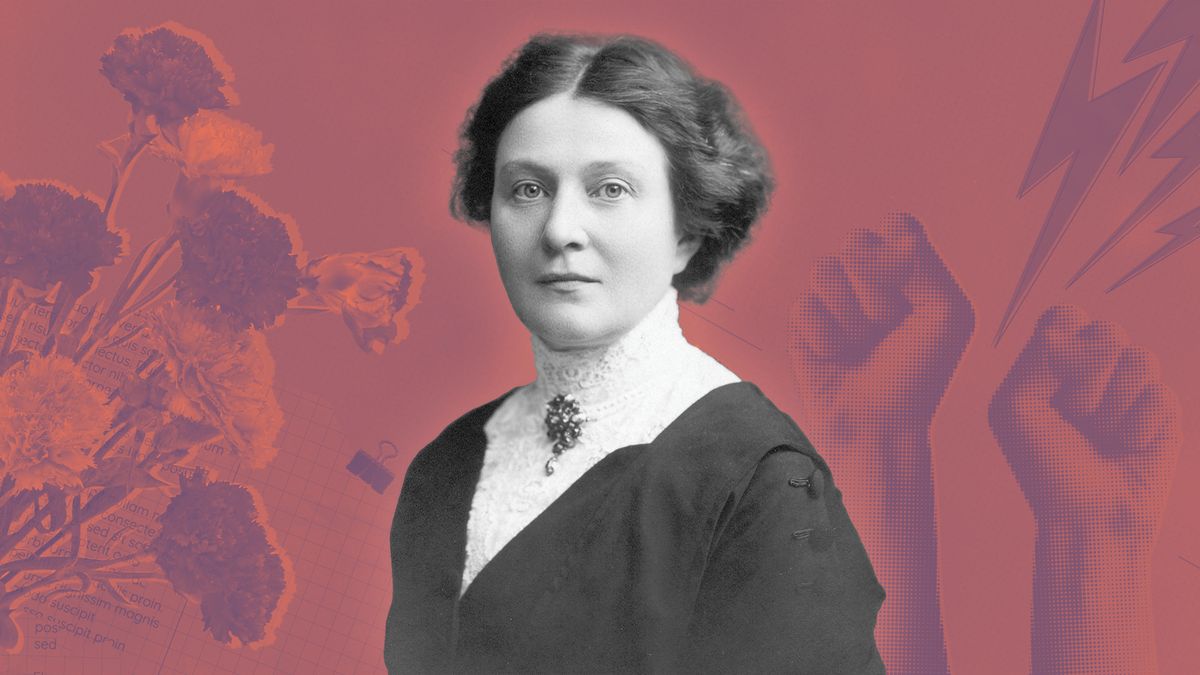
A new exhibit at the National Museum in Prague is aiming to revive the legacy of Františka Plamínková, a largely forgotten figure who fought for women’s rights and democracy in Czechoslovakia. The exhibition, which opened recently, displays personal items, photographs, and texts from Plamínková’s life, hoping to reintroduce her story to a new generation.
Curator Jitka Gelnarová notes that while some older visitors may vaguely recall the name, many younger people are unfamiliar with Plamínková’s contributions. “We wanted to show who Františka Plamínková was,” Gelnarová said. “Some people only learned about her existence through young people, influencers, and organizations fighting for human rights who follow them on social media. At the same time, they don’t know much about her.”
The exhibit is designed to speak to visitors through Plamínková’s personal belongings, offering a glimpse into her life and work. All of her estate was donated to the National Museum by her sister, Marie Vinklářová.
Throughout the display, thought-provoking questions encourage reflection on Plamínková’s era and her actions. One such prompt asks: “What would I fight for today if I had Františka at my back?”
“We see important to show the whole interconnectedness,” Gelnarová explained. “Plamínková said: ‘I am not just a feminist, I am also a democrat.’”
Returning to Collective Memory
Visitors are first greeted by a large white bust of Plamínková, created by Karla Vobišová, one of the first female sculptors in Czechoslovakia, after the war. The sculpture depicts Plamínková in her later years.
The artwork itself represents a return to collective memory, as Plamínková was gradually erased from public consciousness after the war. “In 1960, Marie Vinklářová donated it to the museum, wanting it to one day be placed in the department of the history of the women’s movement in Czech lands,” Gelnarová said. Along with the bust, Vinklářová donated the rest of Plamínková’s estate to the museum.
Notably, despite Plamínková’s belief that the National Museum would eventually house a section dedicated to the fight for women’s rights, such a section does not yet exist, over 84 years after her death.
Ženská národní rada
The Women’s National Council was founded in 1923. “Initially, there was an illusion that there was a constitution, equal rights, a president who promoted equality. But, old laws that discriminated against women were still in effect. In everyday life, in work, they were not accepted as lawyers into the state administration,” curator Jitka Gelnarová commented on the reason for the council’s creation.
Despite the appearance of progress, there were still strong tendencies to limit the work of married women, and there was even an attempt to reintroduce celibacy.
These issues motivated Plamínková to establish the Women’s National Council, which at its peak had 27,000 members. These were mostly educated women, often teachers or working in the state administration, forming a kind of shadow ministry for women’s interests. Institutionalized politics at the time was a men’s club.
Their work led to changes in marriage law, preparation for a revision of family law, and the creation of a Committee for Family Law Reform, led by Milada Horáková. This law was not approved until the 1950s, paradoxically after the execution of Milada Horáková.
Feminism in the Dictionary
Early in her life, Plamínková faced a significant dilemma. As a young woman, she considered her future path. Marriage and motherhood were options – she was proposed to by Vilém Feyer at the age of 16.
Another path was education. While Eliška Krásnohorská had opened the Minerva grammar school for girls, universities were still closed to women. For a girl from a shoemaker’s family, a career as a teacher offered security, but it also required celibacy. Plamínková later worked to abolish this requirement.
Although she declined her suitor’s proposal, she remained close to Vilém Feyer throughout her life. He proposed again when she was 45, and she again refused, stating she was fully committed to her political career and felt it was too late to start a family.
She actively participated in the Czech Women’s Club, founded in 1905, and the Committee for Women’s Suffrage. “It was a group of women who met after work, often teachers. Albína and Anna Honzáková also attended,” the curator said.
The Honzáková sisters were close friends of Plamínková, and they often encouraged her to rest, something her friends said she wasn’t very good at. Anna Honzáková was the first woman in Czech lands to have a private medical practice and the third woman to earn a medical degree.
Along with the Honzákovás, Plamínková co-authored the entry for women’s emancipation (feminism) in Otto’s Scientific Dictionary in 1908. She also led a column titled “Feminism” in the Teachers’ Papers that same year.
She Didn’t Desire to Run Herself
Plamínková frequently participated in protests aimed at highlighting inequalities between men and women. “She was put forward everywhere where there was expected to be greater resistance from both men and women. At the same time, it was Plamínková who discovered a loophole in the law in 1908, which did not allow women to vote, but did not prohibit them from being elected to the Czech Land Diet,” the curator explained. This led to a campaign to elect Marie Tůmova, a co-founder of the Czech Women’s Club and the granddaughter of František Ladislav Čelakovský. However, Tůmova was not ultimately elected.
A breakthrough came in 1912 when Božena Viková-Kunětická became the first female member of the Czech parliament, and the first in Central Europe. “Plamínková didn’t want to run herself; she decided to organize it. It was partly a strategic decision to delegate women who had a better chance. In 1912, Božena Viková-Kunětická was elected,” said Jitka Gelnarová.
However, Viková-Kunětická was barred from taking her seat by the Czech governor, Count Thun, who refused to issue the necessary permits. Nevertheless, it was seen as a symbolic victory for women.
Plamínková often represented the newly formed republic abroad, attending international conferences as a representative of the progressive women’s movement. In 1931 and 1932, she became the first Czech woman to address the League of Nations in Geneva, the precursor to the United Nations.
“She was the most well-known Czechoslovak female personality, and her representation was seen as a representation of Czechoslovakia, and was even supported by the state. At the same time, it should be mentioned that she was never the only woman striving for something; she was always part of a large association,” the curator said.
Foto: Marie Irová, Seznam Zprávy
Jedna sluje Pechmanová – slyším bratři vzdech. Jenom aby podle jména neměla pak pech. Druhá sluje Zemínová – pojďte sestry sem. Když ta spustí, tak se třese tribuna i zem. Třetí. Fanda Plamínková, – šedý vlas je klam, an. Senát neutlumí, v srdci věčný plam. Tuto „básničku“ publikovali spolu s karikaturou senátorek v periodiku „Šlehy: list politicko-humoristický“.
A Fighter to the Last
Fortunately, women in Czechoslovakia gained full suffrage in 1919, thanks in part to Plamínková’s efforts. The constitution of 1920 enshrined equality between men and women, making the country one of the first in Europe to grant women the right to vote. Plamínková also held political positions in the Prague municipal government and was elected to the Senate in 1925, while continuing her work in various organizations.
She held the position of senator until 1939. It’s no surprise that her briefcase and senator’s identification card are among the most important items on display. The leather bag was particularly significant to Plamínková. “Her overstuffed briefcase is the bane of our existence,” her colleague Karel Reidl once said.
She constantly had to fight for her place in a male-dominated world, facing doubt and being overlooked. This was true not only for her, but for other women in politics as well. “They were often invisible to many of her male colleagues. They would deliberately address the parliamentary council as ‘gentlemen,’ even when women were present. They were often the target of caricatures that were sexualized,” Gelnarová explained.
Despite the challenges, Plamínková often represented the country abroad. As a representative of the progressive women’s movement, she was invited to various international conferences.
She decided to return to Czechoslovakia, even as the threat of war loomed. During the Protectorate, she continued to lead the Women’s Council, though the specifics of its activities remain unknown due to the destruction of records. However, it provided a network for people opposed to the regime, as later recalled by Hana Gregorová and Luisa Landová-Štychová.
She openly opposed Nazism, even before its rise to power. On September 14, 1938, she wrote an open letter to Hitler, denouncing him as a dictator and defending then-President Edvard Beneš. The original letter is on display at the exhibit.
Alongside it is the question – as with many of the exhibits – “To whom would you write an open letter today, and why?” Visitors are invited to contemplate this and engage in their own argumentative dialogue.
After the assassination of Heydrich, Plamínková refused to pledge allegiance to the Reich, a decision she made not only for herself but for all women. She knew what the consequences would be. She gradually said goodbye to those around her, transferring ownership of her newly built house in Černošice to her sister.
“You see how they are rushing to finish with me. Tell everyone that I was executed without trial or interrogation,” she reportedly told fellow prisoner Zdenca Nedvědová-Nejedlá. “When they release me, find my colleagues and tell them to continue our work. I regret that I won’t be able to complete what I set out to do,” Nedvědová later recorded. Plamínková was executed in Kobylis in 1942.
She wished for no formal funeral, but rather that people remember her through their work and continue to fight for equality as she had done throughout her life.
After World War II, Františka Plamínková faded from public memory. Now, the exhibit at the National Museum is bringing her story back to light.
And what would you fight for today?
