
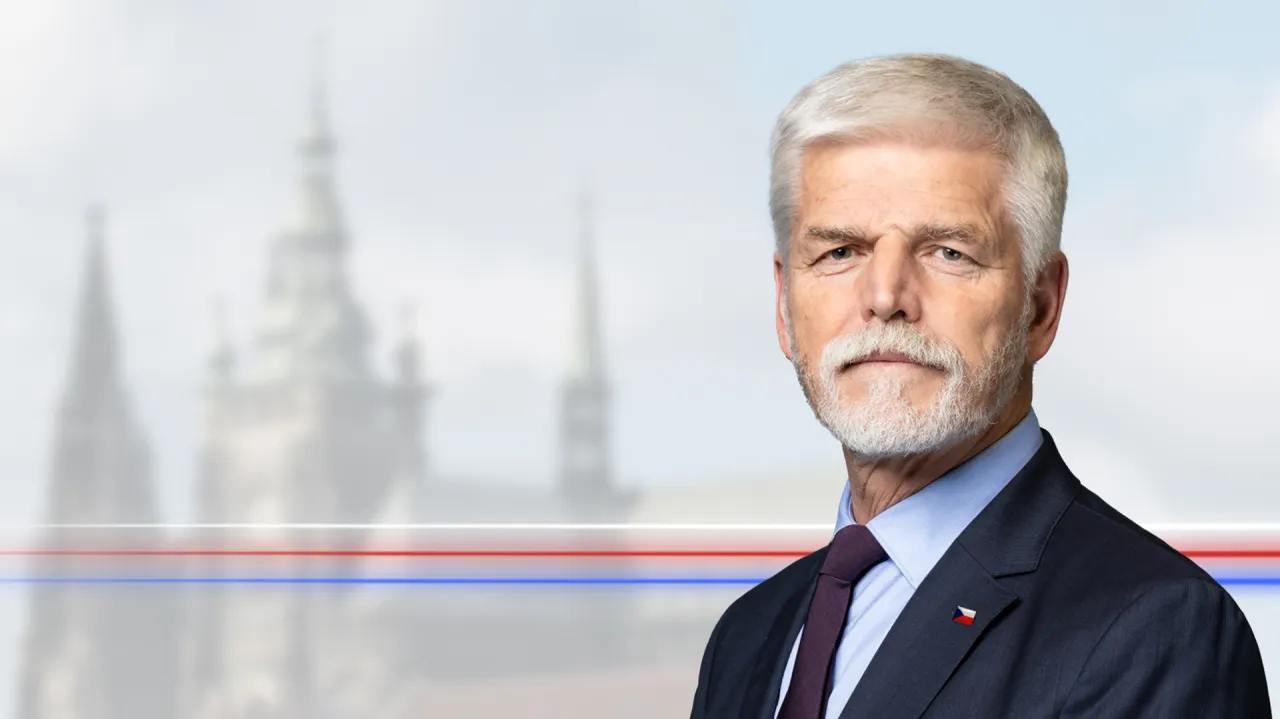
Czech President Petr Pavel recently marked his third year in office, addressing key issues ranging from international security to domestic politics in an interview with Czech Television. The conversation, led by Michal Kubal, covered the ongoing conflicts in Ukraine and the Middle East, as well as the state of alliances and the Czech Republic’s internal affairs.
Good evening, Mr. President.
Good evening.
Three years – what comes to mind when you reflect on that time? Does it feel like it’s flown by, or has so much happened that it seems longer?
I think it feels similar to how most people experience it – when a lot is happening, time seems to pass very quickly. And for me, these three years have gone by in a flash.
Was the past year – perhaps at least on the domestic front – the most challenging of the three?
yes. I believe that forming a government is a crucial test for any president. And everyone was waiting to see how I would handle this task, as was I myself. So it was certainly the most difficult period, involving very intensive negotiations, many doubts – both justified and otherwise. And of course, I am glad that we have successfully completed it.
Your doubts, or doubts about you?
Both. I think it’s perfectly natural that when someone makes decisions with a significant impact, not only on their own life but likewise on many people around them, they should always have doubts. Whether it’s the right thing to do, whether they should act differently, or more quickly. I believe I gave it a lot of attention. And I must say that despite certain doubts I had throughout the process, I believe I acted correctly.
Recent Developments
To illustrate, here are a few headlines from the past seven days. What’s the first thought that comes to mind when you see a headline like this on the CT24 website: “Trump says Zelenskyy must act, or miss a great chance for peace”?
Much like in the past, we should apply the same standards to both sides. The same pressure needs to be exerted on Russia as well, perhaps even more so, as Russia is the one who started the war.
The Chamber of Deputies declined to issue arrest warrants for Babiš and Okamura.
Expected. I didn’t expect a different outcome. But at the same time, I think that questions of immunity should primarily relate to the operate of members of parliament – that is, to what is said and done in the Chamber. And not to broader contexts.
Israel attacks Tehran. Emirates reports casualties. Qatar declares a state of emergency.
A very complex situation, which is, on one hand, justified by the nature of the Iranian regime and everything it has negatively supported in the region.
it’s something that could bring many problems. And that includes indirect impacts for us – whether it’s higher fuel prices, which could raise the price of everything, or the risk of migration waves and other destabilizations that could affect us. Of course, there’s also how the perception of international law evolves in terms of preventative strikes and how we view the legality and legitimacy of such actions.
Let’s move to many topics gradually. First, what comes to mind? Property prices rose by an average of twelve percent last year.
A significant problem, especially for young people. Because the possibility of owning their own home is becoming more distant every year.
Macron ordered an increase in the number of nuclear weapons and is discussing deterrence with other countries.
A natural step. France is one of two European states with nuclear capabilities, and if it offers that nuclear umbrella to other countries, we should definitely be involved in those discussions.
Russian Paralympians were met with boos at the opening of the games in Italy.
On the one hand, I feel sorry for those athletes, but they represent a state that is an aggressor and responsible for hundreds of thousands of lives lost – and ruined lives – by waging war against Ukraine.
Now a report that may have been overlooked, but could be crucial. Anthropic rejected the Pentagon’s ultimatum, refusing to work on autonomous AI weapons.
If we are talking about the ethical criteria of technology companies, we should have – as much as possible – the same standards. That is, not just for American companies working for the American administration, but also for European companies, or multinational companies like Meta or X, when the European Union tries to apply certain criteria, and the attitude is very negative in that case.
There’s a Chinese curse that says, ‘May you live in interesting times.’ Are we living in interesting times?
we are living in interesting times, but that doesn’t mean they are pleasant times.
Is that how we’re behaving, or is it the principle of closing our eyes and hoping the problem will disappear?
I fear we are behaving as if these problems aren’t reaching us over our border mountains, as if we can isolate ourselves from them. But unfortunately, that’s not the case.
Sometimes there’s a comparison to the Shire from *The Lord of the Rings*. Do you feel that way?
I would say we’re acting a bit like ostriches, sticking our heads in the sand, thinking the problem will disappear. Unfortunately, that’s not true, and these problems fundamentally affect us.
Now, a very current issue – the U.S.-Israeli war against Iran and the Russian aggression against Ukraine. What do you see as the greater security risk for the Czech Republic?
the Russian war against Ukraine, because it is closer to us. And it involves a country with a huge nuclear potential, which says it is ready to use it if pushed into a corner.
In the case of Iran, the problem is geographically more distant – but it still affects us directly or indirectly in terms of migration, prices, and the risk of conflict spreading beyond the Middle East.
New Conflict in the Middle East
The official declarations are changing. But do you understand the goals of the U.S.-Israeli operation in Iran?
Three goals have been declared so far. I don’t know to what extent they have been confirmed by the U.S. Administration itself, as they often change. But the three goals were, first, to stop the Iranian nuclear program, second, the ballistic program, and third, regime change.
I’ve heard a lot of conflicting statements about regime change, but even recent statements from Donald Trump suggest they are seeking to have some influence over who ultimately rules in Iran.
A Venezuela 2.0…
A Venezuela 2.0, but we also hear from Donald Trump that it’s now up to the Iranian people to choose their future. And that’s probably how it should be.
Everyone who filled up their tank in the last few days has already felt the first impacts of what’s happening in the Middle East. Warnings are also sounding that this is just the beginning of what could follow – not just in fuel prices. Do you think this is just a short-term phenomenon, or could there really be a long-term process?
I fear it could be longer-term, because we haven’t heard from anyone how long the military part is expected to last. We’re talking about weeks, maybe months. And it’s already clear that reduced production of gas and oil, as well as problems with their transportation, are starting to affect the global market.
When I had the opportunity to speak with the Qatari emir a few days ago, he said that even if the war ended immediately, they would be able to restore production within five or six weeks. This means that the impacts will be at least medium-term. If we can still draw on reserves of gas and oil purchased in the past, the next supplies will be affected by higher prices and lower deliveries.
So we should be prepared for higher prices not only for these commodities, but also for most other goods as a result of their price increases.
The Prime Minister has primarily been dealing with repatriation flights in recent days, openly admitting it. The government wants to control margins at the pumps. Are these the priorities that you believe are most urgent right now?
On the one hand, I understand that in the first phase we should of course capture care of our citizens who have found themselves in trouble abroad. No one in the government will solve the longer-term or broader problems, so they must be addressed in parallel.
I think that repatriation issues could be handled today by officials who are equipped with the necessary powers and experience. And the government should pay more attention to the medium- and long-term impacts, which relate to things like the prices of raw materials, migration pressures, and perhaps even security implications. These are things that could affect us in the coming years, and we should definitely pay more attention to them.
A quote from the other side: “The war, Ukraine program, you’re confusing that with the Fiala government. It’s not in our program statement, our program is the daily life of Czech citizens.” The government, or coalition parties, won the elections on that basis. Doesn’t it develop sense that they are fulfilling those promises?
It’s important to say how fulfilling the needs of citizens relates to their everyday concerns. If we say that the concerns of our citizens relate to salaries, the cost of housing, the prices of food, fuel, and energy, and we pretend that conflicts closer or further away from us have no impact on them, then we resign ourselves to a large part of those problems.
For example, if Russia is successful in Ukraine, that means they might be able to break through the Ukrainian lines of defense, then we can confidently expect another wave of migration that will affect every one of our citizens. So it is in our immediate interest to prevent that from happening. And the way to do that is to continue supporting Ukraine so that Russia does not win in Ukraine.
I think it’s perfectly fair to tell people that this isn’t just about our immediate problems, but also about those that affect us. And we can’t hide from them.
