
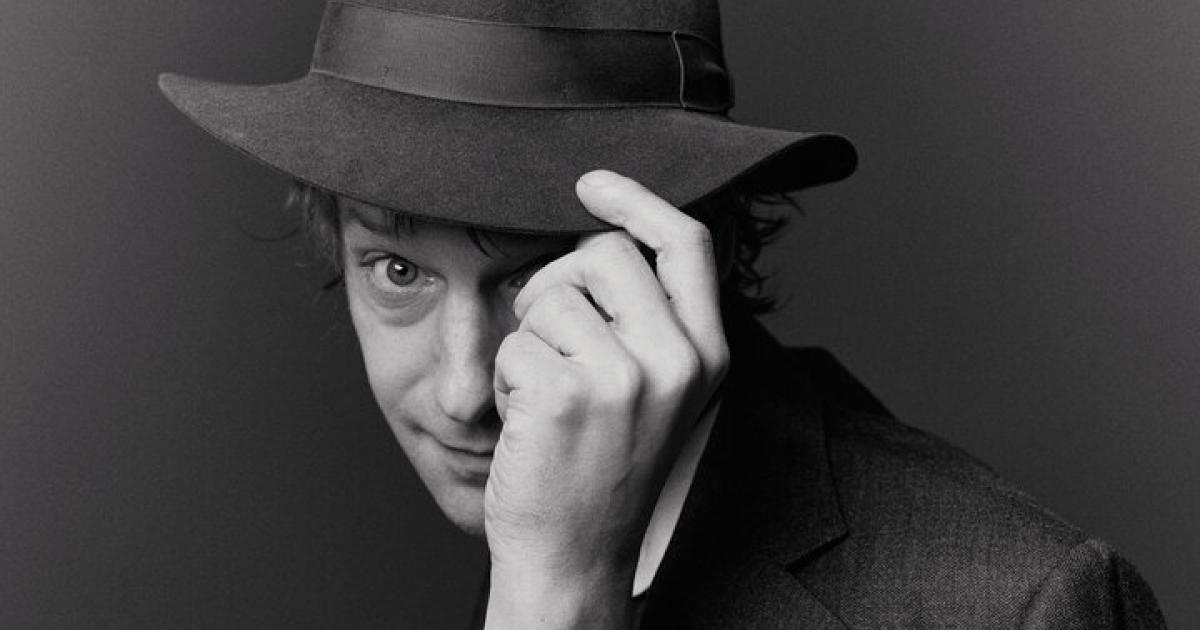
Voodoo Jürgens, already one of Austria’s most successful songwriters with his debut single “Heite grob ma Tote aus,” has also garnered a significant fanbase in Germany. Last year, he received an Austrian Film Award for his first leading role in Adrian Goigingers’s film, “Rickerl.”
Now, Jürgens is reinventing himself musically, at least on his latest CD, “Gschnas.”
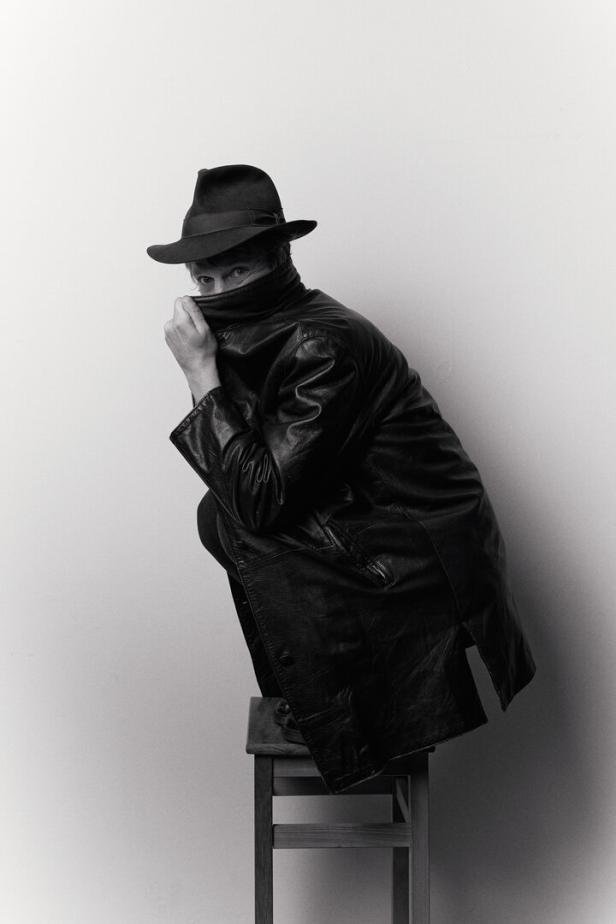
Voodoo Jürgens!
©Susanne Hassler-Smith
“Congratulations on the excellent new album. Let’s tackle the elephant in the room: your new, really top-produced sound. How did that come about?”
“Well, you develop further, generally speaking,” Jürgens said.
“Of course. But this boisterous pub sound was practically your trademark.”
“(laughs) When I recorded the first album, over ten years ago, I was just happy that anyone would play on it, that I could afford the studio. Maybe the sound then became a bit of my trademark, yes…”
“This time, we recorded the instrumental tracks first, then we went to Bremen with our producer Wolfgang Möstl.”
The result is a polished sound, reminiscent of international productions and perfectly complementing the album’s Americana songs. One interviewer described it as sounding like Tom Waits in a Viennese Prater amusement park.
“Although it’s often just as raucous as on my earlier albums…”
“That’s true. He always adds a bit of that depending on how he produces. I’m thinking more of his ‘Downtown Train’ phase. In any case, the music, which was previously just the foundation for your lyrics, is now moving to the forefront, feeling equal in importance. ‘Somnabulen,’ for example, is a wonderful jazzy groove number that reminds me of trumpeter Matthieu Michel. Is that a fair assessment?”
“Hm, the music wasn’t entirely unimportant before. (laughs) But it’s true. We used to play it a little safe musically. I was always afraid that the lyrics would be lost, not understood. And yes, Matthieu Michel is amazing. But we have Alex Kranabetter playing with us – he’s not bad either!”
“Let’s talk about lyrical content. As with any singer-songwriter, your fans are wondering: how autobiographical are your songs?”
“I’d say 63 percent (extended pause) … So yes, there’s a lot of me in there. But I also observe a lot in my surroundings, with acquaintances, on the tram, in a pub. I really don’t like to expose my innermost self. With ‘Tulln’ I went to the maximum extent, and I won’t go that far again.”
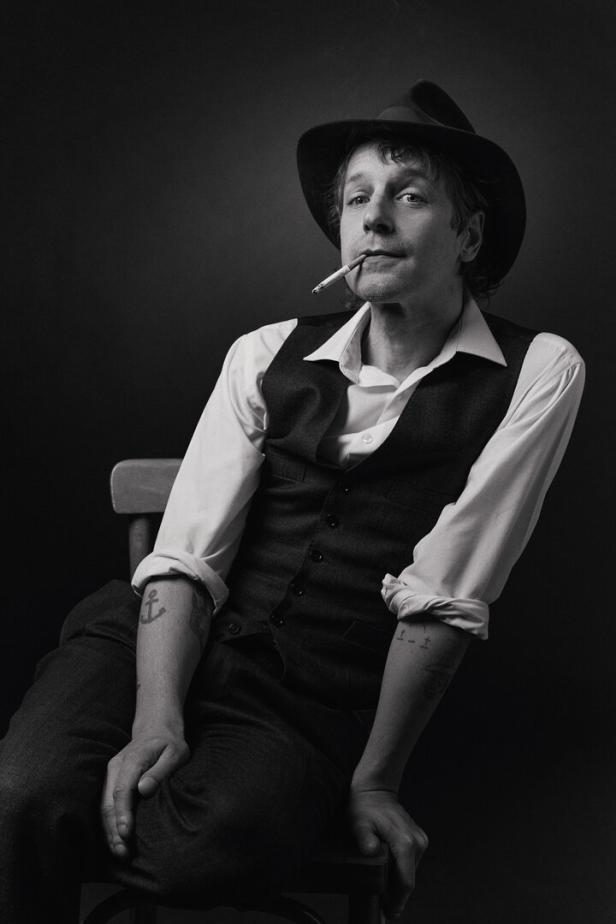
Does Voodoo Jürgens reveal his innermost self?
©Susanne Hassler-Smith
“Why ‘Tulln’ specifically?”
“That was just that time… Everyone in Tulln knew about my father. It was incredibly difficult for my grandmother, that he was in prison. For me too. And when I made the album, my grandmother was really upset, ‘must you do this?’ She didn’t want everything to come up again. But I just had to write about it, it was also a kind of liberation. I finally had that part of my life sorted out, could leave it behind.”
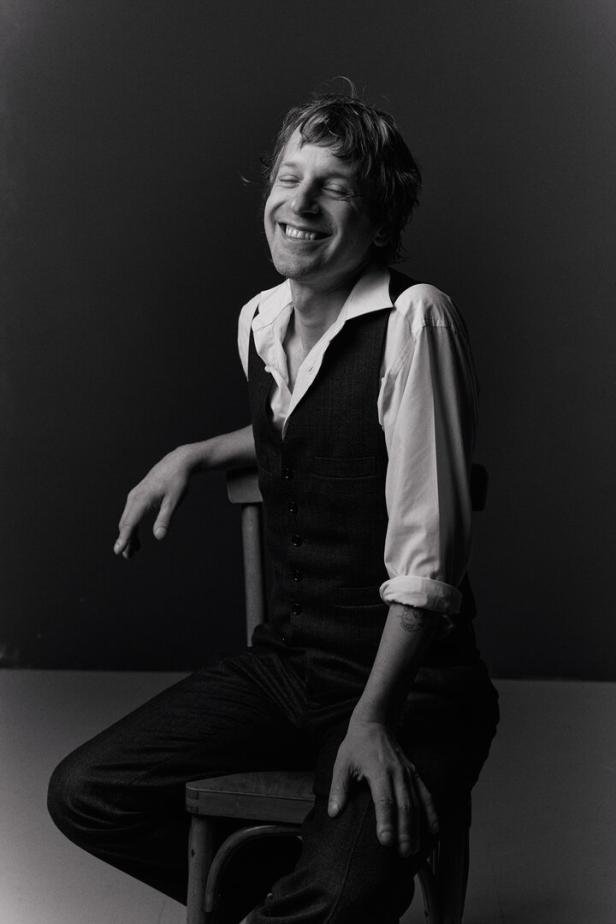
“63 percent!”
©Susanne Hassler-Smith
“And what about ‘Sche langsam wirst ma fremd’ now? This wonderful image, where the protagonist doesn’t realize if his girlfriend or almost ex-girlfriend really didn’t see him, or if she deliberately looked away to avoid seeing him: have you experienced that yourself?”
“Yes, of course, I’ve experienced that… (nods slowly and sips his coffee) Or maybe I just observed it? I don’t know if you have to experience these things yourself… But yes, probably you do. It was about this recognition, when something familiar, something you take for granted, suddenly drifts further and further away. Until you can no longer grasp it.”
“And with the song title ‘Kassiber’ you’ve expanded my vocabulary! Before I heard it, I would have located a Kassiber in the kitchen…”
“Honestly? I thought that word was more common. But several people have asked me about it… In any case, yes, it comes from prison slang and refers to a small, written message exchanged between inmates or smuggled out. I like these traditional words, Viennese, but also those from the underworld. This secret language of crooks, with Hebrew, Yiddish, Italian or Slovenian, Croatian, Bosnian roots, from all the languages spoken in old Austria, so to speak, understood only by those in the know.”
“‘Taxitänzer’ perhaps? Also a title on the new album.”
“No, that doesn’t come from that world. But you know what those are, right? They were or are the gentlemen who were available to dance with single ladies at balls and dance halls. The organizer paid them, they had to be very good dancers, but also charming and able to hold a conversation. I once met an old taxitänzer, and NONE of that applied to him. I wanted to write a song about him for a long time…”
“Speaking of the milieu: on ‘Vaschwindn’ you present a kind of escape scenario. The protagonist has to flee his apartment head over heels because he’s gotten involved with the wrong people. Where does our fascination with this kind of half-world come from?”
“Half-world… Interesting name actually, but yes, that’s what it’s called. I don’t know. Maybe it’s because from politicians to the richest of the rich to corporate executives, whom we don’t even know, everyone is a considerable crook. They do things we can’t even imagine. I find the small crooks more sympathetic, those who are just getting by, stumbling from one problem to the next, and dreaming of a better life that we can all relate to.”
“You mentioned Bremen earlier, where you recorded. And you also have a really large fanbase in Northern Germany. Are you even understood there?”
“Surprisingly little. (laughs) No, really, I thought that wouldn’t be a problem! But after talking to fans from the North, after concerts, I realized: they understand only a few words. And not always correctly. But I think maybe it’s like Eros Ramazotti with us. We only understand the chorus, but we still like him. And Austrians – also because of our completely incomprehensible pronunciation – are somehow considered exotic. Could that be it, or what?”
