
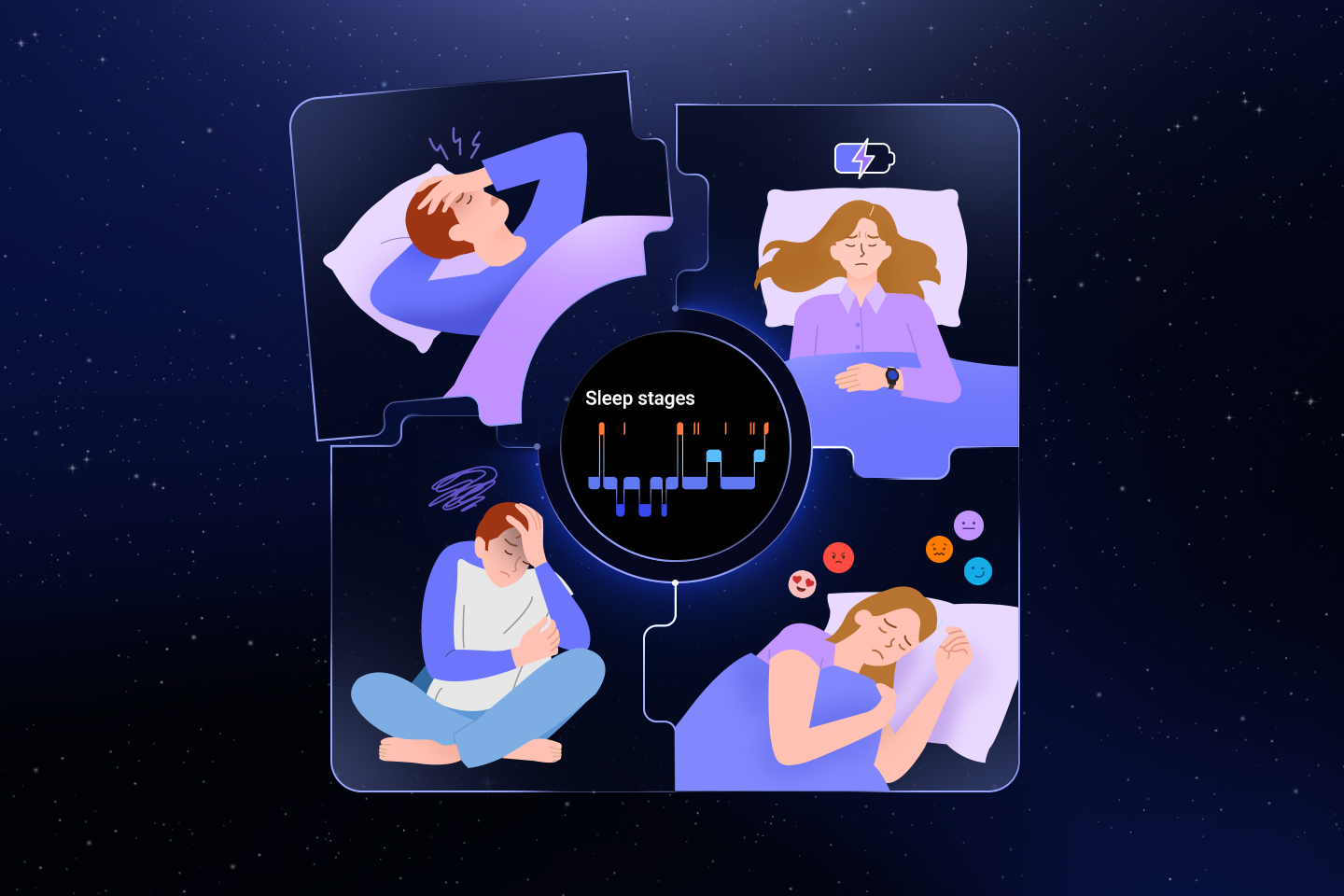
Millions worldwide suffer from sleep apnea, yet an estimated 80% are unaware they have the condition. This disorder causes interruptions in breathing during sleep, potentially disrupting oxygen supply, diminishing sleep quality, and leading to health complications like high blood pressure or stroke. Despite these risks, the condition often goes undiagnosed due to the time-consuming and costly sleep studies typically required for diagnosis.
In recognition of World Sleep Day 2026, a global study of Samsung Health users sheds new light on the true scope of the condition and its disruptive impact on sleep. Aligning with this year’s World Sleep Day theme, “Sleep Well, Live Better,” Samsung is helping to illuminate the often-unseen signs of sleep apnea through the Samsung Galaxy Watch series[3]. Understanding and addressing sleep apnea is crucial for overall health and well-being.
How Does Sleep Apnea Impact Your Sleep?
The study revealed that 23% of participants are at risk for sleep apnea. This finding highlights the widespread prevalence of the condition and the need for increased awareness.
“The micro-awakenings and brief arousals that follow pauses in breathing disrupt your sleep,” explains behavioral sleep scientist Dr. Vanessa Hill. “This prevents the brain from staying in the REM and deep sleep stages necessary for cognitive and physical recovery.”
These constant disturbances directly impact sleep duration and quality, leading to:
- Reduced REM Sleep: Participants with moderate to severe sleep apnea indicators detected by their Samsung Galaxy Watch experienced approximately four fewer minutes of rapid eye movement (REM) sleep. REM sleep is the stage where the brain processes emotions, consolidates memories, and facilitates learning. Insufficient REM sleep can contribute to mood swings and memory problems, impacting work performance and overall well-being.
- Less Deep Sleep: Sleep apnea also deprives individuals of deep sleep, averaging about eight fewer minutes per night. This is the critical phase for physical restoration, where growth hormone is released, muscles are repaired, and the immune system is activated. A lack of deep sleep can lead to physical exhaustion, slower recovery, and increased susceptibility to illness.
- Frequent Nighttime Awakenings: Study participants showing signs of sleep apnea were also waking up more frequently during the night, remaining awake for approximately four additional minutes. These interruptions disrupt the sleep cycle, shifting individuals into lighter, less restorative sleep phases and inevitably leading to daytime fatigue, regardless of sleep duration.
- Shorter Sleep Duration: individuals with a higher risk of sleep apnea averaged about 12 minutes less sleep. While seemingly small, this loss can significantly affect overall sleep quality by fragmenting the sleep cycle throughout the night.
Why This Matters: “Even a small loss of sleep duration is exacerbated by a greater loss of sleep quality,” says Dr. Hill. “This can be the difference between simply ‘lying in bed’ and getting restorative rest, which may explain why people sense so tired the next day.”
Dr. Hill also advocates for a multidimensional approach to sleep health. “Sleep apnea impacts many dimensions of sleep: duration, quality, sleep efficiency, and even daytime fatigue,” she notes.
Because sleep apnea demonstrably affects all aspects of sleep, early detection is a vital first step in managing the condition.
How Does the Samsung Galaxy Watch[4] Signal Signs of Moderate to Severe Sleep Apnea?
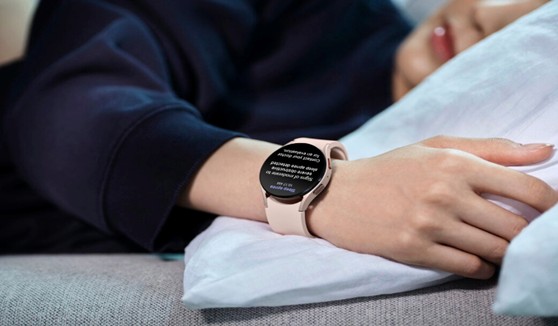
For years, detecting sleep apnea has been challenging, requiring uncomfortable in-hospital sleep studies. Samsung is offering a path to at-home detection with the Sleep Apnea[5] feature on the Samsung Galaxy Watch.
- How it Works: Users simply need to track their sleep for more than 4 hours per night over two nights with a compatible Samsung Galaxy Watch[6]. The Sleep Apnea feature, available through the Samsung Health Monitor app, helps users proactively recognize potential signs of sleep apnea. Initially launched in Korea, the feature has since received De Novo clearance from the U.S. Food and Drug Administration (FDA) and is now available in 78 markets[7] worldwide—with the number continuing to grow.
- The Technology: The feature utilizes the BioActive Sensor of the Samsung Galaxy Watch to monitor blood oxygen levels, detecting when a user stops breathing (apnea) or doesn’t breathe sufficiently (hypopnea). Based on this data, the feature estimates the user’s Apnea-Hypopnea Index (AHI), which indicates the severity of obstructive sleep apnea (OSA).
- From Awareness to Action: Beyond identifying potential sleep apnea, your Samsung Galaxy Watch can help build habits for better holistic sleep health. Features include the Sleep Coaching program for detailed analysis and tips on improving sleep quality, and Bedtime Guidance[8], which recommends an optimal bedtime to help establish better sleep routines.
“For years, the inconvenience of a clinical sleep study in a lab has been a barrier to diagnosing sleep apnea,” says Dr. Hill. “Wearable technology, like the Samsung Galaxy Watch, makes that first step accessible to everyone, allowing people to collect meaningful data in their own beds, which can serve as a starting point for a conversation with a healthcare provider.”
Embrace Your Night
A good night’s sleep is the first step toward a more energized life, and Samsung is here to help. Looking ahead, Samsung continues to innovate and improve the sleep apnea feature to create it even more powerful with sharper insights. Prioritize your rest today to be fitter tomorrow.
[1]“Obstructive Sleep Apnea National Indicator Report”, American Academy of Sleep Medicine (2023)
[2]Samsung Health users from the U.S., South Korea, Brazil, Canada, Mexico, Russia, Chile, South Africa, and the Philippines participated in the research from January to June 2025.
[3] For general wellness and fitness purposes only. Not intended for use in the diagnosis, treatment, or prevention of any medical condition or disease. Measurements are for personal reference only.
[4] For general wellness and fitness purposes only. Not intended for use in the diagnosis, treatment, or prevention of any medical condition or disease. Measurements are for personal reference only.
[5]Sleep Apnea is a software-only, over-the-counter (OTC) medical mobile app that works on compatible Samsung Galaxy Watches and phones. The feature is intended for on-demand use. Users should not use this feature as a substitute for traditional diagnosis and treatment methods by a qualified physician. Data from this device is also not intended to assist physicians in diagnosing sleep disorders. This feature can detect signs of moderate to severe obstructive sleep apnea (OSA) in users 22 years of age and older.
[6]Availability may vary by market, carrier, model, or paired smartphone. Available on the Galaxy Watch4 series and later. The watch requires Wear OS 5.0 or higher and must be paired with a Samsung Galaxy smartphone running Android 12.0 or higher.
[7]Supported markets include Australia, Azerbaijan, Bahrain, Belgium, Bolivia, Brazil, Bulgaria, Canada, Chile, Christmas Island, Cyprus, Denmark, Dominican Republic, Germany, Ecuador, Egypt, El Salvador, Estonia, Faroe Islands, Philippines, Finland, France, Georgia, Greece, Guatemala, Hong Kong, Hungary, Iceland, Iraq, Ireland, Italy, Jordan, Yemen, Kuwait, Cocos (Keeling) Islands, Croatia, Latvia, Lebanon, Lithuania, Luxembourg, Malaysia, Mauritius, Mayotte, Mexico, Netherlands, Nicaragua, Norfolk (Island), Norway, Oman, Austria, Panama, Paraguay, Peru, Poland, Portugal, Qatar, Romania, Russia, Réunion, Singapore, Slovakia, Slovenia, Spain, Syria, Taiwan, Thailand, Czech Republic, United Arab Emirates, United States, United Kingdom, Venezuela, Vietnam, South Africa, South Korea, Sweden, Switzerland.
[8]Bedtime Guidance is available on Android devices (Android 11 or higher) requiring the Samsung Health app (v6.30.2 or higher). Bedtime Guidance is based on a 3-day analysis of the user’s circadian rhythm and sleep debt. For general wellness and fitness purposes only. Measurements are for personal reference only. Not intended for the detection, diagnosis, or treatment of any medical condition or sleep disorder. Consult with a physician for advice.
