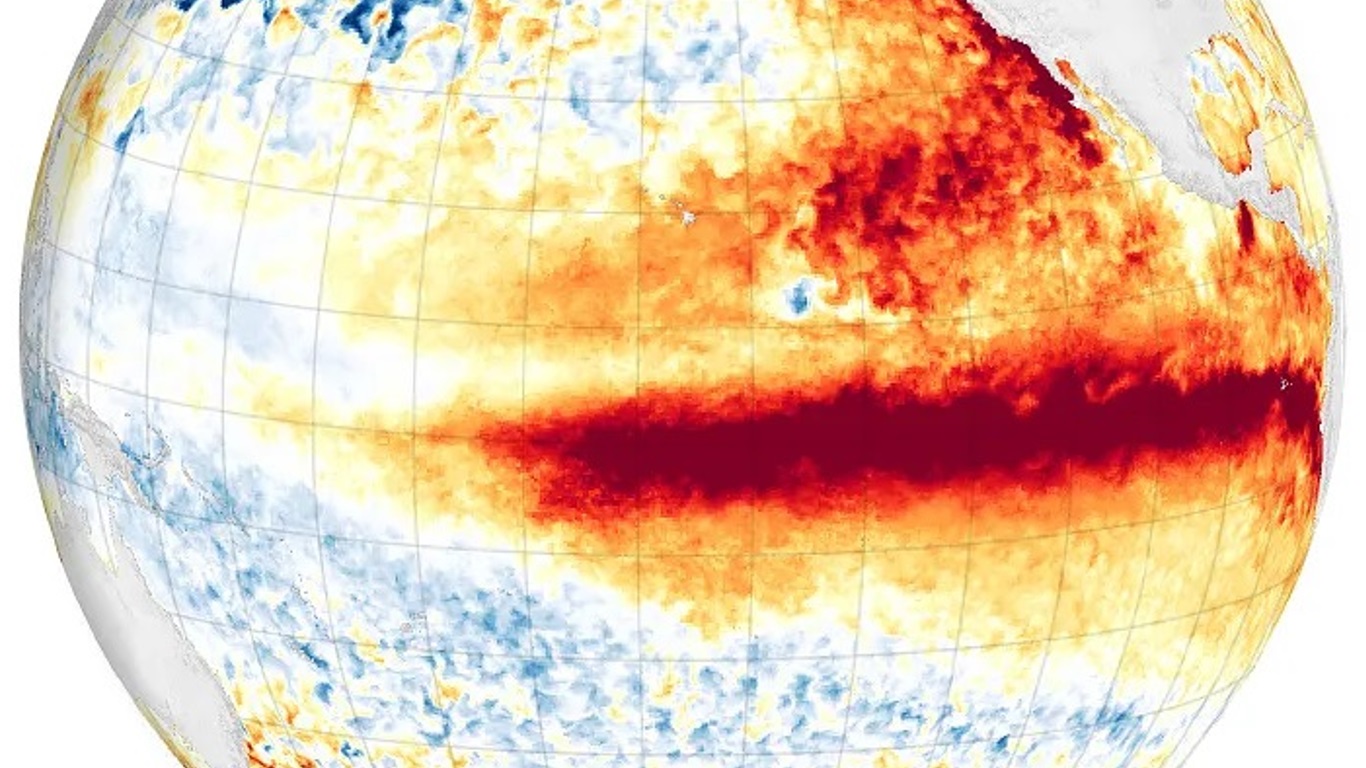
The National Oceanic and Atmospheric Administration (NOAA) is forecasting a high probability of El Niño developing later this year, potentially impacting global weather patterns.

NASA
The latest monthly forecast, released Thursday, March 12, 2026, by NOAA’s Climate Prediction Center (CPC), indicates a strong likelihood of El Niño developing by mid-year. This shift could have significant implications for weather around the globe.
Currently, La Niña conditions persist, but are expected to transition to neutral levels in the coming months. NOAA estimates a 55% chance of ENSO-neutral conditions through May-July 2026. Still, the probability of El Niño emerging increases steadily in the following months.
From April-May-June, there’s approximately a 15% chance of El Niño development, even as neutral conditions remain dominant. That probability rises to around 45% during May-June-July.
The turning point is expected between June and August, with a 62% chance of El Niño developing during June-July-August, surpassing the approximately 38% chance of continued neutral conditions, according to the NOAA projection.
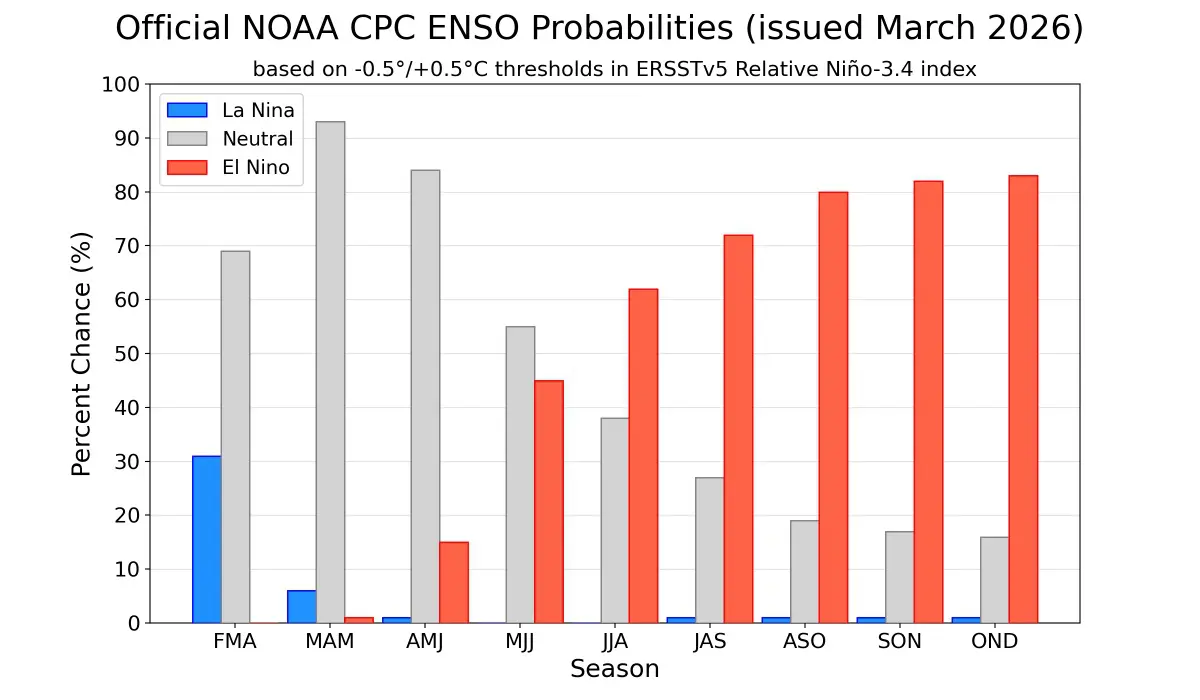
NOAA projects El Niño in the second half of the year | NOAA
The forecast indicates the equatorial Pacific will remain neutral through much of the first half of the year, but with a growing trend toward warming in the second half. This anticipation of a shift in climate patterns is crucial for agricultural planning and disaster preparedness.
The warming trend is expected to continue, with the probability of El Niño reaching approximately 72% during July-August-September, 80% in August-September-October, 82% in September-October-November, and around 83% in October-November-December.
As of February 2026, the sea surface temperature anomaly in the Niño 3.4 region of the equatorial Pacific was -0.5°C, nearly neutral. However, the Niño 1+2 region, near the coasts of Ecuador and Peru, showed an anomaly of +0.9°C, indicating the beginning of a coastal El Niño episode.
Currently, March is unfolding under neutral conditions in the equatorial Pacific, though this doesn’t preclude the possibility of extreme weather events. Atmospheric indicators still reflect the influence of the La Niña conditions from recent months.
What is El Niño?
El Niño occurs when surface waters in the equatorial Pacific become warmer than average and easterly trade winds weaken. The opposite condition is called La Niña, characterized by cooler-than-average waters and stronger easterly winds. El Niño episodes typically occur every three to five years.
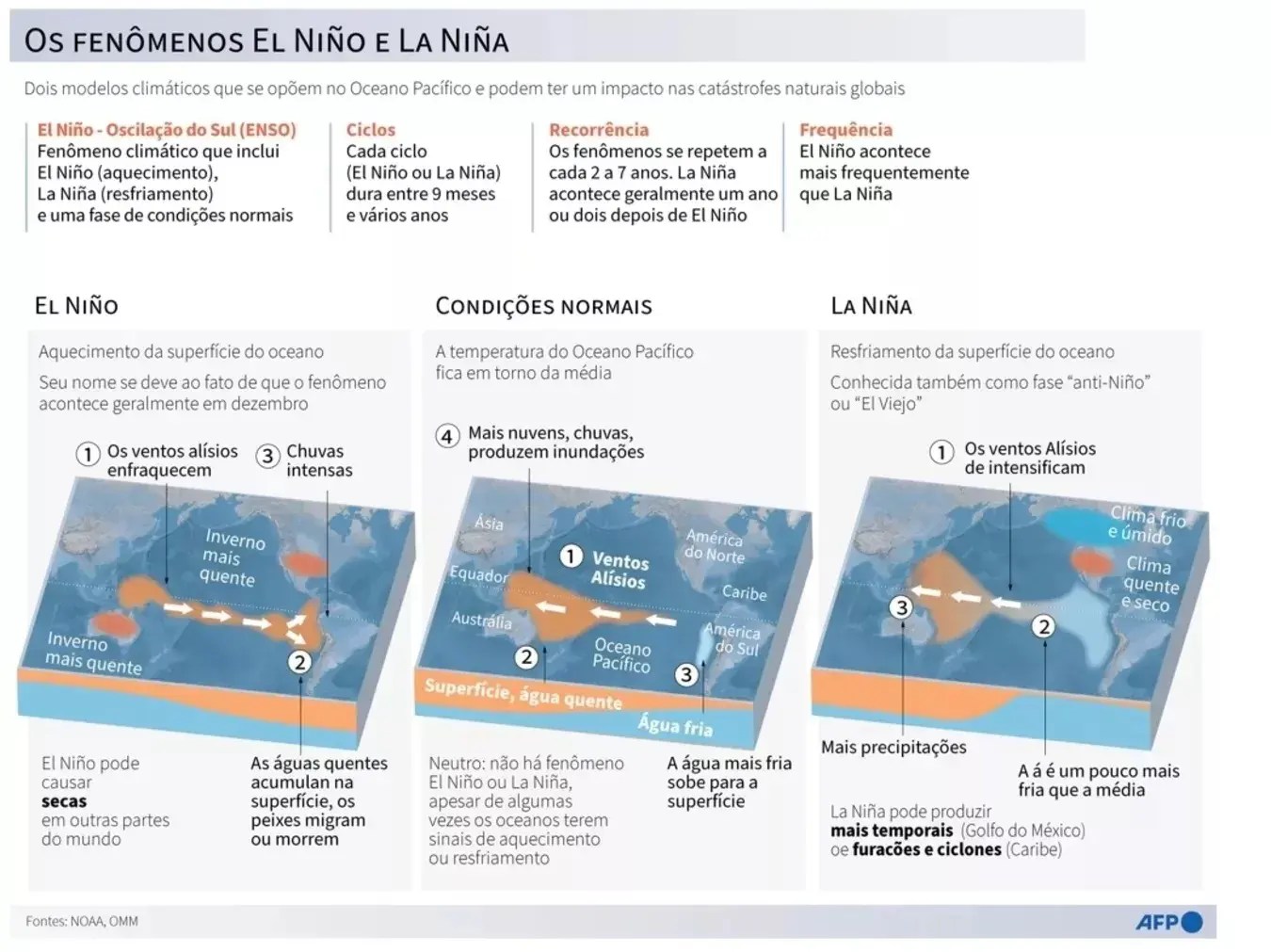
El Niño, La Niña, and neutral conditions have consequences for people and ecosystems worldwide. These interactions between the ocean and atmosphere alter the climate globally and can result in severe storms or mild weather, drought or floods. These climate shifts can have secondary effects on food supplies and prices, wildfires, and economic and political stability.
Ecosystems and human communities can be affected positively or negatively. In the Southern Brazil, La Niña increases the risk of drought while El Niño exacerbates the threat of heavy rainfall and flooding. Historically, the best agricultural harvests in Southern Brazil occur with El Niño, whereas this isn’t always the case, and productivity losses tend to be greater under La Niña. El Niño exacerbates the risk of drought in Northeastern Brazil while La Niña brings more rain to the region.
The name “El Niño” originated in the 1800s, when fishermen off the Pacific coast of South America noticed warmer ocean currents appearing every few years. Fish catches would dramatically decline in the region, negatively impacting food supplies and the livelihoods of coastal communities in Peru. The warmer water coincided with the Christmas season.
Referring to the birth of Christ, Peruvian fishermen then called the warm ocean waters “El Niño,” which means “the boy” in Spanish. Fishing in this region is better during La Niña years, when upwelling of cold water from the ocean depths brings nutrient-rich waters, resulting in increased fish populations.
Anúncios