
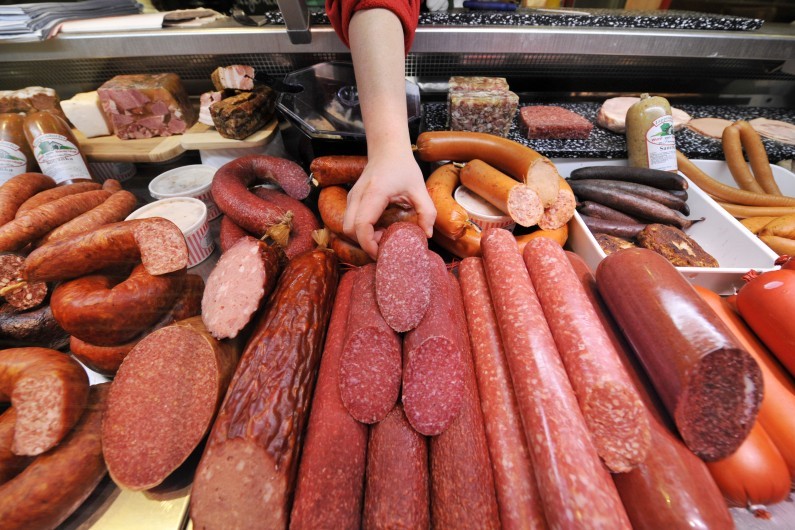
Charcuterie is a cornerstone of French culinary heritage, but it carries a controversial reputation, particularly due to the use of nitrites—additives employed as preservatives. Faced with consumer skepticism, the industry now offers products labeled “nitrite-free.” But does this designation truly equate to better health?
Dr. Jimmy Mohamed first explains the role of nitrites in charcuterie: “In charcuterie, there are nitrites that are preservatives, which help to preserve the charcuterie for longer and also give the pink color to ham.” Without these additives, ham would be “white-gray, in fact. But since that’s not remarkably appetizing, we prefer to buy pink ham rather than gray ham.”
The problem is that nitrites are not harmless. “These nitrites, when mixed with the iron contained in the charcuterie, create a new molecule that destroys the DNA of cells in the colon and promotes cancer.” This link between excessive charcuterie consumption and colorectal cancer has prompted manufacturers to seek alternatives.
supermarkets now stock products proudly displaying “nitrite-free” labels. However, consumers should be cautious about taking this claim at face value. “When you move to the supermarket, you find industrial charcuterie labeled ‘nitrite-free’ that costs more. You think, since there are no nitrites, it’s better. Not quite.” To replace nitrites, manufacturers often use vegetable broths, particularly celery, which are naturally rich in nitrates. “The problem is that nitrates, in the digestive tract, under the effect of certain enzymes, can be converted into nitrites.”
In other words, even without added nitrite, charcuterie can contain it indirectly. “Nitrates can be converted into nitrites, and therefore these nitrites can then promote colorectal cancer. The risk isn’t entirely eliminated, even if it is somewhat reduced. “From a purely pragmatic point of view, it’s still a little better. The risk is a little lower, but it’s still present.”
Vigilance remains crucial, even when purchasing from artisan butchers. “There are many butchers who produce charcuterie without nitrite. They use broth instead. So the risk is a little less important, but it still exists.” For Dr. Mohamed, moderation is key: “You can consume it, but don’t think, ‘There’s no nitrite, so I can eat boxes of it.’ Or conversely, ‘There are nitrites, oh my God, I won’t eat any.’ Everything is about moderation, whether with or without nitrite.”
Official recommendations are clear: no more than 150 grams of charcuterie per week, or about four slices of ham. “And beyond that, we know that we increase the risk of colorectal cancer,” the doctor explains. It’s also important to remember that charcuterie, even without nitrite, remains a fatty and salty food: “Nitrite-free charcuterie is still fat, bad fat, and a lot of salt. And therefore it’s a food that should be enjoyed occasionally and as a treat.”
the “nitrite-free” label shouldn’t overshadow the fundamentals of a balanced diet. “Everything is about moderation,” insists Jimmy Mohamed. Charcuterie, with or without nitrite, should remain a rare pleasure, not a daily habit.
