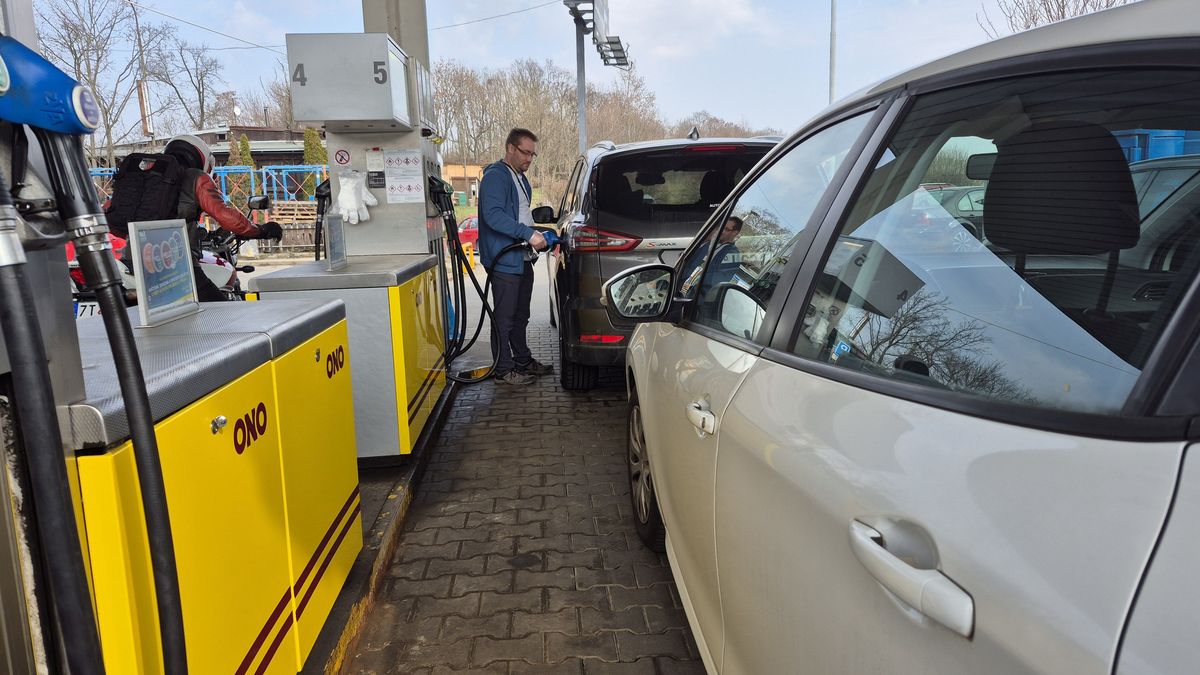
Czech Republic officials are monitoring fuel prices amid rising global tensions, but remain hesitant to intervene with tax cuts despite a surge in costs at the pump. The situation is being closely watched following concerns over escalating prices linked to conflict in the Middle East.
Finance Minister Zbynek Stanjura’s office is tracking prices at gas stations and comparing them to developments in the commodities market, with initial data on fuel retailer margins expected Monday. According to Stanjura, “We do not have information that margins are growing faster than prices on the stock exchanges. Our prices are too still lower than in neighboring countries.”
Opposition leaders are pushing for a temporary reduction in fuel taxes to alleviate the burden on consumers. Martin Kupka, chairman of the Civic Democratic Party (ODS), proposed a cut of 1.70 koruna per liter for diesel and gasoline, estimating a 5 billion koruna impact on the state budget over four months. “This is a step that is anti-inflationary and responsible,” Kupka said during a televised debate.
However, the governing coalition remains opposed to a tax reduction, preferring to focus on monitoring profit margins at fuel retailers. The effectiveness of a tax cut also hinges on whether gas stations will pass the savings on to customers, a concern raised by some experts.
Another potential solution discussed is releasing state oil reserves managed by Čepro, a state-owned company. Government officials have so far dismissed this option, citing sufficient supply at gas stations.
The average price of diesel in the Czech Republic this week exceeded 41 koruna, reaching a three-and-a-half-year high. Gasoline prices are also rising rapidly, with Natural 95 selling for an average of 37.33 koruna per liter on Thursday.
Currently, the consumption tax on diesel is 9.95 koruna per liter, while gasoline is taxed at 12.84 koruna per liter. Stanjura indicated that the timing isn’t right for fiscal measures, but didn’t rule out future action, reiterating that fuel prices in the Czech Republic remain lower than in surrounding countries.
A similar tax cut of 1.50 koruna per liter was implemented in 2022 in response to rising prices following Russia’s invasion of Ukraine. However, the impact was limited by rising crude oil prices and wholesale fuel costs, with some economists suggesting that fuel stations benefited more than consumers from the measure.
According to Tomio Okamura, chairman of the SPD movement, resolving the current issue of higher fuel prices depends primarily on ending the conflict in the Middle East. “We have a law on prices that allows us to cap margins, but that is the last resort,” he said.
Sports Minister Boris Šťastný (Motorists) suggested a need for targeted solutions rather than broad measures, advocating for a wait-and-see approach of one to two weeks. Vít Rakušan, chairman of the STAN movement, dismissed the Hungarian approach of price controls, but called for a discussion on a short-term tax reduction.
Oil Market Volatility Continues
The ongoing turmoil in the Middle East is fueling concerns about potential inflation. Analysts say the duration of the conflict will be crucial, with fears of prolonged disruption to shipping through the Strait of Hormuz driving up oil and commodity prices. Brent crude oil closed Friday’s trading above $103 a barrel, a weekly increase of over 11 percent, according to Reuters.
The United States recently authorized countries to purchase Russian oil for 30 days, but this has not significantly calmed the markets. The move came as members of the International Energy Agency (IEA) prepared to release 400 million barrels of oil.
Former President Donald Trump stated Saturday that the U.S. Military would soon begin escorting vessels through the Strait of Hormuz to protect them from Iranian attacks. He also revealed that U.S. Forces attacked the island of Charg, a key energy infrastructure hub for Iran, stating that it was “totally destroyed” and that further strikes were possible. Trump clarified that energy targets were not hit, as their restoration would take years.