
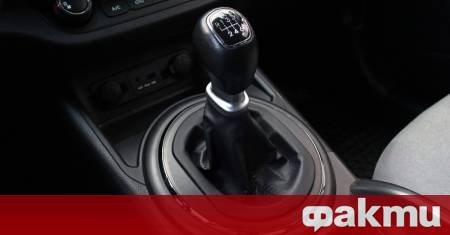
The future of manual transmissions in the automotive industry is increasingly uncertain, though their complete disappearance isn’t imminent. Although automated transmissions dominate the market due to their practicality in congested urban environments, the traditional gear stick continues to hold its ground in specific niches.
Statistics reveal a significant shift: if automatic transmissions barely surpassed 50% of sales in the mid-last decade, by 2026, vehicles with two pedals are projected to account for 70-80% of global sales. In the United States, automatics are nearly the absolute standard, and Europe and Asia are rapidly following suit. Modern robotic gearboxes and dual-clutch transmissions now shift gears so quickly that the former dynamic advantage of manual transmissions is largely a thing of the past.
However, three “bastions” remain where the manual transmission is indispensable. These include true off-road machines and workhorses in the light commercial segment, where direct control over torque is vital. Another segment is sports cars for enthusiasts – where gear changes are about emotion and the pure mechanical enjoyment of driving. Finally, the budget sector continues to rely on manual transmissions, as their lower acquisition cost and easier maintenance remain a preferred choice for cost-conscious consumers.
Interestingly, while Chinese manufacturers are largely embracing automated systems in their new models, European and domestic budget brands – such as Lada – continue to offer manual alternatives to maintain competitive pricing. Environmental standards and the mass electrification of vehicles, however, pose the greatest threat to the third pedal. As electric vehicles inherently don’t require a conventional multi-speed gearbox, the end of the internal combustion engine era will likely also mark the end of the manual transmission in mass production. Forecasts suggest that over the next decade, it will become an exotic niche product, reserved only for the cheapest or most expensive and specialized vehicles.
Поставете оценка:
☆ ☆ ☆ ☆ ☆
Оценка 2.1 от 16 гласа.
