
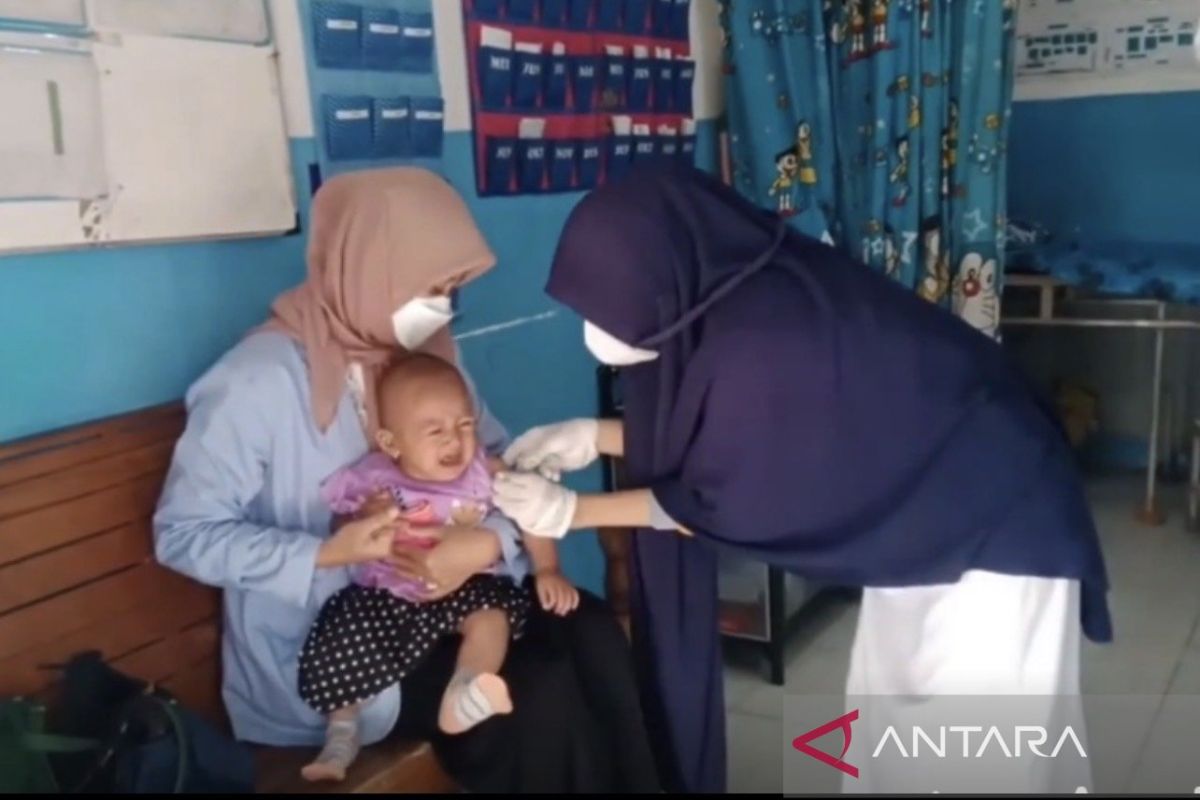
Health officials in East Kalimantan province are urging residents to proactively participate in measles immunization programs as vaccination coverage remains below optimal levels needed to achieve herd immunity. Currently, only 65 percent of the population in the region, nicknamed “The Showcase of the Capital Nusantara,” has received the measles vaccine.
This figure falls significantly short of the national target of 95 percent uniform coverage across all areas, according to Fit Nawati, Head of the Prevention and Control of Diseases at the East Kalimantan Provincial Health Office.
“Our coverage is still quite far from the target. This means approximately 30 percent of children in East Kalimantan are not protected by immunization and are at high risk of contracting the virus,” Nawati stated during a public awareness campaign on measles prevention in Samarinda.
Measles is a highly contagious viral infection that can lead to serious complications in children, and is more than just a common fever. Symptoms parents should be aware of include high fever, cough, runny nose, red eyes (conjunctivitis), and the appearance of a red rash on the skin.
The most vulnerable groups are infants and toddlers who have not been immunized, but adults with poor nutritional status can also act as carriers of the virus, officials noted.
To provide lasting protection and halt the spread of the virus, the government has updated the vaccination schedule. Children are now required to receive three doses of the measles vaccine: at 9 months, 18 months, and in the first grade of elementary school.
Data from the East Kalimantan Provincial Health Office reveals disparities in coverage across these stages. Coverage for the initial dose at 9 months is currently at 62 percent, and at 18 months it’s 60 percent. Though, immunization coverage among first-grade students has reached 92 percent.
“Collaboration with schools has been very effective due to the fact that education can directly reach parents and teachers,” Nawati said. “We hope the same level of awareness will grow among parents with infants and toddlers at home.”
Residents are also encouraged to strengthen their immune systems by adopting clean and healthy living behaviors as an additional defense against infectious diseases.
This push for increased immunization comes as the country strengthens its overall immunization efforts due to reported cases of measles among foreign nationals, as highlighted in recent reports. The national government is intensifying measles and rubella immunization efforts starting in March 2026, as detailed in a recent announcement. The update underscores ongoing public health challenges related to preventable diseases.
