
The U.S. Federal Reserve on Wednesday held steady its benchmark interest rates, citing the uncertain economic impact of the ongoing conflict in the Middle East.
The central bank maintained its target range of 3.50% to 3.75%, a level unchanged since December.
The decision drew criticism from former President Donald Trump, who has repeatedly called for lower rates to reduce borrowing costs for individuals and the federal government. He posted on his Truth Social platform Wednesday, questioning, “When will ‘Too Late’ Powell lower the RATES?”
Economists suggest the recent escalation of geopolitical tensions, triggered by events beginning February 28th, has complicated the economic outlook, potentially fueling inflation although simultaneously hindering growth.
“The implications of events in the Middle East for the U.S. Economy are uncertain,” the Fed stated in its accompanying release.
During a two-day meeting, Fed officials updated their economic projections for the first time since December. The median forecast now anticipates minimal progress on inflation throughout 2026.
Price increases are now projected to reach 2.7% by the end of 2026, a slight upward revision from a previous estimate of 2.4%. January data showed a 2.8% increase in prices. This revised forecast underscores the challenges the Fed faces in achieving its 2% inflation target, a goal it hasn’t reached in five years.
However, officials modestly improved their growth outlook, projecting a 2.4% expansion compared to 2.3% previously.
The unemployment rate is still expected to remain at its current level of 4.4%.
Monetary policy projections continue to lean towards a single rate cut – a quarter-point reduction – later this year.
The decision to hold rates steady was largely unanimous within the Fed, with eleven of twelve voting members supporting the status quo.
The sole dissenting vote came from Governor Stephen Miran, appointed by Donald Trump last fall, who advocated for a quarter-point rate decrease.
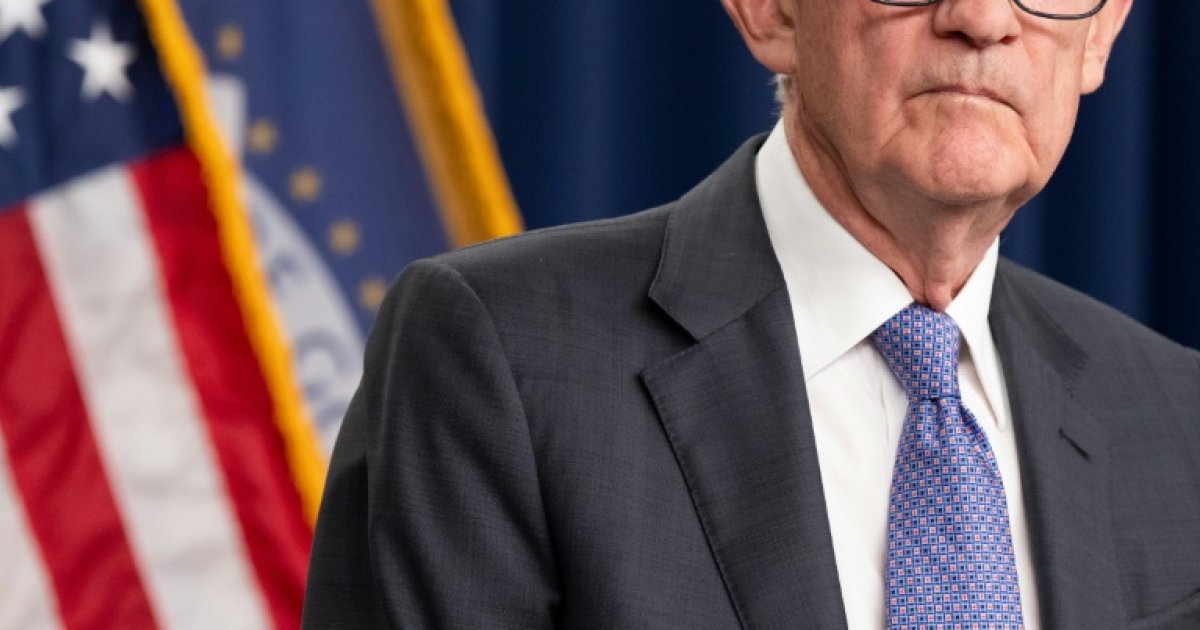
Fed Chair Jerome Powell is scheduled to address the public at 18:30 GMT. Observers anticipate he will reiterate a “wait and see” approach, a common stance when the economic path remains unclear.
– “Credibility” –
The joint military action by Israel and the United States against Iran on February 28th has introduced significant uncertainty into the global economic landscape, contributing to disruptions in the Strait of Hormuz and a surge in energy prices.
In response to these developments, the Reserve Bank of Australia on Tuesday raised its key interest rate, citing “the strong increase in fuel prices.”
The Bank of Canada also held its rate steady on Wednesday, just hours before the Fed’s announcement, while acknowledging that the Middle East conflict had “increased volatility in global energy prices and financial markets, and… elevated risks to the global economic outlook.”
Maintaining credibility on inflation remains a key priority for the central bank. As ING analysts pointed out prior to the meeting, “A central bank must defend its credibility on inflation, and it is difficult to justify rate cuts when inflation is above target and moving away from it.”
Donald Trump has asserted that the conflict’s impact on energy prices will be short-lived. The Biden administration, meanwhile, announced several measures Wednesday aimed at stabilizing prices at the pump, including a temporary 60-day suspension of a law restricting fuel transport by non-U.S. Flagged vessels.
published on March 18 at 7:13 PM, AFP
