
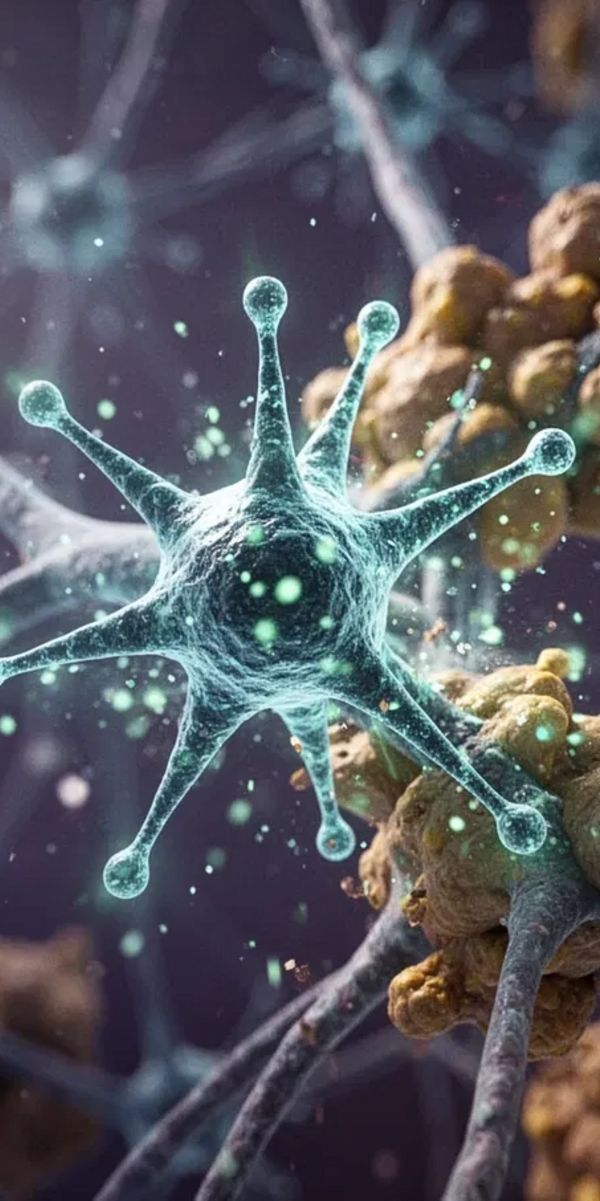
Researchers are reprogramming brain support cells to hunt down plaque and are also unlocking how existing Alzheimer’s medications work by activating the body’s own immune defenses.
A dual breakthrough could revolutionize dementia treatment, as scientists transform brain cells into highly effective cleanup crews and gain a deeper understanding of how current medications function. This research offers new hope in the fight against a disease that affects millions worldwide.
Although research continues on novel therapies, individuals can seize proactive steps to support their cognitive health. A free guide offers seven secrets and 11 practical exercises to enhance concentration and potentially reduce dementia risk. Secure your free PDF: Brain training made easy
Astrocytes Transformed into Plaque Hunters
The research centers on a cell type called astrocytes, star-shaped support cells in the brain. U.S. Researchers have genetically reprogrammed these cells, drawing inspiration from cancer medicine. They equipped the astrocytes with an artificial antenna-receptor (CAR).
This receptor functions like a navigation system, enabling the modified “CAR-astrocytes” to locate and destroy the harmful protein deposits – amyloid plaques – characteristic of Alzheimer’s disease. In mouse studies, this cellular immunotherapy significantly reduced plaque buildup. Importantly, the therapy was most effective when administered before extensive plaque formation, suggesting a potential preventative approach.
Key Insight: How Today’s Medications Really Work
In parallel, a second study provides a groundbreaking explanation of how already-approved Alzheimer’s medications, such as the antibody lecanemab, actually function.
Their effectiveness fundamentally depends on microglia – the brain’s immune cells. A specific part of the antibody, the Fc fragment, serves as an anchor point for these cells. Once the antibody binds to a plaque, this fragment activates the microglia.
the immune cells are genetically reprogrammed and break down the deposits much more efficiently. This discovery resolves a long-standing mystery and confirms that even established therapies harness the power of the brain’s own cells.
Single Injection Instead of Monthly Infusions
This new understanding opens the door to more patient-friendly treatments. Current antibody therapies are considered a milestone, slowing the loss of independence by approximately ten months.
However, these treatments come at a cost: patients must receive the drugs as lengthy infusions in specialized centers one to two times per month. The new CAR-astrocyte therapy could drastically reduce this burden.
According to preclinical data, a single injection may provide a long-lasting effect, potentially improving the quality of life for patients and easing the strain on clinics and care systems.
Paradigm Shift: The Brain Heals Itself
Experts view these publications as a fundamental shift in approach. Previously, the focus was on introducing artificial antibodies from outside the body. The new focus is on strengthening and directing the brain’s natural defenses.
The transfer of the CAR principle from cancer research to Alzheimer’s research highlights the vast potential of this approach. The ability to repurpose both astrocytes and microglia into precision tools opens entirely new avenues for treatment.
A deeper understanding of the Fc fragment now allows for the development of a next generation of medications that could directly activate microglia – eliminating the need for complex antibody infusions.
Still a Long Road to the Clinic
Despite the excitement, research is still in its early stages. The success of the CAR-astrocytes has so far only been demonstrated in animal models. The safety and long-term effects of the genetically modified cells must now be tested in humans.
If these results are confirmed in clinical trials, Alzheimer’s treatment could appear very different. Researchers even speculate that the technology could eventually be applied to other brain diseases or tumors. The discoveries of this spring mark a crucial step toward personalized medicine for the brain.
