
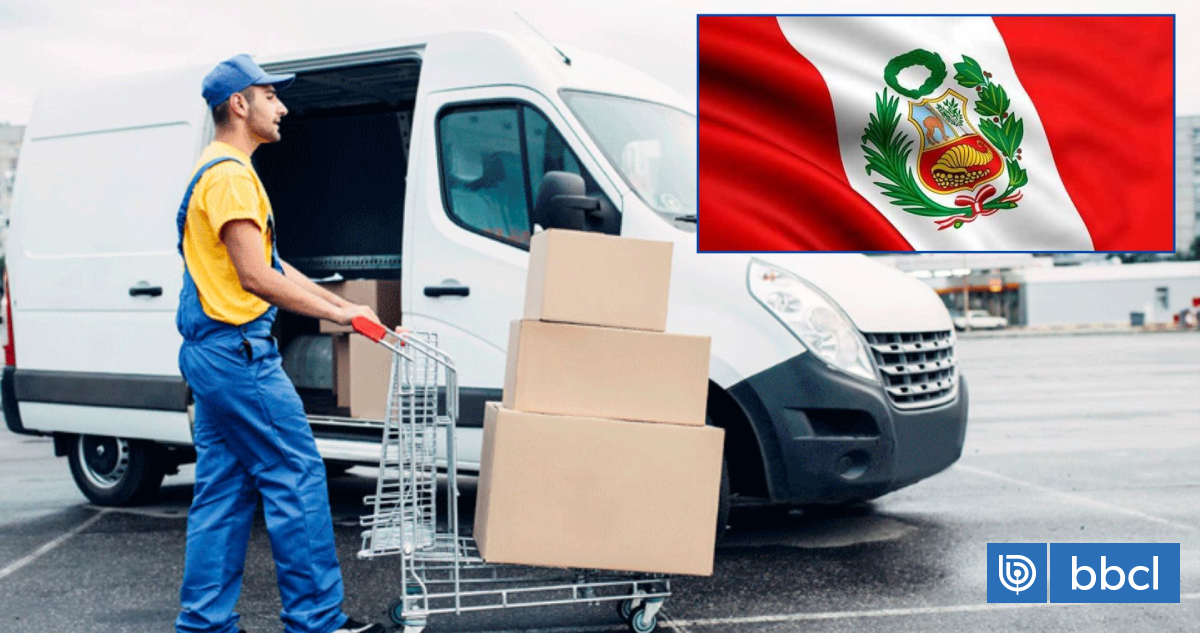
Peruvian logistics company Chazki is aiming for an 80% market coverage of the e-commerce sector in Chile and broader consolidation across Latin America, fueled by a last-mile delivery network.
The company plans to add at least 40 novel cities to its network in 2026, with a goal of reaching 150 destinations over the next three years, according to a report from DF SUD. Chile is a key focus for this expansion.
Latin America’s e-commerce market has grown 1.5 times faster than the global average, driving demand for efficient logistics solutions. This rapid growth underscores the need for companies like Chazki to scale their operations and meet evolving customer expectations.
Founded in 2015, Chazki has shifted its strategy to focus on both deepening its presence in existing markets and entering new ones with stringent delivery time, traceability, and territorial coverage requirements.
Currently operating in 29 cities across the region, including 15 in Mexico, Chazki anticipates expanding to 150 cities within three years. “At the beginning, territorial growth may be slower, but then it will gain speed,” explained CEO Gonzalo Begazo to DF SUD.
The company’s objective in Chile is to establish a presence in the country’s five largest cities and capture at least 80% of the national e-commerce market share.
Country Manager Sebastián Araya outlined the strategy, stating, according to DF SUD, that the firm “will aim to operate with larger channels, more regional relationships, and leaner operational structures.”
Sustained Growth
Chazki experienced nearly 60% growth in 2025 and expects to maintain this momentum in the coming years. The company is prioritizing strengthening operations in its current markets. In Peru, it will add four new cities to its existing operations in Lima and Trujillo. In Colombia, the company plans to expand into six additional locations, building on its current presence in 12 cities.
Expansion in Mexico is also a priority, though the company has not specified the number of new cities it will target. In Argentina, coverage is already nationwide, so growth will focus on service diversification and optimization.
“In three years, Chazki could be a Latin American benchmark for global logistics, with the world seeing the company as a very important Latin American platform,” Begazo told DF SUD.
Origins and Transformation
Chazki’s origins trace back to Arequipa, Peru, where it was founded in 2015 by Gonzalo Begazo, Luis Miguel Frisancho, and Renzo Marrese. The startup’s name pays homage to the “chasquis,” the messengers of the Inca Empire. Initially, the company operated a B2C model, allowing users to send packages through a mobile app and independent couriers.
Over time, Chazki transitioned to a B2B model, focusing its services on e-commerce and retail companies. “We went from selling to individuals to download an app to working with companies that had more complex logistical needs,” Begazo explained.
Early on, a key challenge was convincing companies to prioritize user experience over shipping cost reductions. “Today, everyone understands that you need to have a user experience. Initially, the barrier was educating companies about this,” the executive added.
Diversification and Clients
Chazki’s growth is supported by a diversified client portfolio that includes companies such as Falabella, Nespresso, Amazon, and Telefónica. The firm currently manages approximately 150,000 shipments daily across the region.
The company’s international expansion was influenced by a connection with Endeavor in 2016, which helped assess the startup’s growth potential.
A meeting between Begazo and Mercado Libre founder Marcos Galperin altered the original plans and led to Chazki’s launch in Argentina during a strike that had paralyzed around 300,000 packages. In its first year in Argentina, Chazki doubled its volume to 6,000 daily shipments.
Technology, Retention, and Sustainability
Chazki’s proprietary technology is central to its operations. The company has invested over USD $2.9 million in developing tools that generate efficient routes and monitor deliveries through advanced algorithms and courier applications, according to statements made to Ecommerce News.
“We have an engine that allows us to generate efficient routes, with complex algorithms that understand the number of orders, their size, the space in the vehicles, and distances and time. We also have an app that the couriers – whom we call ‘chaskis’ – use, which allows us to track deliveries via GPS and confirm whether the order was delivered or not,” Begazo explained.
Customer retention is a key priority. “More than 80% of the company’s growth comes from existing customers,” Begazo emphasized. Technological integration with e-commerce platforms like Shopify and Vtex facilitates smoother data management and operations.
In terms of sustainability, the company has implemented solutions such as smart lockers in Mexico – with 150 units currently deployed – to reduce logistical costs and carbon footprint by ensuring first-attempt deliveries.
“The locker ensures that 100% of deliveries are made on the first attempt,” Begazo stated. The company has also incorporated some electric vehicles in Chile, acknowledging current limitations for widespread adoption.
Financial Challenges
The financial landscape for technology startups in Latin America has become more demanding. Following its last investment round in 2021, Chazki adopted a profitability policy, moving away from a growth-at-all-costs model.
“When U.S. Interest rates rose, venture capital dried up, and venture capital funds stopped giving money just since you had growth and started asking for profitability. From that moment on, we adopted an approach under which our unit economic is always positive, and it led us to achieve EBITDA a couple of years ago,” the CEO explained in Ecommerce News.
The company’s goals for the coming years include consolidation in existing markets and expansion to 190 cities by 2028. Chazki currently operates in six cities in Peru and 25 in Mexico. The growth of cross-border e-commerce, driven by global platforms, also presents a growth opportunity.
Economic Model
Unlike other logistics companies, Chazki does not own a fleet. Its operation relies on a collaborative economy model that allows it to serve over 200 corporate clients, nearly 100 of whom are leaders in their respective markets. The company defines itself as an agile “micromultinational” in constant expansion.
The startup projects that its logistics network will play a key role in the movement of packages for e-commerce giants in the region in the coming years. As Begazo put it: “Cross-border e-commerce is a very interesting force.”
