
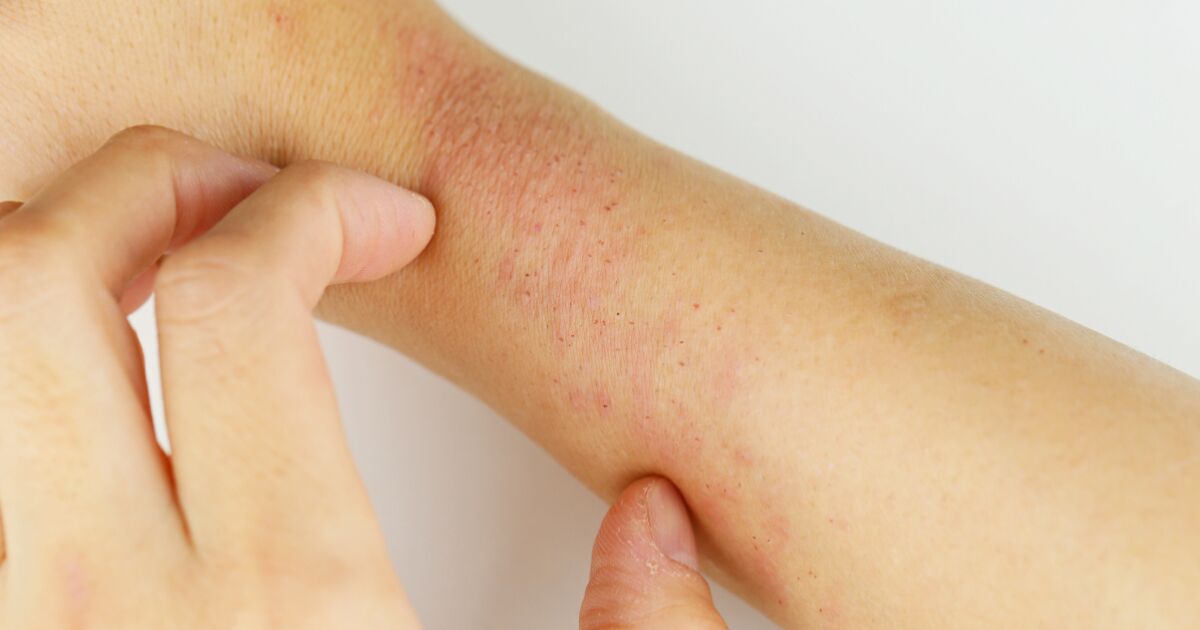
For individuals battling dermatitis, also known as eczema, a new study sheds light on a direct link between psychological stress and skin inflammation. Researchers have identified a specific pathway – dubbed the “sympathetic-eosinophil axis” – that explains how emotional tension can worsen skin conditions like atopic dermatitis.
The research, published in Science, reveals that stress doesn’t simply have a generalized effect on the skin. Instead, it travels through the sympathetic nervous system via specialized nerve cells called neuronas Pdyn+, ultimately reaching the skin and triggering inflammation. This discovery offers a more precise understanding of the mind-skin connection and could lead to new therapeutic approaches.
These neurons act as direct communication lines, transmitting stress signals to the skin’s surface. Once activated by psychological distress, these fibers release a chemical signal – the chemokine CCL11 – which acts as a “call for help,” attracting immune cells called eosinophils to the area. The findings could help explain why dermatitis symptoms often flare up during periods of high stress.
“Our findings suggest that psychological stress exacerbates inflammation similar to that seen in atopic dermatitis through a specialized subset of sympathetic noradrenergic Pdyn+ neurons that innervate the skin and activate eosinophils via the CCL11-CCR3 chemotactic axis and Adrb2-mediated activation,” the study states. Understanding this precise mechanism is a significant step forward in addressing the complex interplay between mental health and skin health.
