
“War Prolongation Could Push Brent Crude to $120”
“Economic Recession Could Become Reality if Iran Situation Isn’t Resolved”
In early trading on March 24, 2026, shares of South Korean oil companies fell, with S-Oil down 0.28%, GS down 1.53%, Heunggu Seokyu down 9.35%, Joongang Enerbis down 8.85% and Hanil Seokyu down 6.23%.
International oil prices had been rising sharply in recent days, surpassing $100 a barrel, amid concerns about a potential U.S. Attack on key Iranian facilities and a wider conflict.
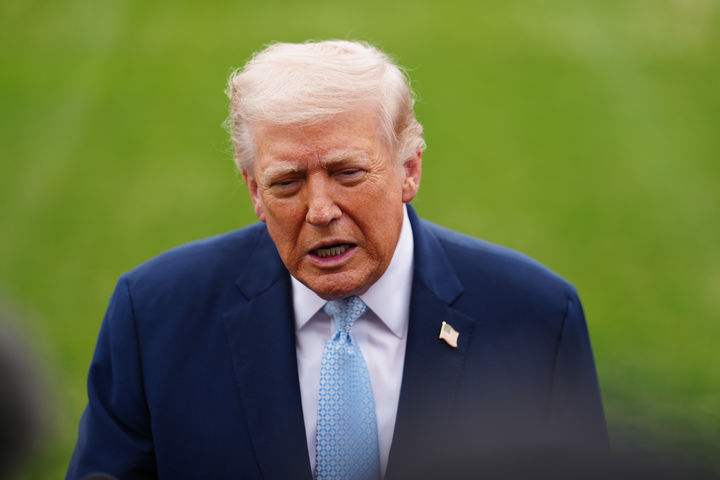
However, the surge reversed course when President Trump announced he was temporarily suspending plans for military strikes against Iranian energy infrastructure.
“My administration has had very solid and productive conversations with Iran over the last two days to fully, and completely, resolve the situation in the Middle East,” Trump said on March 23, 2026, via Truth Social, adding that he had instructed the Department of Defense to delay attacks on Iranian power plants and energy infrastructure for five days.
Brent crude, the international benchmark, closed at $99.94 a barrel, down 10.92% from the previous day. This marked the first time the price had fallen below $100 in eight trading days, since March 11, 2026. West Texas Intermediate (WTI) crude too finished lower, at $88.13 a barrel, a decrease of 10.28%. WTI had briefly risen to $101.50 a barrel after Trump’s initial threat of attacks on Iranian facilities, before falling below $90.
The sharp drop in oil prices is attributed to President Trump’s announcement of ceasefire negotiations with Iran and the postponement of attacks, which eased market fears of disruptions to oil supplies in the short term.
While the immediate threat of a U.S. Attack on Iranian energy facilities has been averted, market observers caution that uncertainties remain, and We see too early to say whether oil prices have entered a sustained downward trend.
Securities analysts are watching several factors that could influence short-term oil prices, including whether the Strait of Hormuz remains closed, the possibility of dialogue between the U.S. And Iran, and whether President Trump will follow through on his threatened attacks on Iranian facilities. International oil prices, based on Brent crude, have fluctuated at a high level of around $100 to $110 per barrel, compared to about $70 before the conflict, with WTI trading between $90 and $100.
Kim Jin-young, a researcher at Kiwoom Securities, noted that “if the Strait of Hormuz gradually normalizes in April and May, WTI could fall back to $65 to $75, giving up a significant portion of its gains.” However, he added, “if the war prolongs and the Strait remains closed this year, Brent crude could face upward pressure up to $120 a barrel.”
Concerns are also growing that an oil shock stemming from the Iranian situation could lead to an economic recession. Park Sang-hyun, a researcher at iM Securities, stated, “The Iranian situation is increasingly likely to escalate into a global energy war, raising the possibility of prolonged high oil prices.” He warned that “if the Iranian situation and the closure of the Strait of Hormuz are not resolved by April, another oil shock could become a reality, significantly impacting non-U.S. Economies such as Asia and Europe due to energy crises and disruptions to supply chains.”
“Historically, there has been a high correlation between U.S. Economic recession cycles and prolonged high oil prices,” Park added. “If the Iranian situation persists through next month, prolonged high oil prices combined with supply chain disruptions could materialize the worst-case scenario of economic recession and inflationary pressures.”
◎Public Journalism Newsis [email protected]
The situation in the Middle East remains volatile, and the potential for further escalation continues to weigh on global markets. The developments underscore growing regional tensions and could have far-reaching consequences for the global economy.
