
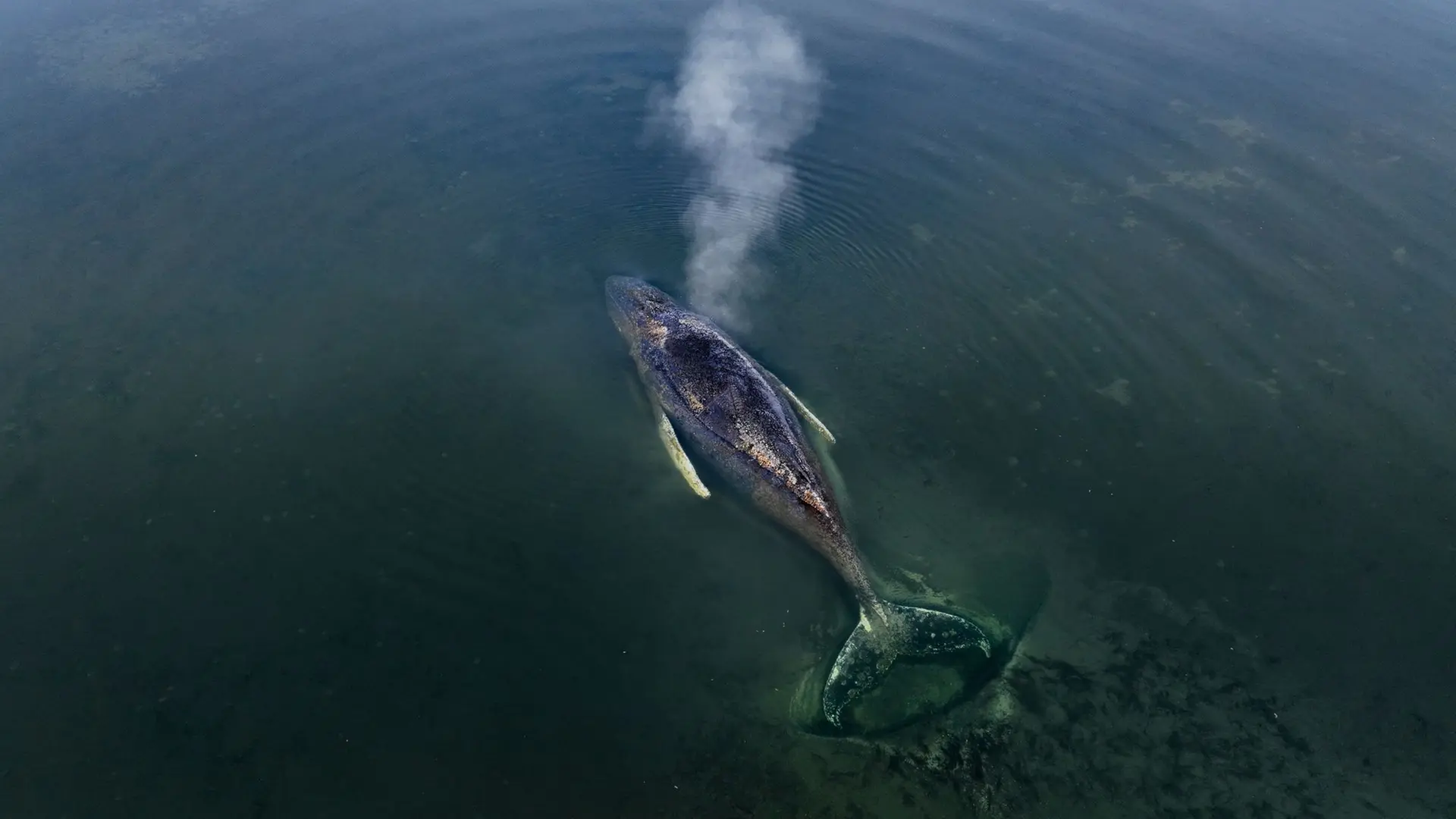
Rescue Efforts Halted for Stranded Humpback Whale in Baltic Sea
Rescue operations for a humpback whale known as “Hope,” which became stranded in the Baltic Sea, have been officially terminated after experts determined the animal’s condition is terminal. The whale, which had drawn national attention for weeks, is expected to pass away at its current location in the Kirchsee near Poel, within the Wismar Bay.
Till Backhaus, the Environment Minister of Mecklenburg-Vorpommern, announced that all attempts to save the animal have ceased. This decision follows assessments by on-site experts who reported that the whale is barely responsive and exhibits irregular breathing patterns.
The whale’s decline is attributed to a prolonged period of suffering. According to marine biologist and whale expert Fabian Ritter, the animal was severely weakened after becoming entangled in a fishing net. Ritter noted that remnants of the netting remain in the whale’s mouth, which likely prevented it from feeding even if it had been physically capable of doing so.
The tragedy has sparked a wider conversation about the environmental crisis facing the world’s oceans. Ritter, who has over 30 years of experience in whale research and represents M.E.E.R. E.V., suggests that the plight of this single animal reflects a global trend of marine mammals suffering due to the deteriorating state of the seas.
“It would be a lament in our direction,” Ritter said, imagining what the whale might communicate if it could. “What is this in my mouth? Why do these strange nets even exist? What are you doing to the oceans?”
The incident underscores the complex emotional bond between humans and cetaceans. Ritter explained that the intense public interest in “Hope” stems from the fact that humans and marine mammals are similarly organized socially and emotionally, making it difficult for observers to remain indifferent to the death of such a massive creature.
Humpback whales (Megaptera novaeangliae), which can reach lengths of 12 to 15 meters and weigh between 25 and 30 tons, are rare visitors to the Baltic Sea. Historical records show only 24 sightings or strandings in the region between 1578 and 2016. More recent data from Danish researcher Dr. Carl Christian Kinze of the State Natural History Museum at the University of Copenhagen documented eight sightings and six deaths between 2010 and 2026.
While some previous visitors, such as the whales named “Ossi” in the late 1970s and “Bucki” in 2008, managed to navigate back to the open North Sea, “Hope” was unable to overcome the combined stress of disorientation and human-made hazards. The case highlights the persistent danger that abandoned or active fishing gear poses to migratory marine life.
