
Forget Plugs: The Revolutionary Computer Powered by Springs and Ambient Heat
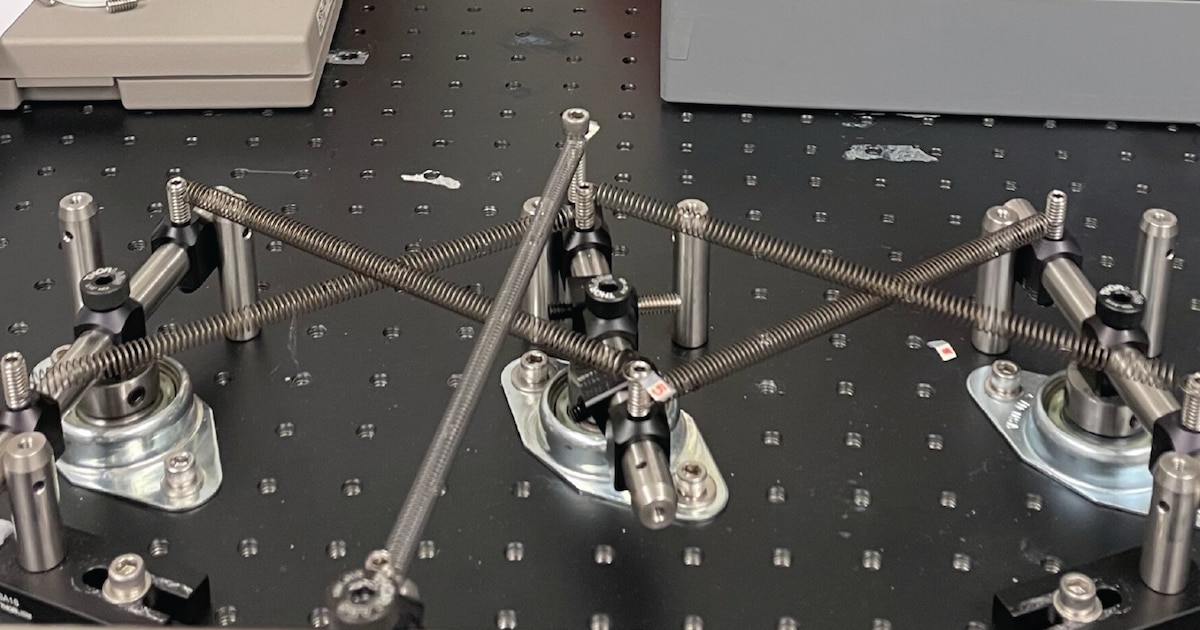
In a bold departure from the global race toward miniaturization and lightning-fast processing speeds, researchers from St. Olaf College and Syracuse University in the United States have developed a mechanical computer that operates entirely without electricity. By swapping silicon chips and electronic circuits for steel bars and springs, the team has created a system capable of performing logical operations and retaining data without the need for batteries or external power sources.
This breakthrough suggests a future where computing relies on the physical memory of materials, potentially allowing machines to function in extreme environments where traditional silicon-based hardware typically fails.
Harnessing Material Memory
The project was born from a study of how common materials, such as rubber, retain a form of “memory” after being stretched or compressed. This physical property became the blueprint for a system that processes and stores information through the tension and movement of mechanical components.

Joey Paulsen, an associate professor of physics at St. Olaf College, highlighted the conceptual shift in a statement: “Normally we think of memory as something that is found in a computer’s hard drive or inside our brain. However, many everyday materials retain some kind of memory of their past.”
By leveraging this characteristic, the research team successfully built a mechanical architecture using steel bars and springs to handle data. According to the St. Olaf College team, this allows for the processing and storage of information solely through the behavior of physical materials, completely bypassing electronic circuits.
The development of such a system marks a significant pivot in innovation, demonstrating that physical mechanics can achieve logical processing tasks previously reserved for electronic hardware.
