

here’s a short introductory paragraph to prepend to the provided HTML (which appears to be a heavily nested, empty div structure):
“This document appears to contain a complex, yet currently empty, hierarchical structure built using div elements. While seemingly devoid of content, this foundational layout suggests preparation for a more elaborate webpage or submission. Understanding the purpose behind this nested structure requires further investigation into how it will be populated with meaningful content and functionality. This skeletal framework provides a starting point for building a potentially dynamic and interactive web experience.”
/By a special correspondent in Ukraine/
During his presidential campaign, Volodymyr Zelenskyy sharply criticized then-President Petro Poroshenko, accusing him of corruption and a system of favoritism that he argued was hindering Ukraine’s reforms.
Six years later, Zelenskyy himself is facing similar accusations in what is becoming the largest corruption scandal of his presidency. At the center of the allegations is Timur Mindich, a close associate and former business partner.
Ukraine’s National Anti-Corruption Bureau alleges that Mindich led a group that solicited bribes and commissions from suppliers to the state-owned energy company. These payments, investigators claim, were made to secure contracts and “protection” from having their services or products blocked. The group is believed to have amassed approximately $100 million through the scheme.
“I think Zelenskyy knew about it,” says Olena Halushko, an activist in Kyiv. “Frankly, it’s hard to imagine a situation where everyone around him was involved to some extent and he had no idea. It all ties in with the protests in June – the government was clearly trying to prevent revelations like these from coming to light.”
A major corruption scandal is unfolding in Ukraine, threatening to undermine public trust and potentially jeopardize the country’s bid for European Union membership. The allegations center around individuals connected to President Volodymyr Zelenskyy and involve accusations of large-scale bribery within the state energy sector.
One of the country’s largest anti-corruption organizations is based in central Kyiv, near the site of protests held in June against government efforts to limit the independence of investigative bodies. The location underscores the ongoing debate about the strength and autonomy of Ukraine’s anti-corruption institutions.
Zelenskyy initially responded to the scandal with restraint, avoiding strong public statements or significant personnel changes. This cautious approach, according to experts, raised questions about what he and his inner circle knew.
“The reaction we’re seeing now, two days after the case went to court, is telling,” said lawyer Mykhailo Zhernakov in a forthcoming interview. “If this came as a surprise to the president and his team, the reaction would have been much stronger and more decisive.”
“When you remember 2020, when the Constitutional Court overturned parts of anti-corruption measures, the president reacted immediately and very sharply. He even proposed dismissing judges, even though he didn’t have the authority. We haven’t seen anything like that immediately now. And that’s a big change,” Zhernakov explained.
The scandal has resonated strongly throughout Ukraine, sparking widespread discussion and debate on social media and in public spaces. Citizens are openly discussing responsibility and voicing criticism of the political leadership.
“It’s almost a mockery of our soldiers on the front lines,” said a Kyiv resident named Olha. “While they are fighting for the survival of this country, people in power are still stealing. And what’s worse? They thought they would get away with it.”
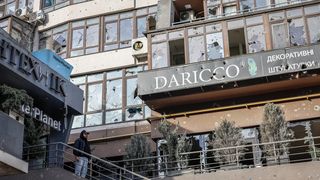
Analysts say the public reaction is surprising, particularly given that Ukrainians have been living under conditions marked by frequent power outages caused by Russian attacks on energy infrastructure. Households and businesses are struggling with limited heating and constant switching to emergency modes.
Against this backdrop, the revelation that hundreds of millions of hryvnia were being siphoned off from the energy sector has sparked outrage. Experts say corruption in a sector vital to the country’s functioning is particularly sensitive because Ukrainians experience the effects of the energy crisis every day.
“Ukrainians are tired of being treated as second-class citizens, as they were for decades under the Soviet Union, and that’s why they are so angry now,” said British journalist Caolan Roberton. “That’s why Maidan happened – they demanded accountability. They lived under Soviet rule and decided they didn’t want to live like that for another second.”
In response to the public outcry, Zelenskyy announced over the weekend that state-owned energy companies would undergo a major restructuring. “In addition to a complete audit of their finances, their leadership will also be replaced,” he said on X, formerly known as Twitter. According to his statement, Energoatom, the state nuclear company, will have a new supervisory body within a week.
Zelenskyy also called for the swift appointment of a new head of Ukrhydroenergo, a key producer of hydroelectric power, and announced reforms at Naftogaz and the gas transmission system operator.
Anti-corruption authorities have confirmed that a 15-month investigation revealed the involvement of several Ukrainian government officials. Two ministers have resigned in connection with the case, and sanctions have been imposed on one of Zelenskyy’s former business partners.
“This is a huge blow, but the worst part is that I’m not sure if this is the end. The whole thing could develop further,” a Ukrainian lawmaker close to the government told the Kyiv Independent, speaking on condition of anonymity. “What I would advise the president now is to take decisive action and get rid of a number of people from his inner circle.”
Ukrainian political analysts explain that the problem isn’t just the scandal itself, but also the long-standing way the president works with his closest associates. There is growing commentary in the media that Zelenskyy places too much trust in his friends and former colleagues, and that this trust may be the source of his current troubles.
“Every president almost always has a close circle,” said Volodymyr Fesenko, a Ukrainian political analyst. “With Zelenskyy, these are friends. People he knew and trusted. But life has punished him several times, especially now in the case of Mindich, by showing that too much trust in old acquaintances can backfire.”
The scandal poses a significant challenge to Ukraine’s long-awaited start of accession talks with the European Union.
“This is extremely serious. At the current rate, it will take 22 years for Ukraine to become a member of the EU. I don’t believe in any simple turning points that will decide everything on their own, but this is exactly the kind of event that can fundamentally tip the scales in one direction or the other. The fight against corruption has had its ups and downs, it has never been linear. But the overall trend has been positive for a long time. Now, however, a huge test is coming,” explained Zhernakov.
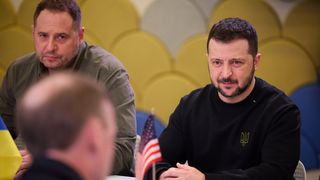
According to experts, it is now crucial for the government to capitalize on this momentum. “Neither society nor international partners will be willing to accept excuses like ‘it’s nothing.’ They will expect a systematic approach and real reform to prevent similar cases from happening again,” Zhernakov added.
The conditions of war also facilitate corruption. Democratic tools that Ukraine commonly used before the invasion – protests, public gatherings, independent media, and elections – are now limited. Society cannot respond to every new problem with mass mobilization, even though significant events occur almost daily. These restrictions create an environment in which corrupt structures can more easily survive in the shadow of war.
A Corrupt Ukraine?

Photo: Vitalii Vodolazskyi, Shutterstock.com
.
The Ukrainian government inadvertently highlighted a persistent problem – corruption – when it attempted to tighten control over anti-corruption authorities. The move was met with unprecedented resistance from Ukrainian society, even amid the ongoing war.
How corrupt is Ukraine? Seznam Zprávy is publishing a series of reports exploring this issue in depth. The first installment examines the roots of corruption in the country, while subsequent articles will map the extent to which Ukrainians encounter corruption in their daily lives and revisit scandals involving President Volodymyr Zelenskyy’s team.
