
Canada’s Public Service Alliance of Canada (PSAC) is seeking to halt the federal government’s early retirement program for public servants. Announced in the latest budget, the program aims to eliminate 30,000 jobs in the public service by 2028-2029.
In complaints filed with the Federal Public Sector Labour Relations and Employment Board, copies of which were obtained by Radio-Canada, the PSAC is requesting the government cease the unilateral implementation
of the program until its parameters are negotiated with the union.
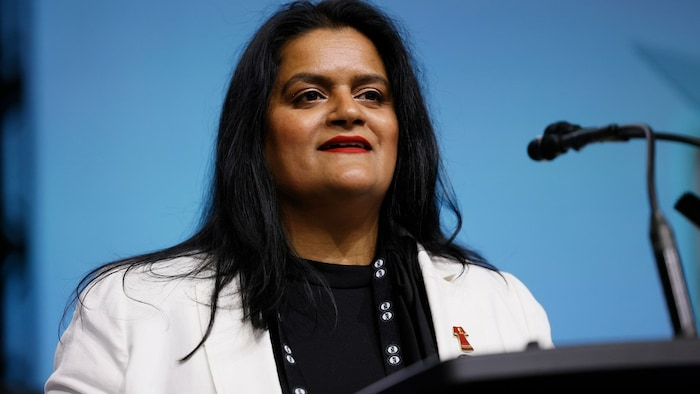
Sharon DeSousa is the president of the Public Service Alliance of Canada. (Archival photo)
Photo : X/PSAC
The largest union representing federal employees alleges the government engaged in unfair practices by announcing the program, as it undermines its role in representing its members. The move comes as governments worldwide grapple with balancing fiscal responsibility and public sector employment levels.
The PSAC asserts that by offering a severance package to encourage public servants to leave, the employer is directly negotiating with members on terms and conditions of employment
. This, the union argues, constitutes interference
.
At least 68,000 public servants over the age of 50 have been invited to check their eligibility for the program.
Labor lawyer Marc Boudreau, who reviewed the complaints, indicated he understands why the program’s announcement shocked
the union, and that it would have preferred to be a stakeholder from the outset.
The union has no interest in losing members, as it will eventually lose union dues.
Boudreau doubts the two sides will reach an agreement quickly. I get the impression they will seek to stretch this out so that This proves included in the next collective agreement, while the government is in a hurry to reduce the number of public servants.
PSAC President Sharon de Sousa was not available for comment. The President of the Treasury Board’s office did not respond to requests for comment on the matter.
Similar Goals to Workforce Adjustment?
The complaints allege the government is circumventing
the workforce adjustment process and that this prevents the union from playing any role in how the reductions [in personnel] are carried out
.
The PSAC further contends that the early retirement program has the same objectives and overall design
as the workforce adjustment that was negotiated in collective agreements.
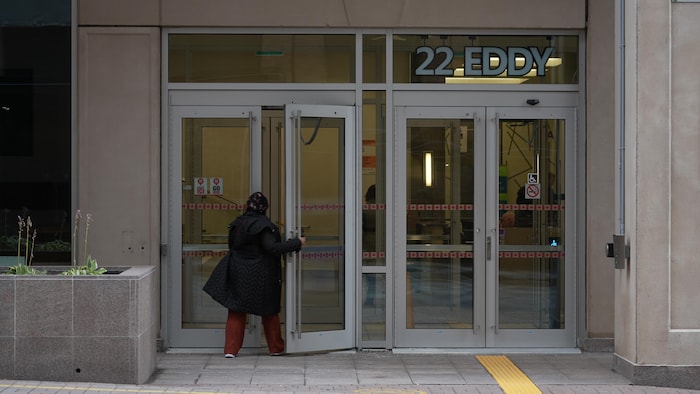
The early retirement program is expected to generate savings of $82 million. (Archival photo)
Photo : Other image banks / Reno Patry
The union believes it is unable to explain to its members how the program will be deployed or implemented jointly
with the existing process.
By placing the union in this situation, [the government] is actively undermining its role as a bargaining agent and causing members to perceive it as misinformed and ineffective.

Marc Boudreau is a labor lawyer.
Photo : Courtesy of Marc Boudreau
According to Boudreau, one loses a little face at the union level, because one wants to justify its usefulness
. He points out that the PSAC missed out on a process that is being put in place
.
Although, in his view, the problem is that the federal government doesn’t seem to know where it’s going with this program either
. Details are expected to be revealed when the federal budget receives royal assent.
Changes to Terms of Employment
The PSAC also argues that by announcing the program, the government is violating its obligation to respect terms of employment during collective bargaining for certain employee groups.
Boudreau, however, believes that the changes to the terms of employment have not taken place
.
What the union is doing right now is a bit like a lawyer standing up and shouting “objection” before even asking the question.

Under certain conditions, public servants aged 50 or older will be able to participate in the program. (Archival photo)
Photo : Radio-Canada / Michel Aspirot
To support its arguments, the PSAC submitted a copy of the proposals it made during ongoing negotiations regarding workforce adjustment. These reveal that the union wants to increase the education allowance paid to public servants leaving the government from $17,000 to $25,000.
The union also wants affected public servants to be able to accept reasonable function-from-home offers.
The employer must respond to the complaints. The Federal Public Sector Labour Relations and Employment Board will then determine the next steps.
