
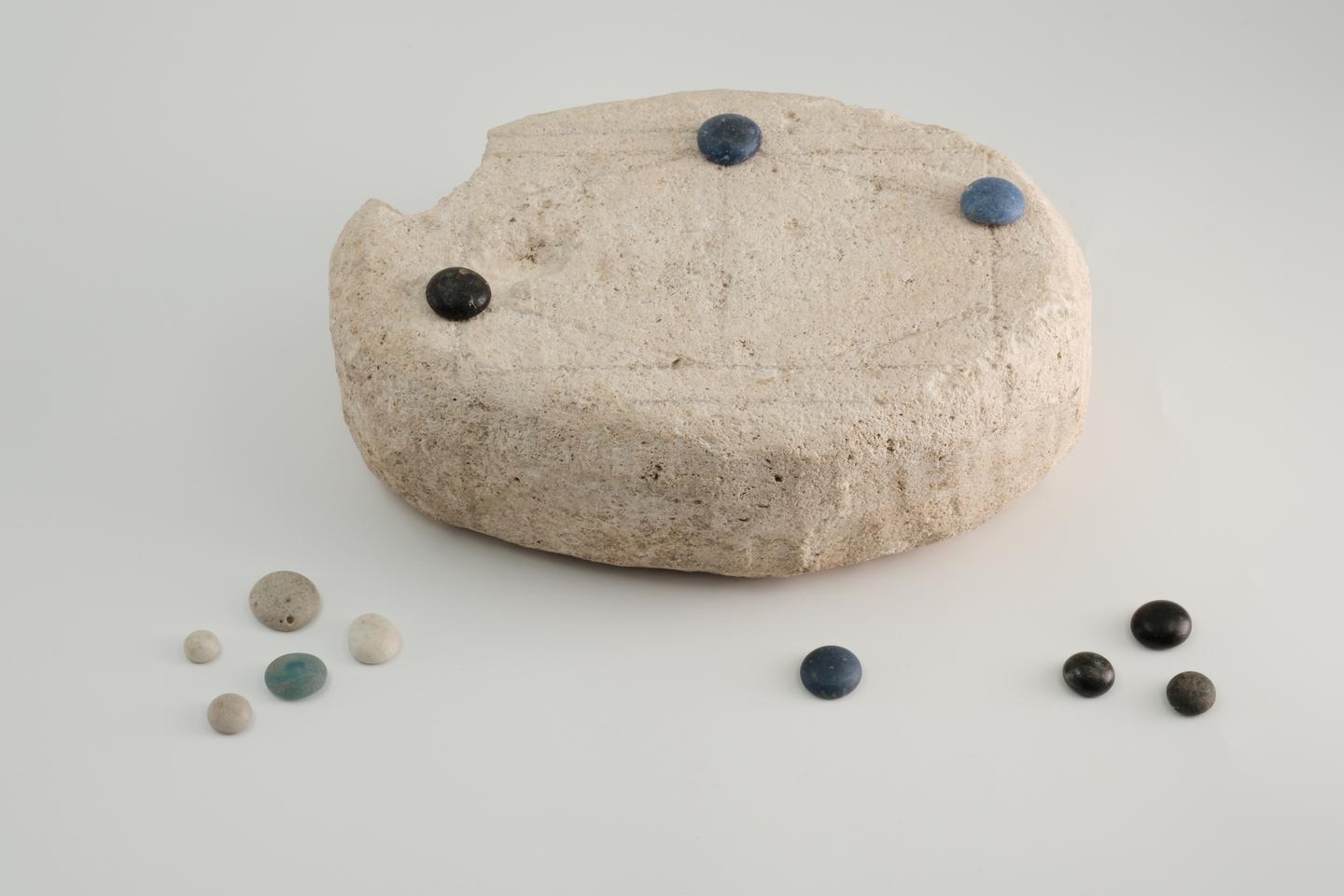
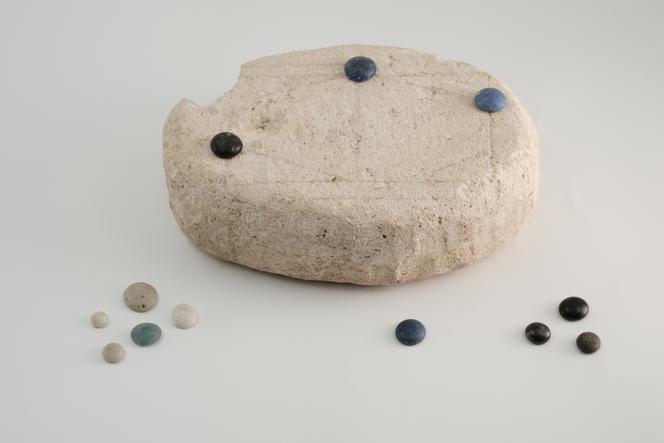
An ancient Roman game board, resembling a peppered wheel of cheese, has yielded its secrets thanks to the power of artificial intelligence. The 21-centimeter limestone game board was originally discovered in the early 20th century during excavations at Heerlen, in the southeastern Netherlands, the site of the former Roman colony of Coriovallum.
Whereas visiting the Het Romeins Museum in Heerlen in 2020, archaeologist Walter Crist became fascinated by the object, characterized by intriguing angular lines forming an oblong octagon within a rectangle.
To decipher the game’s rules, Crist’s team turned to AI, integrating the principles of thousands of games – both ancient and modern – from around the globe. This approach highlights the growing use of AI in archaeological research, offering new avenues for understanding past civilizations.
A Variation on Blocking Games
The results, published on February 11 in Antiquity, suggest the stone “cheese” is a type of “blocking game,” similar to tic-tac-toe, where players attempt to prevent their opponent from moving their pieces.
Researchers programmed two AI agents to play relentlessly, following over 100 different rule sets derived from known European games. As the agents played – completing more than 1,000 games per rule set – they analyzed piece movements and compared them to the wear patterns on different areas of the board.
Il vous reste 27.12% de cet article à lire. La suite est réservée aux abonnés.
