

Artificial intelligence is increasingly impacting the automotive world, moving beyond initial design concepts to reimagining classic vehicles. A recent project showcased within the “AI automotive art” Facebook group demonstrates this trend,with artist Łukasz Konieczny generating a series of choice designs for the iconic Škoda 105.The renderings explore a “what if” scenario, envisioning the model in various body styles-including hatchback, wagon, and off-road versions-that were never commercially produced.
Artificial intelligence is rapidly becoming an unstoppable force, permeating all aspects of modern life, including the automotive industry. From initial visual concepts – some remarkably well-executed, others less so – AI is now being used to reimagine classic car designs and explore future possibilities.
The “AI automotive art” Facebook group recently showcased a new series of renderings, this time focusing on alternative designs for Škoda vehicles. User Łukasz Konieczny presented several variations of the Škoda 105, a model with a significant history in the Czech automotive landscape.

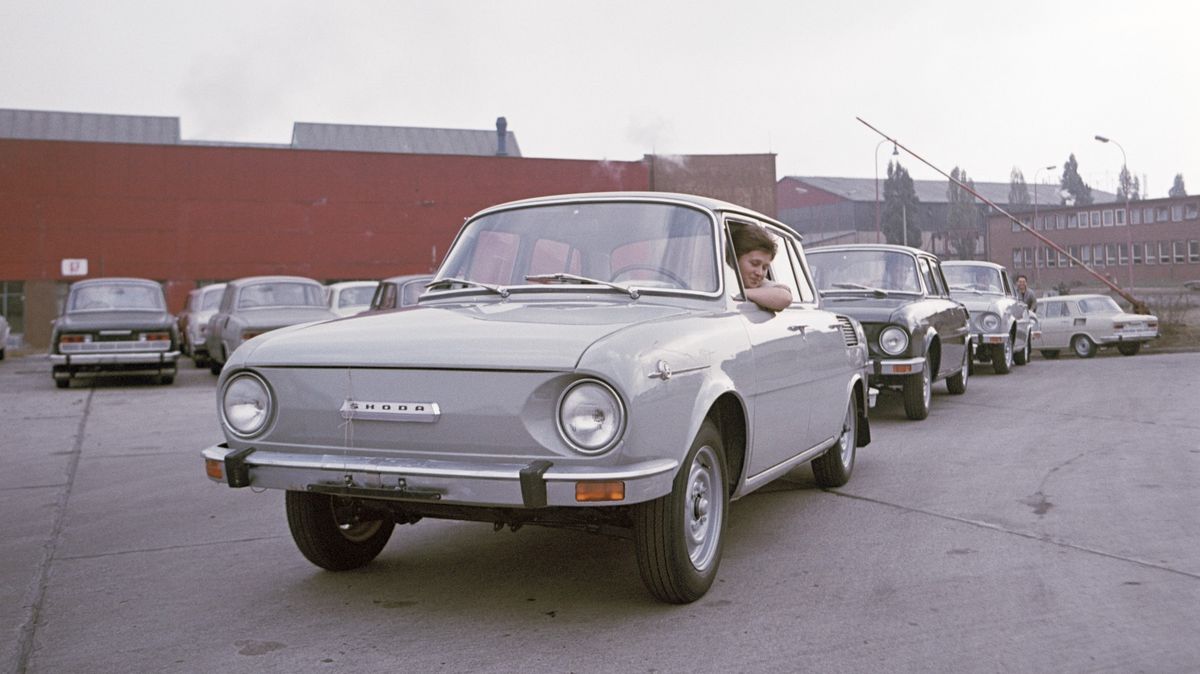
Foto: Retro Garáž
This is the original Škoda 105.
Konieczny’s concept explores a “what if” scenario: “What if, instead of the Škoda Favorit, we had created a Škoda 105 in hatchback, wagon, and long and short off-road versions? Naturally, with a more powerful engine in the front.”
A Precursor to the Yeti
Table of Contents
First up is a design reminiscent of the Škoda Yeti – a five-door Škoda 105 equipped with massive off-road tires, a raised air intake, a front bull bar with protective framing and fog lights, an expedition rack, and a spare tire mounted on the tailgate.

Foto: Facebook AI automotive art/Łukasz Konieczny
The Škoda 105 is presented as a practical off-road vehicle and a precursor to the Yeti.
The vehicle bears some resemblance to the Lada Niva, the most famous Soviet off-roader, and may have drawn inspiration from it.
Three-Door Off-Roader
The second off-road variant is more understated. It features three doors, a standard front bumper with fog lights, and lacks the raised air intake. It also sports a modern expedition rack, and a spare tire is mounted on the rear door.

Foto: Facebook AI automotive art/Łukasz Konieczny
This is what a three-door Škoda 105 off-roader could look like.
A Retro Fabia Combi
The concept for a Fabia Combi features plain steel wheels with all-season tires, black door handles and mirror caps, and black trim around the windows. The rear end is noticeably extended and heavily glazed, topped with practical roof rails.

Foto: Facebook AI automotive art/Łukasz Konieczny
Engine in the front, and we immediately have a practical wagon.
Notably, the artist placed the engine in the front. The original 105 has a rear-mounted engine, which would theoretically not preclude the creation of a wagon, but would take up most of the cargo space.
A Practical 105
Finally, the hatchback variant evokes the FSO Polonez and Lada Samara. The five-door vehicle shares the front end and design elements with the wagon, but lacks full roof rails. The rear features a sloping rear end.

Foto: Facebook AI automotive art/Łukasz Konieczny
The Škoda 105, as envisioned by AI in hatchback form.
These renderings are remarkably well-executed, and had these vehicles been produced, they likely would have secured Škoda a greater degree of success and a broader model portfolio than it had before its acquisition by the Volkswagen Group. However, even so, the automaker has adapted and now, conversely, is a key financial driver for the group, particularly thanks to the Elroq model.
