
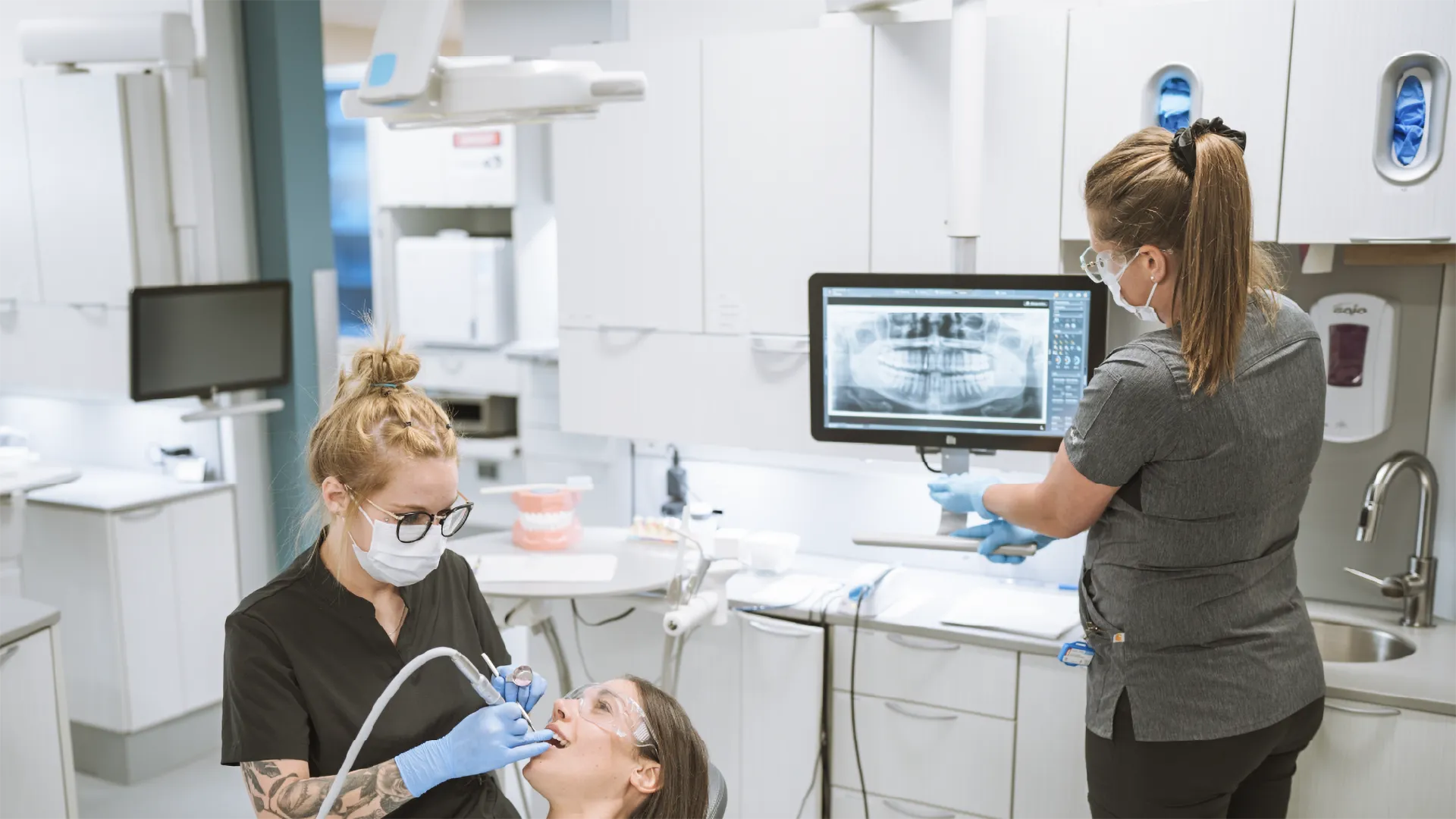
The integration of artificial intelligence into educational programs is rapidly evolving, and dental hygiene is no exception. A series of reports from the Cégep de Matane highlights the ongoing changes to both teaching practices and professional skills driven by technological advancements, reflecting the current state of affairs as of 2026.
Marie-Jaelle Paul, an instructor at Cégep de Matane, is particularly focused on these innovations as she teaches the course Radiologie dentaire et possibilités de traitement (Dental Radiology and Treatment Possibilities). This is a specialty where AI is becoming increasingly prevalent. The technology isn’t intended to replace human expertise, however. “The AI does not replace the clinical judgment of the professional,” Paul emphasizes. “It serves rather as a tool to assist analyze certain data and support decision-making.”
AI is enhancing the ability of dental professionals to visualize structures and anomalies, leading to more informed treatment planning. For example, software analyzing dental radiographs now utilizes AI to detect common oral pathologies such as interproximal caries, periodontal bone loss, and subgingival tartar. The technology can likewise illustrate the progression of bone loss over time using both clinical and radiological data in periodontal follow-up. AI is also being integrated into digital dentistry technologies, including the analysis of intraoral scans and three-dimensional images used in orthodontics and before oral surgeries.
Mieux documenter
pour mieux traiter
Beyond diagnostics, AI-powered tools are also being developed to improve patient education. These tools can visually demonstrate the progression of periodontal disease or the presence of plaque. “By seeing these images, patients better understand their situation and are more motivated to adhere to the proposed solutions,” Paul explains. This increased patient engagement is a key benefit of incorporating AI into dental care.
Paul actively follows academic research in these technologies, noting the growth of specialized AI labs in the United States. “Several American institutions now have laboratories specializing in artificial intelligence applied to dentistry. On the Canadian side, McGill University, for example, has a research laboratory in artificial intelligence and oral health,” she adds.
Adaptation continue
Recognizing that these innovations are already reshaping clinical practice, Paul continually adapts her teaching methods to ensure her students are prepared for the technological transformations ahead. The ongoing integration of AI into dental hygiene curricula underscores the importance of equipping future professionals with the skills to leverage these powerful new tools.
