
These images form a detailed model of the real world. Each photo is accompanied by metadata indicating position, the direction the phone was pointing, movement, and other device information at the time of capture. With this data, the company has built a geospatial model capable of recognizing locations with extreme precision.
The system can identify location by observing the environment. The technology, called VPS (Visual Positioning System), compares images captured by cameras with a database of photos to determine where a device is—even in locations where GPS performs poorly.
Technology to Guide Robots in Cities
The latest application of the technology involves delivery robots. Niantic Spatial has announced a partnership with Coco Robotics, a startup developing robots for short-distance deliveries in urban environments.
Robots struggle with GPS in dense urban areas. In regions with many buildings, tunnels, or overpasses, satellite signals can reflect or be lost, causing location errors of tens of meters.
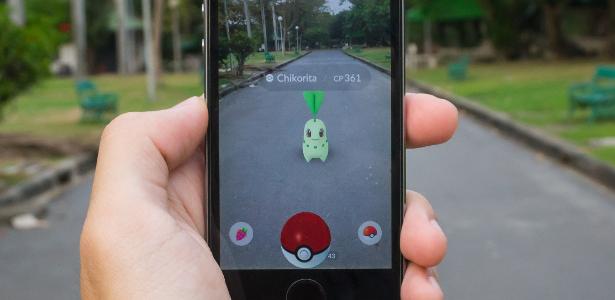
A new visual positioning system (VPS) is poised to improve robotic navigation in complex urban environments. Niantic Spatial, the enterprise arm of the company known for augmented reality game Pokémon Go, is partnering with Coco Robotics to integrate the technology into delivery robots.
The core of the system relies on a detailed, geographically-referenced model of the world built from user-submitted images. Each photo is tagged with metadata including location, device orientation, and movement, allowing Niantic to create a highly accurate map. This technology allows devices to pinpoint their location by comparing camera feeds to the image database, even where traditional GPS signals are unreliable.
According to Niantic Spatial, the partnership will address a key challenge for autonomous delivery: GPS inaccuracies in cities. Tall buildings, tunnels, and overpasses can all disrupt satellite signals, leading to positioning errors that can exceed several meters. This new approach offers a more robust solution for navigating these obstacles.
Coco Robotics is developing robots specifically for last-mile delivery in urban areas. The integration of Niantic’s VPS is expected to significantly improve the robots’ ability to navigate sidewalks and deliver goods efficiently. This collaboration highlights the growing potential of VPS technology to enable a new generation of location-aware applications and services.
Niantic Spatial’s VPS technology is as well available for other applications, offering a scalable and secure solution for businesses requiring precise location data. The company offers a range of VPS configurations, with pricing starting at $4.20 per month for basic plans and scaling up to $45.39 per month for more demanding applications, as detailed on the OVHcloud website. OVHcloud’s Cloud VPS allows for seamless upgrades without downtime.
The development underscores a broader trend of leveraging AI and computer vision to overcome the limitations of traditional positioning systems. As cities become increasingly complex, technologies like VPS will be crucial for enabling a wide range of robotic and autonomous applications.
