
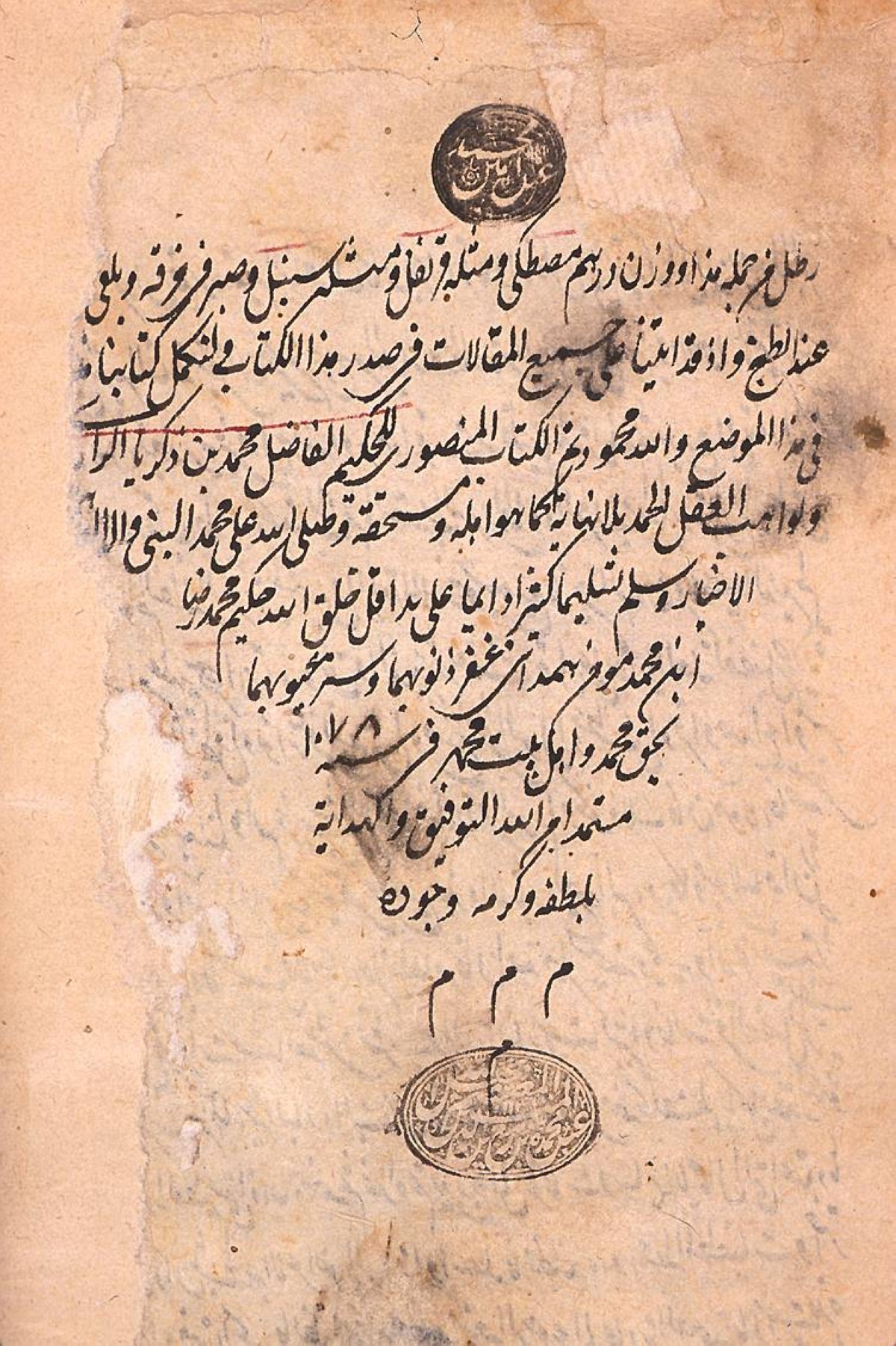
In an era plagued by relentless epidemics, marked by sudden fevers, skin eruptions, and pervasive anxieties, the physician Abu Bakr al-Razi meticulously observed his patients, carefully documenting his scientific observations based on direct experience rather than secondhand accounts. This dedication resulted in a concise treatise known as “On Smallpox and Measles,” originally a section of his larger medical encyclopedia, *al-Hawi*, but now considered a cornerstone of clinical medicine in Islamic civilization due to its systematic analysis and clear scientific differentiation between the two diseases, relying on direct observation and accurate diagnosis.
Al-Razi began his treatise by acknowledging a significant disagreement among physicians regarding the descriptions of smallpox and measles. Driven by this discrepancy, he resolved to record his own scientific testimony, grounded in observation and experience. This approach immediately positions the reader before a physician who doesn’t simply accept existing knowledge, but rather examines and refines it.
Prior to al-Razi, as noted in the Britannica Digital Encyclopedia, the two diseases were often confused, as both presented with skin rashes. However, al-Razi astutely recognized key distinctions. He identified that measles was characterized by redness and tearing of the eyes, sneezing with a mild nasal discharge, an internal sensation of heat accompanied by a light, scattered rash, and more pronounced respiratory symptoms.
In contrast, the signs of smallpox began with a more intense fever, a distinct heaviness in the skin, and blisters filled with fluid that left scars, accompanied by severe body pain and a heavy head. Differentiating between smallpox and measles wasn’t solely based on appearance, but on the evolution of symptoms and their progression – a methodology that made the work a vital reference for physicians for centuries. This careful tracking of disease progression is a foundational element of modern medical diagnostics.
Early Signs Before the Rash Appears
One of the most remarkable aspects of “On Smallpox and Measles,” published by Dar al-Kutub al-Islamiya, is al-Razi’s inquiry into how to identify the diseases before the rash manifests. He meticulously recorded early indicators, beginning with severe headache, back pain, chills, shortness of breath, nausea, and changes in the color of the face and urine. This early assessment allowed the physician to prepare for the illness and manage the patient from the outset, rather than after symptoms worsened.
A Patient’s Daily Record
In an unprecedented clinical description, al-Razi detailed the disease’s development day by day, posing logical questions as a physician: When does the fever reach its peak? When does the rash appear and mature? When does the persistence of the rash grow dangerous? What signs indicate choking or pneumonia? This approach mirrors modern patient charts, where observations are recorded precisely to answer a physician’s questions, rather than relying on memory or conjecture.
Al-Razi’s Approach to Treatment
His treatise reveals a responsible and measured approach to treatment, avoiding overly aggressive interventions. Al-Razi didn’t seek out potent medicines, but instead established clear guidelines, such as ensuring fresh air and rest, ventilating the room, avoiding crowding around the patient, and preventing excessive heat. He also recommended a diet excluding meat and fats, favoring light broths and reducing food intake until the fever subsided.
Recognizing that both smallpox and measles caused skin eruptions, he advised leaving blisters intact, avoiding harsh or irritating substances, and focusing on gentle hydration. He repeatedly cautioned that strong medicine, when improperly applied, could be more dangerous than the disease itself, advocating for responsible preventative medicine that balances care and gentleness.
Acknowledging Medical Errors and the Courage to Critique
Al-Razi wasn’t afraid to write candidly, noting instances where patients died because a physician had rushed to perform venesection or used overly potent medications. This transparency underscores that medicine is not a gamble, but an ethical responsibility to the patient. He meticulously detailed complications and recognized warning signs, focusing on changes in rash color, increased shortness of breath, weakened pulse, severe vomiting, or bleeding. He emphasized the importance of listening to the body, as the body itself communicates its condition.
The Book’s Impact on the History of Medicine
Muhammad ibn Zakariya (Abu Bakr al-Razi), who died in 925 CE, was a physician of Persian origin. He wrote “On Smallpox and Measles” in Arabic. Although the exact date of its completion is unknown, We see believed to have been finished in the ninth century CE. Some scholars consider it a treatise rather than a standalone book, as it was originally part of *al-Hawi*. However, due to the treatise’s significance, it was regarded as a separate work. It was translated into Latin early in European history and repeatedly copied, as it provided physicians with a new language for thinking and distinguishing between diseases, remaining a crucial reference for centuries.
