
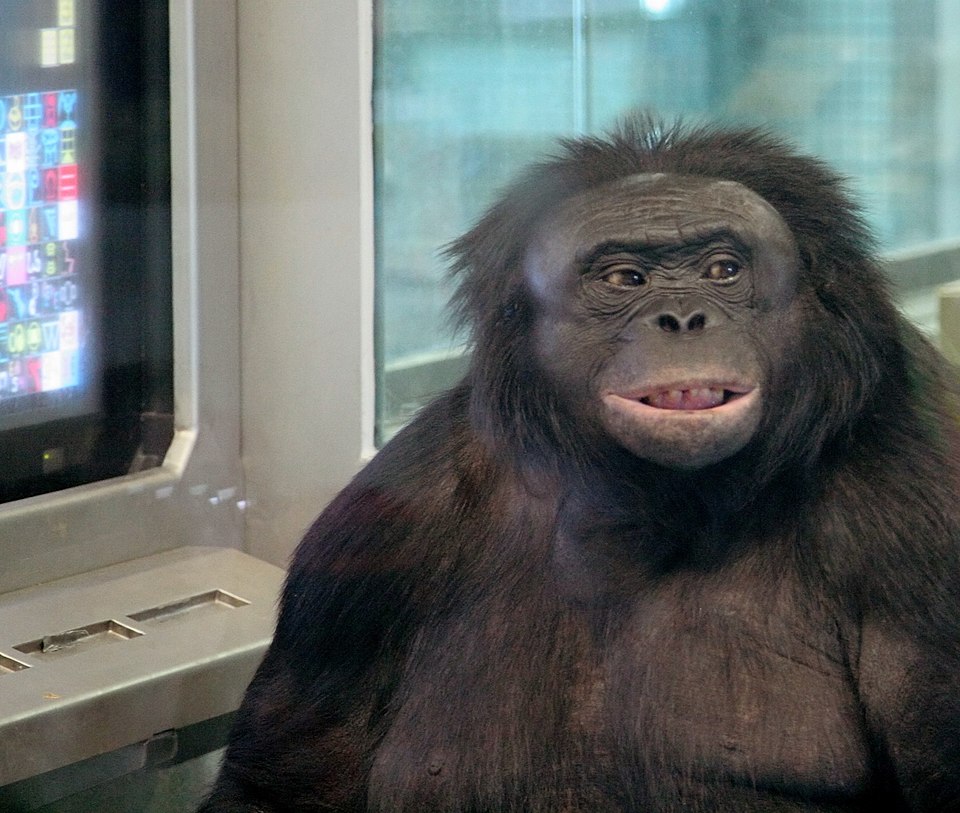
Primates Demonstrate Imagination, Challenging Understanding of Animal Cognition
New research suggests that bonobos, a great ape species, are capable of imaginative play, a cognitive ability previously thought to be unique to humans. The findings, reported across multiple news outlets including Correio Braziliense and Catraca Livre, indicate that bonobos engage in “develop-believe” scenarios, similar to children.
For years, scientists believed the ability to interact with imaginary objects was exclusive to humans. However, this new research challenges that assumption, revealing that bonobos demonstrate a capacity for abstract thought and imaginative play. This discovery adds to the growing body of evidence highlighting the complex cognitive abilities of primates and could reshape our understanding of the evolution of intelligence.
Bonobos, found exclusively in the Democratic Republic of Congo, are known for their peaceful social structures and are recognized as an endangered species. The Bonobo Trust details that these apes are matriarchal, with female bonobos forming strong coalitions to maintain order. They likewise exhibit a high degree of physical affection, often described as a “bonobo handshake,” involving genital touching.
According to Wikipedia, bonobos share approximately 98.7% of their DNA with humans. This close genetic relationship, combined with observations of their complex social behaviors and now, imaginative play, underscores their significance in the study of primate cognition. Project GAP notes that bonobos are unique among great apes in that they do not kill members of their own species.
The study’s findings, also reported by CNN Brasil and Diário do Litoral, suggest that the capacity for imagination may be more widespread in the animal kingdom than previously believed. Xataka reports that the research overturns the long-held belief that monkeys are incapable of interacting with imaginary objects.
