
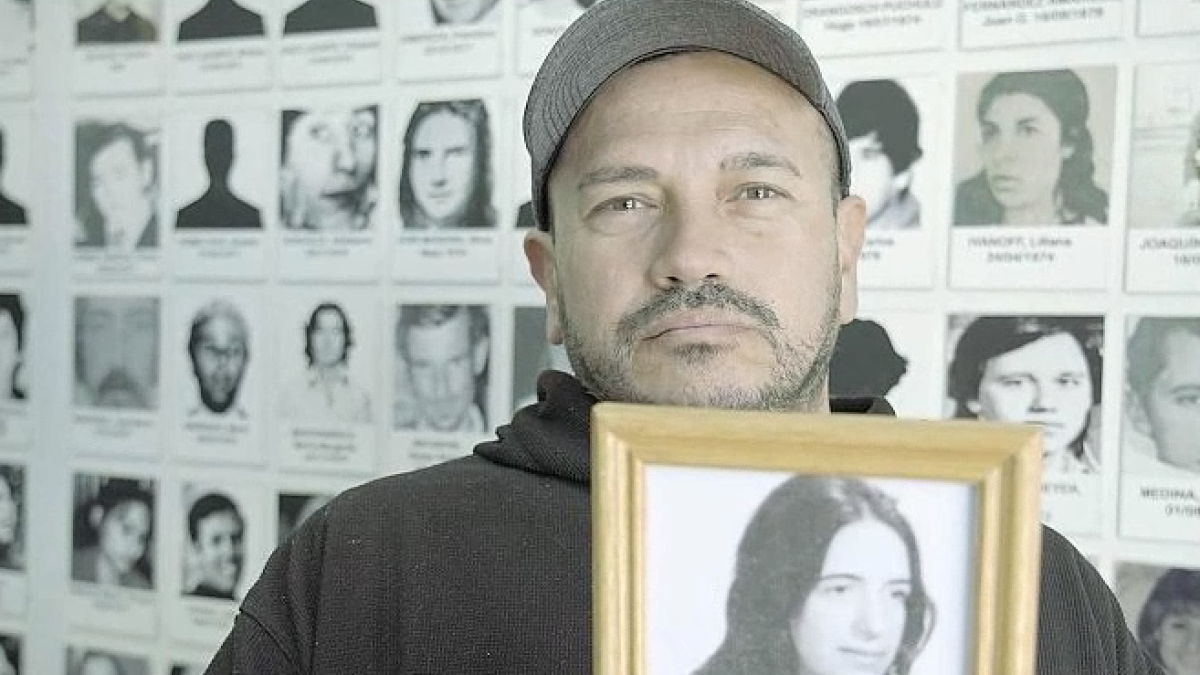
Director Florencia Santucho follows the search for truth about what will be revealed as her biological brother: “Despite the denial that characterizes the current government in Argentina, many people want to realize today.”
“In the Latin world, identity is an achievement: it is the recovery of those little pieces of soul and belonging that end up identifying you; it is the idea of recomposing silenced or forgotten stories that explain some fundamental aspects of oneself.” Florencia Santucho, a “green manager” and director of socio-environmental festivals in Latin America twinned with our CinemAmbiente, born in Turin in 1980 during her parents’ exile due to the Videla dictatorship in Argentina, presents her first work, as personal as possible, co-directed “with the fundamental contribution of Rodrigo Vázquez-Salessi, as well the screenwriter.” It’s a documentary, titled Identidad, and Turin residents will be able to see it on March 9 and 10, respectively at Cinema Massimo at 8:30 p.m. And at the Arci Babelica circle at 8 p.m. on the occasion of the 50th anniversary of the Coup.
The Generation of Stolen Children
In the film, the director follows Daniel Santucho Navajas in the search for the truth about his birth, which will reveal that he is her biological brother. “I was born in 1977 — Daniel recounts — and when I was 21 years old, I began to suspect that my father was actually my kidnapper. In those years, in fact, Argentina was implementing a systematic plan to entrust newly born babies to the military after killing their natural mothers, even shortly after childbirth.” The protagonist’s doubts were sadly confirmed by correspondence found by the Abuelas de Plaza de Mayo, “Grandmothers of Plaza de Mayo,” who hold the genetic information of the dictatorship’s victims. His mother Cristina, in fact, was one of the thousands of people who disappeared at the time, and after finding his biological family, Daniel decided to raise public awareness about the crimes committed during the dictatorship. This documentary arrives as Argentina continues to grapple with the legacy of its past.
The Search for Truth
“For the 20 years I doubted my birth, I was also plagued by guilt towards those I believed to be my father, who kept denying it every time I brought it up; they even told me I “looked like my mother.” Then, thanks to the DNA results, I gradually found inner peace. Finding the truth was also necessary for my daughters, who shouldn’t have to carry the same lie that tormented me.” Today, Daniel is a changed man, whereas the price was high: “Unfortunately, other people in my same situation have closed in on themselves, some have committed suicide. But if I had discovered the truth at 21, or hadn’t found such a welcoming family, I too would have suffered a greater emotional crisis, especially without adequate psychological support.”
Argentina: A Denying Present
Regarding how Argentina is receiving the story involving hundreds of cases, Florencia responds: “In general, the public is interested in the topic and the truth, regardless of whether they have relatives who disappeared. And even though the denial that characterizes the Milei government characterizes the portion of society that supports it, the film especially helps those who don’t yet have a formed idea, like young people. Daniel knows how to empathize with young people, and he doesn’t use political rhetoric: by presenting himself publicly and talking about his private, dramatic, and publicly recognized story, it’s impossible to attack him.” About the many embraces that are the common thread of Daniel’s new — real — family, the sister-director comments: “When we finally met, it was like reconnecting lost feelings. But beyond being spontaneous, the gesture, so “physical” in the film, becomes collective, directed at all those who have had the strength to seek the truth by participating in the thousand campaigns that keep the memory alive. Identidad is moving because it can pass on the story, but also because viewers feel involved: that embrace is also for them.”
