
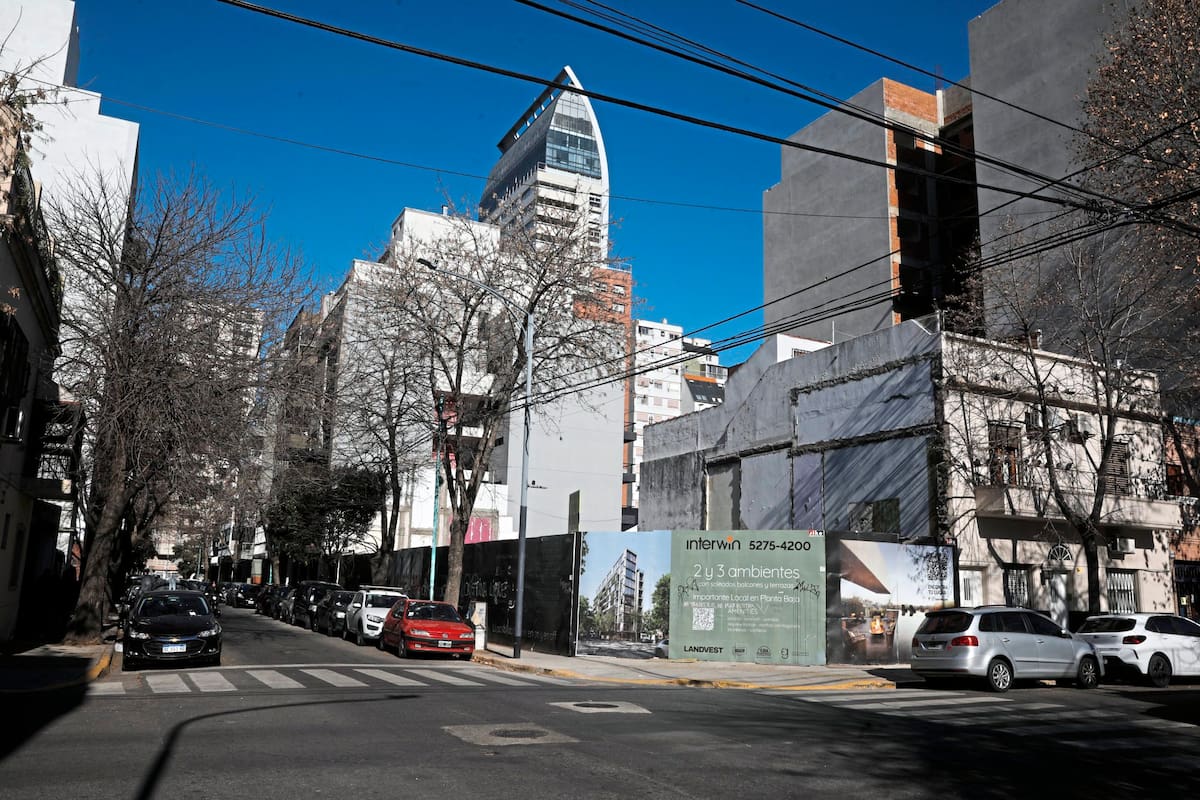
A contrarian strategy is paying off for some Argentinian real estate developers, as those who invested in land during a period of high construction costs and low demand are now poised to benefit from a recovering market. The approach flies in the face of the conventional wisdom that the best deals materialize when conditions are favorable.
Between 2023 and 2024, a segment of developers opted to acquire land despite a challenging economic climate. This decision was made when construction costs were elevated and buyer demand was sluggish, leading many to prioritize preserving capital and waiting for more favorable conditions. The move now appears prescient as the Argentinian property market shows signs of stabilization and growth.
During that period, the cost of land represented between 20% and 25% of total project costs, according to analysis from land platform Terres, a decrease from the historical average of 30% to 35%. This reduction in land costs partially offset high construction expenses and uncertainty surrounding sales projections. The lower land costs provided a crucial buffer during a period of economic instability.
“Many developers were genuinely concerned about the overall picture at the time: high costs, low demand, an equation that didn’t add up,” explained Federico Akerman, director of Terres. “But those who analyzed the complete picture understood they were buying the most key input – land – at an opportune price. Today, those projects are starting with a cost structure that competitors who bought later probably can’t match.”
The strategy rested on three key pillars: a thorough understanding of market cycles, a long-term investment horizon, and the ability to identify undervalued assets. This approach required a willingness to go against prevailing market sentiment and capitalize on opportunities others overlooked.
“It wasn’t intuition or a blind bet,” Akerman clarified. “In Argentinian real estate development, land is the only variable you can completely control. If you buy well and wait for the right exit moment, the rest of the equation tends to fall into place.”
The current situation contrasts sharply with the 2016-2018 cycle, which was fueled by a surge in mortgage lending that rapidly validated demand. This boom led to widespread investment and inflated land prices, with developers assuming indefinite increases in per-square-meter values. The rapid expansion created a bubble that ultimately proved unsustainable.
When the cycle reversed, several developers found themselves burdened with expensive land and shrinking profit margins. This highlights the risks of chasing short-term gains and the importance of prudent land acquisition strategies.
Today’s market lacks the widespread euphoria and abundant credit that characterized previous booms. Positive results are stemming from projects built on solid technical foundations – equations that operate even without relying on external shocks. This suggests a more sustainable and resilient recovery is underway.
Terres identifies three distinct profiles among the developers who successfully navigated this period: those with strong financial backing, those with a long-term perspective, and those who conducted rigorous due diligence. The common thread was financial strength and a belief in the eventual recovery of the market, even without a precise timeline.
In Argentina, where developers typically rely on their own capital or private investors rather than bank loans, land is a critical strategic asset. Acquiring land at a favorable price is often equivalent to securing future profitability. This reliance on self-funding underscores the importance of careful land investment decisions.
This strategy has tangible consequences for the Buenos Aires real estate market. The success of these contrarian investors is influencing market dynamics and setting a new benchmark for value. The shift in approach is contributing to a more stable and predictable investment environment.
However, the window of opportunity is beginning to close. With macroeconomic stabilization and a recovering demand, land values are approaching average levels. If the cycle continues to consolidate, land prices are likely to return to historical highs. This suggests that developers who delay may miss out on favorable acquisition opportunities.
“It’s about making a decision at the right time,” Akerman concluded. “When the fundamental variables of a project align and the land price is below its structural value, the opportunity won’t last forever. Those who wait for perfect conditions in a three-year projection may be too late.”
