
Pressure is mounting on Liverpool manager Arne Slot following a recent string of disappointing results, including a 4-1 defeat to PSV, prompting speculation about his future at the club. Despite maintaining he has the backing of club leadership,Slot faces growing scrutiny as Liverpool struggles to replicate the success of the previous season,raising questions about whether a managerial change is needed to regain their form. This article examines the arguments for and against relieving Slot of his duties as liverpool seeks a path forward.
Arne Slot’s future at Liverpool is under increasing scrutiny following another decisive defeat, sparking debate over whether the club should move on from the Dutch manager.
Despite the growing pressure, Slot insists he “feels the trust” of Liverpool’s leadership, stating he is “not worried” about losing his position after the 4-1 loss to PSV.
Nine defeats in 12 matches would typically spell the end for a manager elsewhere, and Liverpool supporters are sharply divided on whether that should be the case for Slot. The team continues to struggle with familiar issues, and a solution remains elusive. But is a managerial change the right move? Here’s a look at the arguments for and against.
Why Liverpool Could Sack Arne Slot
Table of Contents
- Why Liverpool Could Sack Arne Slot
- 1. A Disconnected Dressing Room
- 2. Slot’s Own Uncertainty
- 3. A Need for Fresh Leadership
- 4. Reclaiming Liverpool’s Identity
- Why Liverpool Could Stick with Slot
- 1. A Lack of Clear Alternatives
- 2. No Guarantee of Improvement
- 3. Shared Responsibility for the Struggles
- 4. Liverpool’s History of Patience

1. A Disconnected Dressing Room
When a manager loses the faith of his players, it usually shows, and that appeared to be the case against PSV. Liverpool’s players lacked fight and failed to respond after their previous defeat. They seemed to be playing without purpose, and the team’s energy and intensity were noticeably absent.
The lack of cohesion was striking, even impacting set-piece organization, where players appeared more confused than coordinated despite the guidance of set-piece coach Aaron Briggs.
2. Slot’s Own Uncertainty
Before facing PSV, Slot admitted to TNT Sports: “I’m also, like so many others, confused. How is this possible with so much quality available that I cannot find a way of winning with my team?”
This candid admission highlights his struggle to identify solutions and explains why he’s repeatedly made the same choices, offering little indication of a potential turnaround. The issues surrounding Florian Wirtz, Alexander Isak, Hugo Ekitike and Milos Kerkez persist, while the team continues to leak goals and struggle to find the back of the net despite significant summer investment.
Furthermore, rewarding underperforming players while overlooking those with the right attitude creates a lack of motivation and competition within the squad.
3. A Need for Fresh Leadership
Currently, Slot is unable to connect with his players or inspire them, and a new voice could offer a path forward. A fresh perspective could provide solutions to the challenges the Dutchman admits he can’t overcome, injecting energy and clear direction into the team. A new manager would need to prioritize effort and application over simply rewarding mediocrity.
While Slot may not be solely responsible for the team’s struggles, he hasn’t demonstrated he’s the solution either.
4. Reclaiming Liverpool’s Identity
The high-pressing, hard-to-break-down, quick-transitioning, attacking force Liverpool once was has vanished. There are few defining characteristics left to attribute to the current team, whether in style of play or effort.
Liverpool has been in crisis mode since their defeat to PSG last season. Slot was brought in for his tactical acumen and convinced players like Wirtz to join, but where is that tactical vision now? The longer a decision is delayed, the more damage is inflicted.
Why Liverpool Could Stick with Slot

1. A Lack of Clear Alternatives
The Liverpool job is highly sought after, and any manager currently under contract would likely have their agent exploring the possibility. However, as it stands, there isn’t an obvious replacement available. While it shouldn’t be the sole reason to offer a lifeline, it’s a factor the club’s hierarchy will consider, especially after investing in Slot.
He’s a young manager experiencing adversity for the first time, and with a squad full of quality, there’s an expectation that fortunes can change under the right leadership.
2. No Guarantee of Improvement
This point builds on the previous one, regarding the potential consequences for Liverpool’s future. Failing to find the right replacement could result in the club’s third managerial change in less than two seasons – an unprecedented situation.
Sacking Slot wouldn’t necessarily be a rash decision, given the team’s lack of tactical prowess throughout the calendar year. However, some might caution, “Be careful what you wish for.” He led the team to a Premier League title in his first season, a feat not to be dismissed, and the season is still young.
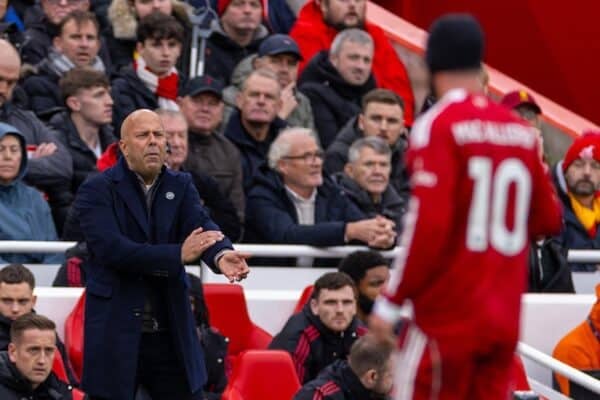
The tendency in football is to blame the manager first when things go wrong, making it easier to change one figure than address issues throughout the squad. While Slot has his shortcomings, Richard Hughes and the recruitment team aren’t without fault for their summer strategy, nor are the players exempt from responsibility for their performances and effort levels.
There are many factors at play, more than fans are likely aware of, and Slot’s title win earns him some credit as he attempts to turn things around.
4. Liverpool’s History of Patience
In its 133-year history, Liverpool has had 21 full-time managers – a testament to the club’s commitment to stability and standing by its initial decisions.
Roy Hodgson is the obvious exception, and for good reason, winning only 13 of his 31 games in charge. But the club’s handling of Jurgen Klopp demonstrated a willingness to give a manager time to succeed. While the squad Slot has at his disposal is strong, Liverpool doesn’t operate with a revolving door policy when it comes to its managers.
