
NASA’s Artemis II Launches: Humanity Returns to Lunar Orbit for First Time in 54 Years
In a historic milestone for deep-space exploration, NASA successfully launched the Artemis II mission on April 1, 2026. The rocket departed from the Kennedy Space Center in Florida at 6:35 PM EDT, marking the first time a crewed spacecraft has ventured toward the Moon since the Apollo 17 mission in December 1972.
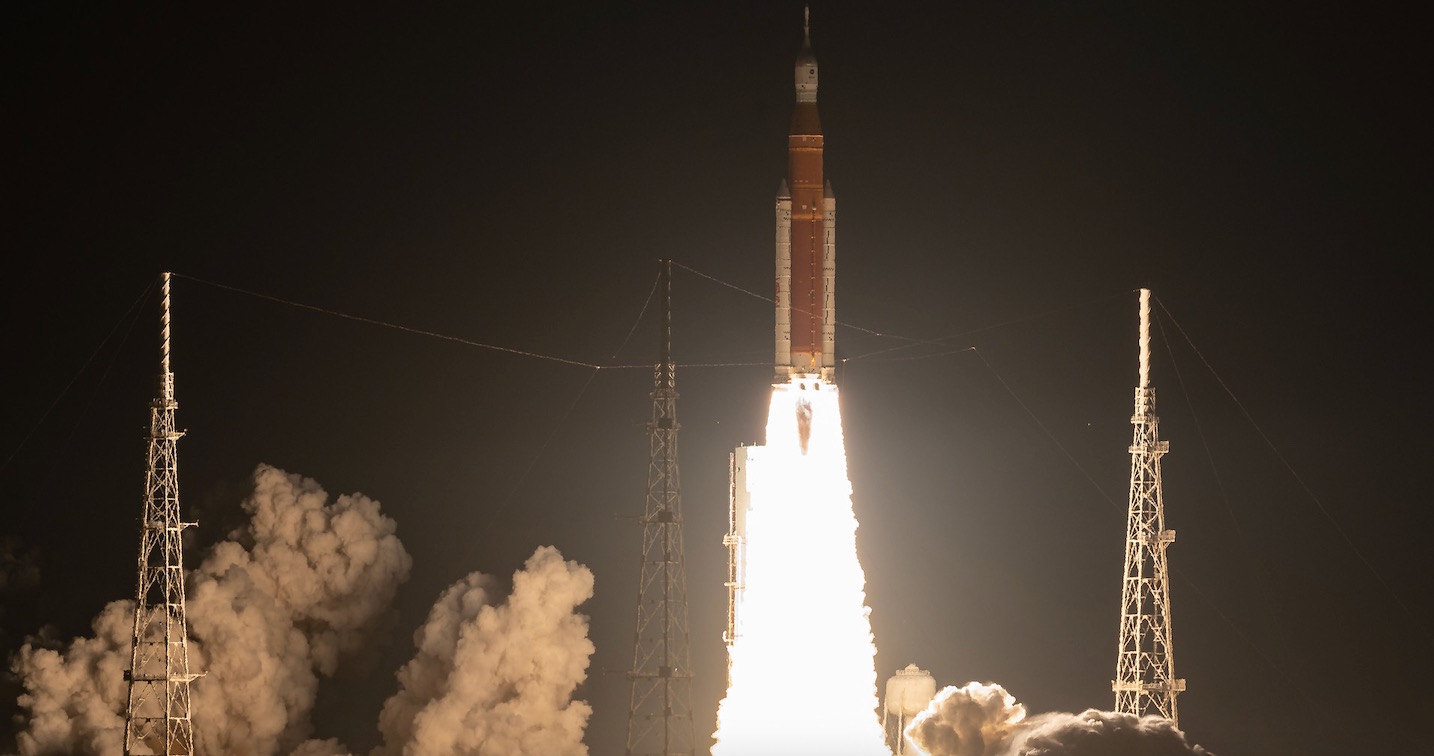
The mission is powered by the Space Launch System (SLS), a massive rocket standing 98 meters tall, which carries the Orion crew capsule. On board are four astronauts: Commander Reid Wiseman, NASA’s Victor Glover and Christina Koch, and Canadian astronaut Jeremy Hansen. Upon reaching orbit, the crew shared their early impressions of the journey, noting “everything looks like one” from their vantage point in space.
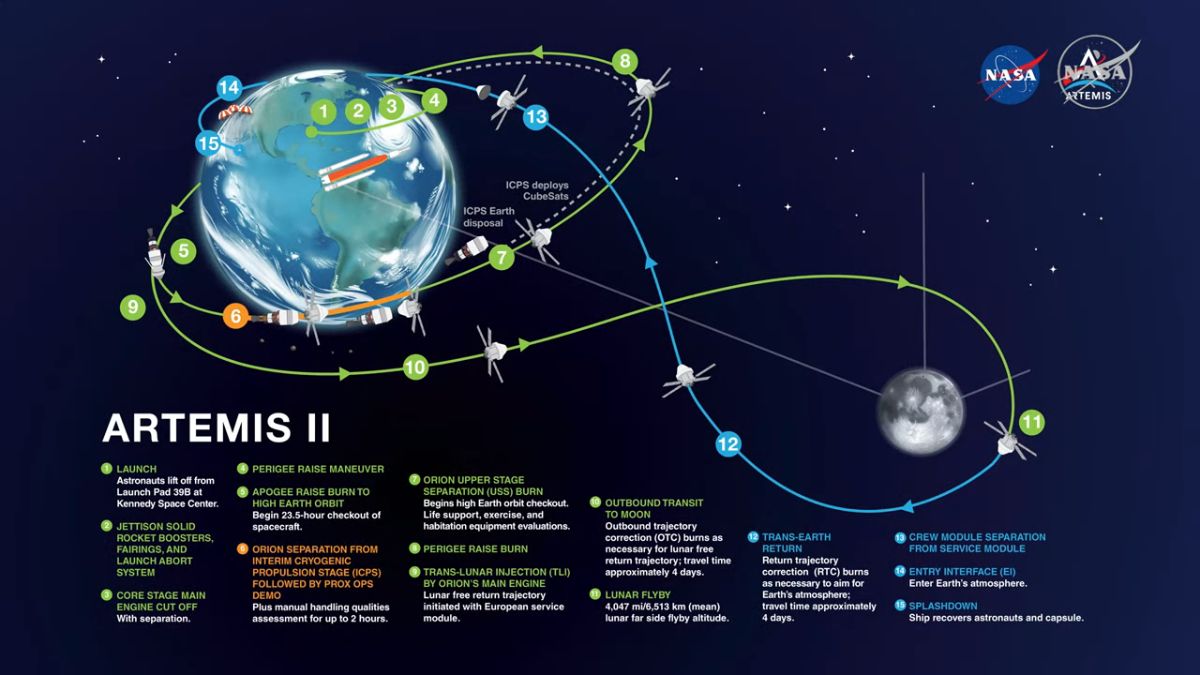
This mission serves as a critical human rehearsal for future lunar landings. Over a planned 10-day journey covering approximately 1,102,400 kilometers, the crew will orbit the Moon at altitudes ranging between 6,437 and 9,656 kilometers. This trajectory will allow the astronauts to observe lunar surface areas that have remained unseen by human eyes until now. The primary technical objectives include testing Orion’s life-support systems and analyzing the effects of the space radiation environment on the human body.
The successful launch follows a series of technical setbacks. The mission was originally targeted for February 2026 but was delayed due to hydrogen leaks. A subsequent attempt last month was as well postponed following issues with helium flow. This third attempt marks a significant victory for the program; as President Trump stated, “America wins in space and on Earth.”
The Artemis project, first announced in the spring of 2019, aims to re-establish a human presence on the Moon. Even as initial goals for a 2022 orbit and a 2024 landing were pushed back, NASA is now targeting a full lunar landing by 2028. This renewed investment in lunar infrastructure signals a strategic push to master long-term survival in deep space.
The Artemis II mission is scheduled to conclude on its tenth day, with the Orion capsule performing a splashdown in the Pacific Ocean near San Diego. For those following the mission’s progress, you can view the full coverage on Google News.
