

NASA’s Artemis II Captures Historic Lunar Imagery During Deep-Space Flyby
On Monday, April 6, 2026, NASA’s Artemis II mission reached a pivotal milestone as its crew executed a historic flyby of the Moon. This mission marks the first time humans have ventured around the lunar body in over half a century, serving as a critical validation of the systems required for a long-term return to the Moon and eventual crewed missions to Mars.
As the spacecraft approached its destination, the crew captured a series of striking images that provide a new perspective on our place in the cosmos. Among the most poignant is the final photograph of Earth before reaching the Moon, where the home planet appears as a tiny, distant dot. This visual testament to the vastness of space was accompanied by a tribute to Earth published by one of the astronauts, highlighting the emotional weight of the journey.
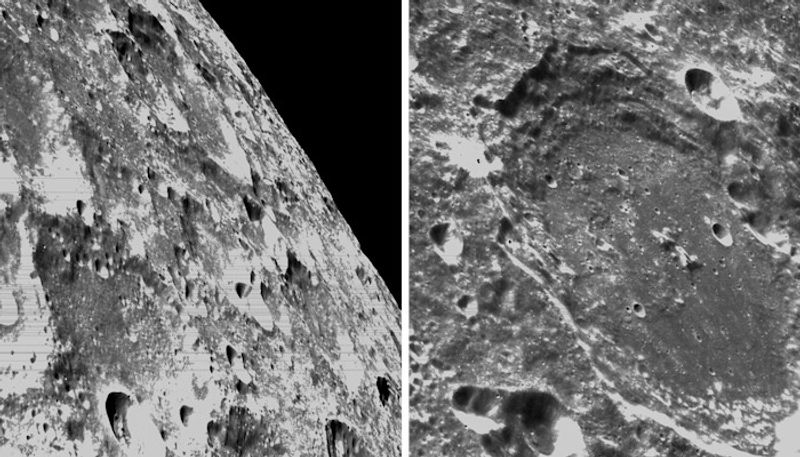
The mission has also delivered significant scientific data. NASA has released unprecedented images of the Moon, providing a level of detail captured directly by the crew during their transit. These newly released lunar photographs are part of a broader effort to map and observe targets for future surface missions.
Launched on April 1, 2026, the mission utilizes the Space Launch System (SLS) rocket and the Orion spacecraft to carry a crew of four—comprising three Americans and one Canadian. This 10-day journey is not merely a flyby but a rigorous testing phase for deep-space capabilities. The mission’s impact was noted early on when an astronaut aboard the International Space Station photographed the rocket trail left by the Artemis II launch, marking the start of this new era of exploration.
Today, April 6, marks Flight Day 5. The crew is currently engaged in a series of critical tasks, including spacesuit checks and tests. According to NASA’s lunar science lead, Kelsey Young, the astronauts are working in shifts over the course of a seven-hour flyby to achieve 10 science objectives and record observations across 35 different targets.
This mission represents a significant leap in aerospace innovation, proving that the Orion spacecraft can sustain a crew in deep space and return them safely. The Artemis II crew is expected to conclude their mission with a splashdown on Friday, April 10, 2026.
