

NASA’s Artemis II Set to Smash Human Distance Record During Historic Lunar Flyby
Humanity is about to venture further into the cosmos than ever before. On Monday, April 6, 2026, NASA’s Artemis II mission is scheduled to break the all-time distance record from Earth, marking a pivotal moment in deep space exploration and the first crewed lunar flyby in half a century.
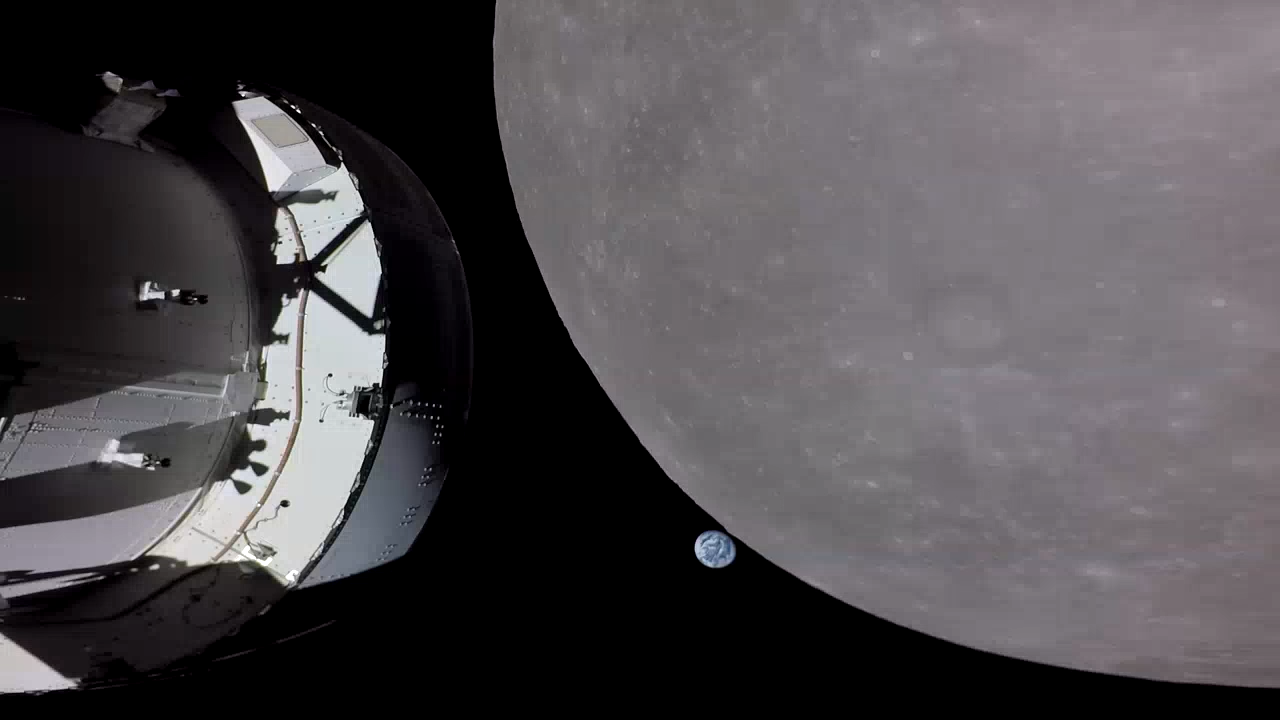
According to data released by NASA, the Orion spacecraft is projected to reach a maximum distance of 252,757 miles (406,773 kilometers) from Earth. This milestone will surpass the previous record of 248,655 miles, which was established by the Apollo 13 crew in April 1970. This new distance estimate was finalized following the successful translunar injection (TLI) burn on April 2, 2026—a critical six-minute maneuver that propelled the capsule out of Earth’s orbit and toward the Moon.
The mission represents a massive leap in deep space capabilities, utilizing the Space Launch System (SLS) heavy-lift rocket to send a crew of four into the void. The team consists of NASA astronauts Reid Wiseman, who serves as Commander, Victor Glover, and Christina Koch, alongside Canadian Space Agency astronaut Jeremy Hansen. This 10-day mission is designed to test the Orion spacecraft’s ability to sustain a crew in deep space and verify the systems necessary for future lunar surface landings.
The journey has already seen several key milestones. On April 3, 2026, Commander Reid Wiseman captured a photograph of Earth from the spacecraft. By April 4, the crew had completed a manual piloting demonstration. As of 7 a.m. ET on April 5, 2026, the Orion capsule was traveling at 1,771 mph, positioned approximately 206,482 miles from Earth and 75,000 miles from the lunar surface.
The climax of the mission occurs on April 6, 2026, during a roughly six-hour window. The alignment of the sun, moon, and spacecraft will allow the crew to view the far side of the Moon—a perspective impossible to see from Earth. This flyby is a crucial test of the systems that will eventually support long-term lunar habitation and future missions to Mars.
While Artemis II will not land on the lunar surface, it paves the way for subsequent missions, with a landing planned for Artemis IV in 2028. The mission’s progress is being tracked in real time via the Artemis Real-time Orbit Website (AROW), which utilizes sensor data sent from Orion to the Mission Control Center in Houston.
This achievement highlights the continued evolution of human spaceflight technology, shifting from the short-term goals of the Apollo era to the sustainable deep space exploration goals of the Artemis program.
